
Best for home-based treatment of diagnosed pattern hair loss: topical minoxidil. Best for clinician-delivered treatment: PRP. Best for avoiding needles: home low-level laser therapy. This 2026 guide compares appointment burden, maintenance and limitations; iGraft offers personalised assessment before you choose a non-surgical hair treatment.
- Best non surgical hair treatment sessions depend on diagnosis; fewer appointments do not mean less treatment.
- Topical minoxidil suits eligible patients who prefer home treatment and can maintain regular use.
- PRP involves repeat clinic appointments; home laser therapy involves repeated device use.
- iGraft offers non-surgical hair treatment assessment; choose a plan before committing to a session package.
Why this matters
A session count describes your schedule, not your likelihood of regrowth. Daily medication, repeated device use and clinic injections are different commitments. Comparing them only by appointments hides the work you do between visits.
The cause of hair loss also changes the decision. Pattern hair loss, temporary shedding, scalp inflammation and scarring disorders do not share one treatment plan. A procedure package chosen before diagnosis puts the schedule ahead of the medical problem.
For your 2026 comparison, separate three questions: what condition needs treatment, how treatment is delivered, and how progress will be reviewed. The shortest appointment schedule is not automatically the most suitable option.
What makes the best non-surgical hair treatment?
Use these criteria before comparing session totals:
- Diagnosis fit: The treatment addresses the identified cause, rather than hair fall as a general symptom.
- Clinic burden: You understand which appointments involve assessment, treatment or review.
- Home commitment: You can follow the application or device schedule between appointments.
- Maintenance: The plan explains what happens after the initial course and after stopping.
- Safety: Your clinician considers scalp health, medicines, pregnancy plans and relevant medical history.
- Measurable review: Consistent photographs and scalp assessment guide decisions, not package completion alone.
Non-surgical hair treatments at a glance
This 2026 ranking separates home treatment from clinic procedures. The order prioritises lower procedural appointment burden, not a claim that every earlier option works better than every later option.
| Rank and option | Best for | Session commitment | Standout feature | Key limitation |
|---|---|---|---|---|
| 1. Topical minoxidil | Eligible patients with pattern hair loss who prefer home treatment | Regular home applications plus clinical reviews | Does not require injection appointments | Continued use is needed to maintain benefit |
| 2. Home low-level laser therapy | Suitable patients seeking a needle-free device option | Repeated home sessions according to device instructions | Treatment takes place at home | Device suitability and adherence need checking |
| 3. Cause-directed medical care | Patients with shedding linked to an identifiable trigger or condition | Assessment and follow-up depend on the diagnosis | Addresses the underlying problem | Not a single treatment or fixed course |
| 4. Platelet-rich plasma, or PRP | Suitable patients willing to attend injection appointments | An initial series followed by maintenance | Clinician-delivered treatment using a preparation from your blood | Repeat visits, discomfort and variable response |
| 5. Growth factor concentrate, or GFC | Patients discussing a clinic-based alternative | A clinician-defined injection schedule | Another blood-derived treatment approach | A shorter proposed course does not establish better results |
1. Topical minoxidil: best for home-based pattern hair loss care
Topical minoxidil is a medicine used for pattern hair loss. You apply it to the scalp according to the prescribed formulation and instructions; review appointments assess tolerance, adherence and response.
Best for: Eligible patients with diagnosed pattern hair loss who can maintain regular home treatment.
Topical minoxidil pros:
- Avoids injection appointments.
- Fits a home-based treatment routine.
- Has an established role in treating pattern hair loss.
Topical minoxidil cons:
- Requires continued use to maintain benefit.
- Can cause scalp irritation and unwanted hair growth outside the treatment area.
- Does not treat every cause of shedding.
The American Academy of Dermatology’s public patient guidance on hair loss treatment describes 6–12 months as a period in which minoxidil results can become apparent. That is an assessment window, not a promise of regrowth.
Do not treat all minoxidil products as interchangeable. Combination formulations can contain additional medicines and require their own suitability assessment, particularly around pregnancy or breastfeeding.
Verdict: Hold self-treatment until the diagnosis and formulation are confirmed; then consider minoxidil for a sustainable home routine.
2. Home low-level laser therapy: best for needle-free device treatment
Low-level laser therapy uses a light-based device rather than injections. Home devices require repeated use according to their instructions; avoiding clinic procedures does not remove the treatment schedule.
Best for: Suitable patients with pattern hair loss who prefer a device-based option and accept repeated home sessions.
Home low-level laser therapy pros:
- Does not involve scalp injections.
- Allows treatment at home.
- Provides an option to discuss when a medication routine is difficult to tolerate.
Home low-level laser therapy cons:
- Repeated use still takes time and discipline.
- Evidence for one device does not establish the performance of every device.
- A device does not diagnose unexplained hair loss.
Before choosing a device, ask which hair-loss condition it is intended to treat and what evidence supports that specific model. Follow the manufacturer’s safety instructions, including eye-safety advice and any restrictions relevant to your health.
Do not add sessions beyond the instructions to accelerate results. More exposure is not a substitute for an appropriate diagnosis or an agreed review point.
Verdict: Hold purchase until your clinician confirms suitability and reviews the specific device.
3. Cause-directed medical care: best for unexplained shedding
Cause-directed care starts with identifying why hair is shedding. Depending on your history and examination, management can involve treating scalp disease, reviewing medicines or correcting a confirmed nutritional deficiency.
Best for: Patients with new, diffuse or unexplained shedding who do not yet have a diagnosis.
Cause-directed medical care pros:
- Targets an identified contributor rather than choosing a procedure first.
- Allows testing to follow clinical findings.
- Helps avoid supplements or injections without a clear indication.
Cause-directed medical care cons:
- Does not follow a standard session package.
- Hair recovery can lag behind correction of the trigger.
- Requires reassessment if shedding persists or the diagnosis changes.
A blood test is not automatically necessary for everyone with hair fall. Your clinician should explain what a proposed test is investigating and how its result would change treatment.
Likewise, supplements are not a universal regrowth treatment. Correcting a documented deficiency is different from taking a hair supplement without an identified need. Tell your clinician about supplements, including biotin, because they can affect some laboratory tests.
Verdict: Skip procedure shopping until unexplained shedding has been assessed.
4. PRP: best for patients choosing clinician-led injection treatment
PRP involves taking a blood sample, preparing a platelet-rich portion and injecting it into the scalp. It is a non-surgical procedure, but it still involves needles, repeat appointments and medical assessment.
Best for: Suitable patients discussing a clinic-based treatment for pattern hair loss, including its role alongside other care.
PRP pros:
- Provides clinician-delivered treatment.
- Uses a preparation derived from your own blood.
- Can be considered within a broader pattern hair loss plan.
PRP cons:
- Involves injection discomfort and possible bruising or bleeding.
- Requires repeat appointments rather than a single visit.
- Response varies, and maintenance adds to the commitment.
For session planning, the American Academy of Dermatology’s public guidance describes PRP appointments once a month for the first 3 months, followed by treatment every 3–6 months. This describes a commonly used schedule, not a prescription for every patient or every clinic protocol.
Ask how your clinician will assess response before recommending further treatment. Also discuss infection risk, bleeding history and medicines that affect clotting.
Verdict: Hold commitment to an extended course until suitability, the initial schedule and review criteria are clear.
5. GFC: best for a clinician-led discussion of alternatives
GFC is a blood-derived injection approach offered in hair restoration. iGraft lists GFC/PRP among its treatments, but the treatment name alone does not establish the right appointment schedule for you.
Best for: Patients already considering clinic-based injections who want a clear comparison with PRP.
GFC pros:
- Provides another clinician-delivered option to discuss.
- Uses a blood-derived preparation.
- Allows a direct discussion of protocol, follow-up and maintenance alongside PRP.
GFC cons:
- Still requires blood collection and scalp injections.
- Protocols and proposed schedules differ.
- Fewer proposed appointments do not prove a better outcome.
Ask what preparation is being used, what evidence supports that protocol and why it suits your diagnosis. Request the same explanation of discomfort, risks and maintenance that you would expect for PRP.
Do not accept “more concentrated” as a complete explanation of clinical benefit. The useful question is whether the proposed approach has evidence relevant to your condition and a defined way to assess response.
Verdict: Hold until the clinician explains the protocol and its evidence; skip claims based only on fewer sessions.
How to compare session plans without being misled
For your 2026 consultation, ask for a plan that separates assessment, active treatment and maintenance. A total appointment count without those distinctions is incomplete.
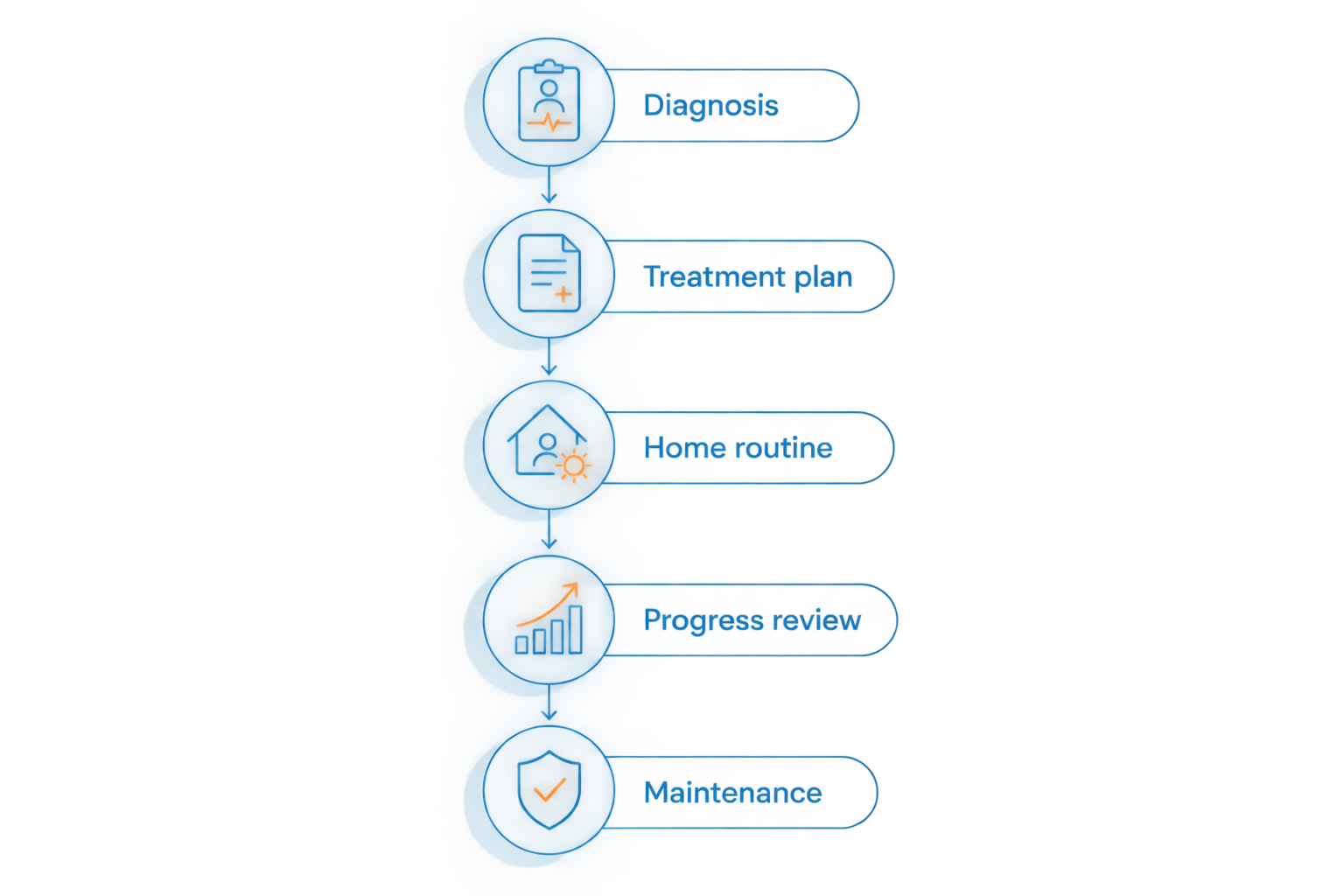
Use this sequence:
- Diagnosis: Ask for the name of the condition and the findings supporting it.
- Treatment plan: Confirm the medicine, device or procedure and its purpose.
- Home routine: Record what you must do between appointments.
- Progress review: Agree on photographs, examination and the review point.
- Maintenance: Clarify what continues after the initial course.
The sequence matters because maintenance should be discussed before you start, not introduced after you finish a package. Ask what would lead your clinician to continue, change or stop treatment.
Bring a list of medicines and supplements, previous treatment details and photographs showing the change over time. If you travel for care, distinguish appointments that require your presence from reviews your clinician considers suitable for remote follow-up.
How this ranking works
This is a ranking of treatment commitments, not a head-to-head effectiveness trial. Home-based options appear before repeat clinic injections because the article compares procedural visits and the work between them.
Diagnosis fit, safety, maintenance and review quality remain more important than rank. Cause-directed care moves ahead of every listed option when unexplained shedding requires investigation. Likewise, a treatment you cannot follow consistently is a poor fit despite a convenient appointment schedule.
Which non-surgical hair treatment should you choose?
Start with diagnosis; choose the delivery method second. For confirmed pattern hair loss, discuss whether topical minoxidil fits your medical circumstances and routine. Consider home laser therapy or clinic-based injections only after comparing their evidence, limitations and ongoing commitment.
iGraft offers hair restoration assessment for patients comparing non-surgical care. Use the consultation to request a personalised plan rather than selecting a treatment by session count alone.
If you have sudden patchy loss, scalp pain, inflammation or signs of scarring, seek medical assessment promptly. Do not wait to finish a cosmetic treatment course before reporting a changing scalp condition.
FAQ
What’s the best non-surgical hair treatment if I want fewer clinic visits?
Topical minoxidil is a home-based option for eligible patients with diagnosed pattern hair loss. It replaces injection appointments with regular applications, but clinical assessment and reviews still matter.
How many PRP sessions do I need for hair loss?
Your clinician should set the PRP schedule after assessment. The American Academy of Dermatology describes a common approach of monthly treatment for the first 3 months, followed by maintenance every 3–6 months; individual plans differ.
Is GFC better than PRP because it needs fewer sessions?
Fewer proposed sessions do not establish that GFC is better than PRP. Compare the specific protocol, supporting evidence, risks and maintenance plan rather than appointment totals alone.
Does non-surgical mean there are no needles?
No, non-surgical hair treatments include injection procedures such as PRP and GFC. Topical medicines and home laser devices avoid scalp injections, but each has separate suitability and safety considerations.
Can I stop minoxidil once my hair improves?
Stopping minoxidil generally means losing the benefit it maintains. Discuss irritation, pregnancy plans or other reasons for stopping with your clinician so the treatment plan can be reviewed.
Are shampoos and gummies alternatives to hair restoration treatment?
Shampoos and gummies are not interchangeable with diagnosis-specific treatment for pattern hair loss. Scalp care and correction of a confirmed deficiency have different purposes from medicines, devices or injection procedures.
Can I combine home treatment with PRP?
A clinician can consider combined treatment when it suits your diagnosis and medical circumstances. Ask what each component contributes and how response or side effects will be assessed.
One last thing
Ask what happens after the final booked appointment. That question exposes the difference between an initial treatment course and long-term management. In 2026, a useful plan should explain both before you commit.
Related guides
- Hair transplant techniques for curly hair
- Scalp donor extraction methods ranked by density yield
- Hair transplant options for a widow’s peak