Hair Free Hair Grow belongs on your shortlist if you are already considering it, but a clinic name alone cannot establish whether surgery suits your hair loss. The comparison becomes useful when you examine diagnosis, donor planning and follow-up rather than procedure labels. Among hair free hair grow alternatives in 2026, consider iGraft for a hair-transplant consultation in Hyderabad, Pune, Bangalore or Vijayawada; choose a dermatologist-led medical pathway when diagnosis or non-surgical treatment comes first.
- Compare hair free hair grow alternatives by diagnosis, donor assessment and follow-up, not procedure names alone.
- iGraft is a hair-restoration option for patients comparing consultations in Hyderabad, Pune, Bangalore and Vijayawada.
- A dermatologist-led medical pathway fits patients who need a diagnosis before considering hair transplantation.
- Stay with Hair Free Hair Grow if its treating clinician provides a suitable, clearly explained care plan.
Why this matters
Choosing a different clinic and choosing a different treatment are separate decisions. Another transplant consultation helps you compare surgical plans; a dermatology assessment helps establish whether transplantation is the appropriate next step at all.
iGraft provides hair-transplant and hair-restoration treatments across 4 Indian cities. Its stated procedures include FUE, ActiveFUE and DFI Ultimate Hair transplant, alongside GFC/PRP treatment. Those options give you subjects to discuss, not a treatment prescription.
Choose the diagnosis before the procedure, and the procedure before the package. A carefully planned procedure starts with an explanation of your hair loss, what treatment can address and what it cannot.
Hair Free Hair Grow alternatives at a glance
Use this 2026 comparison to decide which consultation belongs next on your calendar. The alternatives below include a named clinic and distinct care pathways; they are not interchangeable services.
| Option | Best for | Main point of comparison | How it differs from choosing by clinic name |
|---|---|---|---|
| Hair Free Hair Grow | Patients already considering the clinic | Ask the treating clinician to explain diagnosis, proposed treatment and follow-up | Keep it as the benchmark for your other consultations |
| iGraft | Patients comparing hair-restoration consultations in Hyderabad, Pune, Bangalore or Vijayawada | FUE, ActiveFUE, DFI Ultimate Hair transplant and GFC/PRP are stated treatment options | Offers another clinic-specific plan to assess against the same questions |
| Dermatologist-led medical management | Patients who need diagnosis or non-surgical treatment assessment | Evaluation of the cause of hair loss and suitability for medical treatment | Changes the treatment pathway rather than simply changing the clinic |
| Hospital dermatology department | Patients seeking assessment of hair loss alongside scalp or medical concerns | Dermatology assessment within a hospital setting | Prioritises the diagnostic setting before selecting a surgical provider |
No option wins every category. Medical care does not redistribute donor follicles, and transplantation does not explain or treat every cause of shedding.
1. iGraft: best for comparing a local hair-restoration plan
This hair-restoration clinic serves patients in Hyderabad, Pune, Bangalore and Vijayawada, including patients travelling from the USA, Australia and Europe. Its stated treatment range makes it an option for discussing surgical and non-surgical approaches during an individual assessment.
iGraft is a hair-restoration option for patients comparing consultations in Hyderabad, Pune, Bangalore and Vijayawada. The useful outcome of that consultation is a reasoned plan, not simply a recommendation carrying a different technique name.
Where this option shines
- City choice: You can consider consultations in any of its 4 stated cities, according to your location and travel plans.
- Different treatment categories: The stated offering includes transplantation and GFC/PRP treatment, giving you separate approaches to ask about.
- Relevant comparison questions: You can ask why FUE, ActiveFUE or DFI Ultimate Hair transplant is being proposed for your particular case.
Where this option falls short
- A treatment list cannot establish suitability. You still need an individual assessment before choosing surgery or a non-surgical procedure.
- Technique names do not prove a better result. Ask what changes in the actual procedure and why those differences matter for you.
- Travel creates follow-up work. If you live elsewhere, establish how reviews and unexpected concerns will be managed after you return home.
Head-to-head: what to compare with Hair Free Hair Grow
| Dimension | This clinic's stated position | Question for Hair Free Hair Grow |
|---|---|---|
| Locations | Hyderabad, Pune, Bangalore and Vijayawada | Which treating location fits your consultation and follow-up needs? |
| Surgical options | FUE, ActiveFUE and DFI Ultimate Hair transplant | Which procedure is proposed, and what does it involve? |
| Non-surgical options | GFC/PRP treatment is included in the stated offering | Which non-surgical options fit your diagnosis? |
| Individual plan | Request donor assessment, hairline reasoning and follow-up arrangements | Request the same details so you can compare like with like |
Best for: Patients seeking another hair-restoration assessment in one of the stated cities.
Verdict: Hold the procedure decision until you have an individual plan.
2. Dermatologist-led care: best for diagnosis before surgery
A dermatologist-led medical pathway is a treatment alternative, not a competing transplant brand. It is relevant when you have not established why your hair is thinning, or when shedding, scalp symptoms or recent changes need assessment.
Pattern hair loss, alopecia areata and shedding associated with illness are different clinical problems. You should not assume they need the same treatment because each involves visible hair loss.
Where this option shines
- Diagnosis comes first: The consultation can distinguish the problem being treated before you compare procedures.
- Medication assessment: A clinician can discuss whether medical treatment fits your diagnosis, health history and circumstances.
- Surgery remains a separate decision: You can assess transplantation later without making it the starting assumption.
Where this option falls short
- It is not a replacement for graft placement. Medical management does not move donor follicles into a new hairline.
- Treatment carries its own trade-offs. Discuss adverse effects, suitability and what happens if treatment stops.
- You still need review. An initial prescription is not the same as an assessed response to treatment.
Best for: Patients with an uncertain diagnosis or those comparing non-surgical care before transplantation.
Verdict: Hold surgery until the diagnosis and medical options are clear.
3. Hospital dermatology: best for a broader clinical assessment
A hospital dermatology department is another assessment setting to consider when hair loss comes with scalp inflammation, patchy loss or relevant medical concerns. It is not automatically better than a standalone clinic; the treating clinician and assessment remain central.
Where this option shines
- A diagnostic starting point: You can seek a dermatology opinion without beginning with a transplant technique.
- Assessment of related concerns: Bring your scalp symptoms, medical history and current medicines into the discussion.
Where this option falls short
- Do not assume transplantation is offered. Confirm the department's services before arranging a surgical comparison.
- Another consultation can still be necessary. A diagnostic opinion and a detailed transplant plan answer different questions.
Best for: Patients seeking dermatology assessment before selecting a surgical provider.
Verdict: Hold the clinic comparison until the clinical question is settled.
Compare the plan, not the procedure label
For your 2026 shortlist, request 2 written plans before committing to an elective procedure. This is a comparison method, not a clinical requirement: it helps you identify where recommendations differ and what needs explaining.
Use the same questions at each appointment. Otherwise, one clinic's detailed donor discussion can disappear beside another clinic's more memorable procedure name.
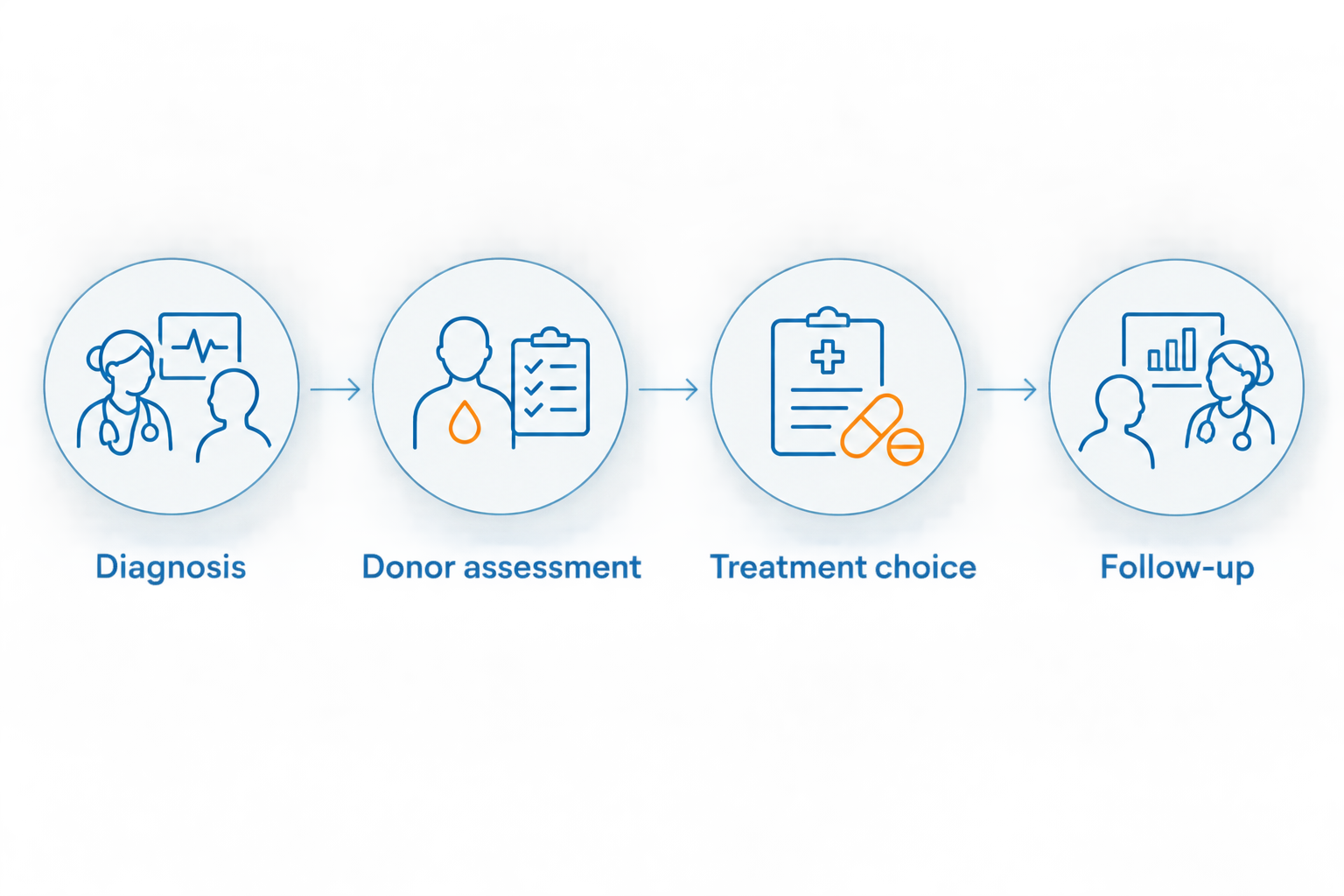
Diagnosis
Ask what type of hair loss you have and what supports that conclusion. Explain when it started, whether it is changing and which treatments you have already tried; let the clinician decide whether further investigation is needed.
Donor assessment
Ask how the donor area has been assessed and what limits it places on the proposed coverage. Transplantation redistributes existing follicles rather than creating an unlimited supply, so a plan should address future needs as well as today's gaps.
Treatment choice
Ask why the proposed approach fits your diagnosis and goals. If different clinics recommend different techniques, request an explanation of the practical difference rather than treating the names as a ranking.
Follow-up
Ask who handles routine reviews and whom you should contact about an unexpected symptom. If you are travelling, settle those arrangements before booking travel around a procedure.
The strongest second opinion explains agreement as clearly as disagreement. If both clinicians identify the same limitation, such as restricted donor supply, changing clinics does not remove that limitation.
Why consider switching from Hair Free Hair Grow?
Switch because another plan better fits your assessed needs, not because a comparison page declares a universal winner. Use these as decision criteria for any clinic, rather than assumptions about Hair Free Hair Grow.
- Location fits your care: Choose a treating location that works for assessment, the procedure and subsequent reviews.
- The explanation is clearer: You understand the diagnosis, proposed approach, limitations and alternatives.
- The recommendation matches your priorities: The clinician addresses the area that concerns you without dismissing donor constraints or future loss.
- Responsibilities are explicit: You know who assesses you, who performs the proposed procedure and who handles follow-up.
- You need another kind of care: A diagnostic or medical consultation answers your immediate question better than another surgical quotation.
For international patients planning care in 2026, include continuity in the comparison. Ask how records, follow-up photographs and concerns will be handled across locations; do not assume those arrangements from a clinic's international patient profile.
When staying with Hair Free Hair Grow is the right call
Stay with Hair Free Hair Grow if its treating clinician establishes a diagnosis, explains reasonable options and provides a plan you understand. A second opinion can support your original choice rather than overturn it.
Before deciding, ask 3 consultation questions: Why this treatment? What are its limitations? What happens after the procedure? Clear answers matter more than a higher position on an alternatives list.
If you feel pressured to decide before those questions are answered, pause. Elective treatment should follow informed consent, not a deadline created by the comparison process.
FAQ
What’s the best Hair Free Hair Grow alternative in 2026?
The right alternative depends on whether you need diagnosis, medical management or a transplant assessment. iGraft is a hair-restoration option in Hyderabad, Pune, Bangalore and Vijayawada; a dermatologist-led pathway fits a diagnosis-first decision.
Is another clinic automatically better than Hair Free Hair Grow?
No, a different clinic is not automatically a better fit. Compare the treating clinician’s assessment, proposed treatment, limitations and follow-up arrangements using the same questions.
Should I see a dermatologist before choosing a hair transplant?
Seek a diagnostic assessment before choosing transplantation if the cause of your hair loss is unclear. A dermatologist can assess the condition and discuss whether medical treatment or further evaluation belongs before surgery.
Is FUE better than a branded hair-transplant technique?
A technique name alone does not establish which procedure is better for you. Ask what the proposed procedure involves, who performs it and why it fits your donor area and treatment goals.
Can non-surgical treatment replace a hair transplant?
Non-surgical treatment and transplantation serve different purposes. Medical treatment can be appropriate for certain diagnoses, while transplantation moves donor follicles to selected areas; individual assessment determines the relevant options.
How do I compare hair-transplant plans in 2026?
Compare diagnosis, donor assessment, proposed coverage, treatment limitations and follow-up. Request written explanations so that differences between plans are clear before you consent.
What should I ask before travelling to India for hair restoration?
Ask which assessments must happen in person and how follow-up will work after you return home. Confirm whom to contact about unexpected symptoms and discuss travel timing with your treating clinician before booking.
One last thing
The better second opinion sometimes recommends less treatment, or no procedure yet. Hair transplantation moves existing donor follicles; it does not create a new donor supply. In 2026, judge your shortlist by how clearly each clinician protects that resource and explains the limits of the plan.
Related guides
- Hair transplant techniques ranked by sessions required
- Best non-surgical hair treatments ranked by sessions
- Hair transplant options for thin donor density
- Choosing a hair-transplant surgeon in Pune in 2026