DHI India is known for a hair-transplant approach built around direct hair implantation. That technique alone does not settle whether you need surgery, how much donor hair you can safely use, or how your existing hair should be managed. The best DHI India alternative in 2026 is iGraft for patients comparing surgical and non-surgical hair restoration; a dermatologist-led medical assessment is the better first step when the cause of hair loss remains unclear.
- Compare DHI India alternatives by diagnosis, donor assessment and surgeon involvement, not technique names alone.
- iGraft offers hair restoration consultations across Hyderabad, Pune, Bangalore and Vijayawada.
- FUE and direct implantation describe different parts of a transplant; ask how extraction and placement are performed.
- Medical treatment and PRP are not interchangeable with surgery; each addresses a different clinical need.
Why this matters
Choosing a hair-transplant clinic means choosing a clinical plan, not simply an implantation tool. A carefully designed hairline still needs adequate donor hair, appropriate graft handling and a plan for hair that continues to thin.
Your 2026 shortlist should answer three questions: what is causing the loss, whether transplantation is appropriate, and who takes responsibility for treatment and follow-up. A recognisable procedure name cannot answer those questions on its own.
This comparison separates a named clinic alternative from other treatment pathways. They belong on the same decision sheet, but they are not equivalent purchases: an assessment can lead to surgery, medical treatment, an adjunctive procedure or observation.
DHI India alternatives at a glance
| Option | Best for | Distinguishing feature | Difference from choosing DHI India |
|---|---|---|---|
| DHI India | Patients specifically considering direct hair implantation | An implantation-focused approach to transplantation | The benchmark; still assess the individual surgeon and treatment plan |
| iGraft | Patients comparing surgical and non-surgical hair restoration in its clinic cities | FUE, ActiveFUE, DFI and GFC/PRP treatment options | Offers a different provider and a consultation covering several treatment routes |
| Surgeon-led FUE assessment | Patients comparing donor extraction and placement plans | Individual follicular-unit extraction with a separately explained implantation plan | Compares the surgical workflow rather than relying on an implantation label |
| Dermatologist-led medical care | Patients with unexplained shedding or potentially treatable thinning | Diagnosis and condition-specific medical management | Investigates whether transplantation is the right next step at all |
| Clinician-led PRP/GFC assessment | Patients considering an adjunct for suitable hair-loss conditions | Assessment of an injection-based treatment within a wider plan | Does not relocate donor follicles or replace surgical coverage |
Use this table to choose the right consultation, not to declare one technique universally better. A useful comparison ends with a written recommendation matched to your scalp and donor area.
1. iGraft: best for comparing restoration pathways
For patients researching hair restoration, iGraft provides FUE, ActiveFUE and DFI procedures alongside GFC/PRP treatment. Its clinics serve Hyderabad, Pune, Bangalore and Vijayawada, making it a relevant alternative when you want to compare treatment routes in those cities.
The practical advantage is the opportunity to discuss surgery and non-surgical care within your assessment. Those options still need a clinical explanation: ask what each proposed treatment addresses and why it belongs in your plan.
Where this option shines
- Offers both transplant procedures and non-surgical treatment options.
- Provides a consultation route in four Indian cities.
- Serves patients travelling from the USA, Australia and Europe as well as patients in India.
- Gives you several named procedures to discuss against the same diagnosis and donor assessment.
Where this option falls short
- Treatment choice still requires an individual assessment; the procedure list cannot establish suitability.
- Transplantation redistributes existing follicles rather than creating an unlimited donor supply.
- Travelling patients must account for in-person assessment, recovery and continuity of care.
| Decision point | This clinic option | DHI India comparison |
|---|---|---|
| Treatment discussion | FUE, ActiveFUE, DFI and GFC/PRP | Ask which surgical and non-surgical routes your assessment covers |
| Location planning | Hyderabad, Pune, Bangalore and Vijayawada | Compare the proposed treatment location and return-visit arrangements |
| Surgical recommendation | Requires assessment of your scalp and donor area | Request the same individual assessment before accepting a procedure |
| Follow-up | Ask for a written postoperative and ongoing-care plan | Apply the same requirement to the clinic you are benchmarking |
Best for: Patients who want an individual comparison of surgical and non-surgical hair restoration in these locations.
Verdict: Hold the procedure decision until the consultation explains diagnosis, donor limits and clinician responsibilities.
2. Surgeon-led FUE assessment: best for comparing the surgical plan
FUE describes extracting follicular units individually from the donor area. Direct implantation concerns how grafts are placed, so treating FUE and DHI as completely separate, mutually exclusive procedures creates a misleading comparison.
For your 2026 shortlist, ask every surgeon to explain extraction and implantation separately. Then compare donor protection, recipient-site planning and the proposed distribution of grafts.
Where this option shines
- Makes donor management a central part of the discussion.
- Lets you compare the same surgical stages across different clinics.
- Encourages questions about who extracts grafts, designs the hairline and performs placement.
Where this option falls short
- FUE is not scar-free; extraction leaves small scars.
- Excessive harvesting can reduce donor coverage.
- A technique label does not establish the skill of the operating team or the quality of graft handling.
| Dimension | Surgeon-led FUE assessment | Direct-implantation assessment |
|---|---|---|
| Extraction | Ask how follicles are selected and removed | Ask how follicles are selected and removed |
| Placement | Ask which placement method is proposed and why | Ask how the implantation method fits your recipient area |
| Donor safety | Assess available supply and extraction distribution | Assess available supply and extraction distribution |
| Future loss | Request a plan that preserves donor options | Request a plan that preserves donor options |
If donor density is a concern, review hair transplant options for thin donor density before accepting a coverage proposal. Ask the surgeon to explain the trade-off between hairline density, crown coverage and retaining donor hair for future needs.
Best for: Patients who already have a surgical recommendation and want to compare its reasoning.
Verdict: Hold until extraction, placement and donor preservation are explained separately.
3. Dermatologist-led medical care: best for diagnosis before surgery
A medical assessment is the stronger first step when you do not know why your hair is shedding. Pattern hair loss, temporary shedding, scalp inflammation and scarring disorders require different management.
The consultation should cover your history, scalp examination and investigations when clinically indicated. Medication belongs after that assessment, not before it.
Where this option shines
- Identifies conditions that a transplant would not address on its own.
- Supports management of existing hair rather than focusing only on empty areas.
- Gives you a reasoned basis for deciding whether to defer surgery.
Where this option falls short
- Medical treatment does not redistribute follicles into a new hairline.
- Some treatments require continued use to maintain benefit.
- Prescription medicines have contraindications and potential adverse effects that require discussion.
| Dimension | Medical care | Transplantation assessment |
|---|---|---|
| Main purpose | Diagnose and manage the underlying condition | Assess whether moving follicles can improve coverage |
| Donor requirement | Does not require surgical donor harvesting | Requires suitable donor hair |
| Main limitation | Cannot reproduce surgical redistribution | Does not independently control every cause of ongoing loss |
Best for: Patients with recent shedding, uncertain diagnosis, scalp symptoms or no previous medical assessment.
Verdict: Hold surgery until the cause of hair loss is established.
4. PRP/GFC assessment: best for discussing adjunctive care
PRP and GFC are injection-based treatment categories discussed in hair-loss care. They are not hair transplants and do not move follicles from the donor area into a bald region.
In 2026, compare these options by clinical indication, the proposed protocol and how response will be reviewed. Do not treat the treatment name as proof that it will address your particular pattern of loss.
Where this option shines
- Provides a non-transplant option to discuss for suitable conditions.
- Can be considered within a wider clinician-directed management plan.
Where this option falls short
- Does not provide transplanted follicles for an area needing surgical redistribution.
- Involves injections and associated discomfort and procedural risks.
- Requires a clear review plan rather than an open-ended course without reassessment.
Best for: Patients whose clinician recommends adjunctive treatment after diagnosing the hair-loss condition.
Verdict: Skip any proposal that does not explain the indication, limitations and review criteria.
Why consider an alternative to DHI India?
A second consultation is useful when your questions concern the treatment plan rather than the brand. These are reasons to compare providers, not claims about shortcomings at DHI India.
You need diagnostic clarity
If you have not received a clear diagnosis, start there. A transplant proposal should explain which areas are suitable for surgery and which need medical management or further investigation.
You need a donor-conservation plan
Donor hair is finite. Ask how the proposed hairline and coverage plan would work if untreated areas continue to thin, rather than judging the plan only by its immediate appearance.
You need clearer clinical accountability
Ask who assesses you, who designs the hairline and who performs each surgical stage. Obtain the operating clinician's credentials and a clear route for postoperative concerns before committing.
You need practical follow-up
Patients travelling within India or from overseas need to understand what requires an in-person visit and what can be reviewed remotely. Agree on those arrangements before booking travel.
How to compare consultations in 2026
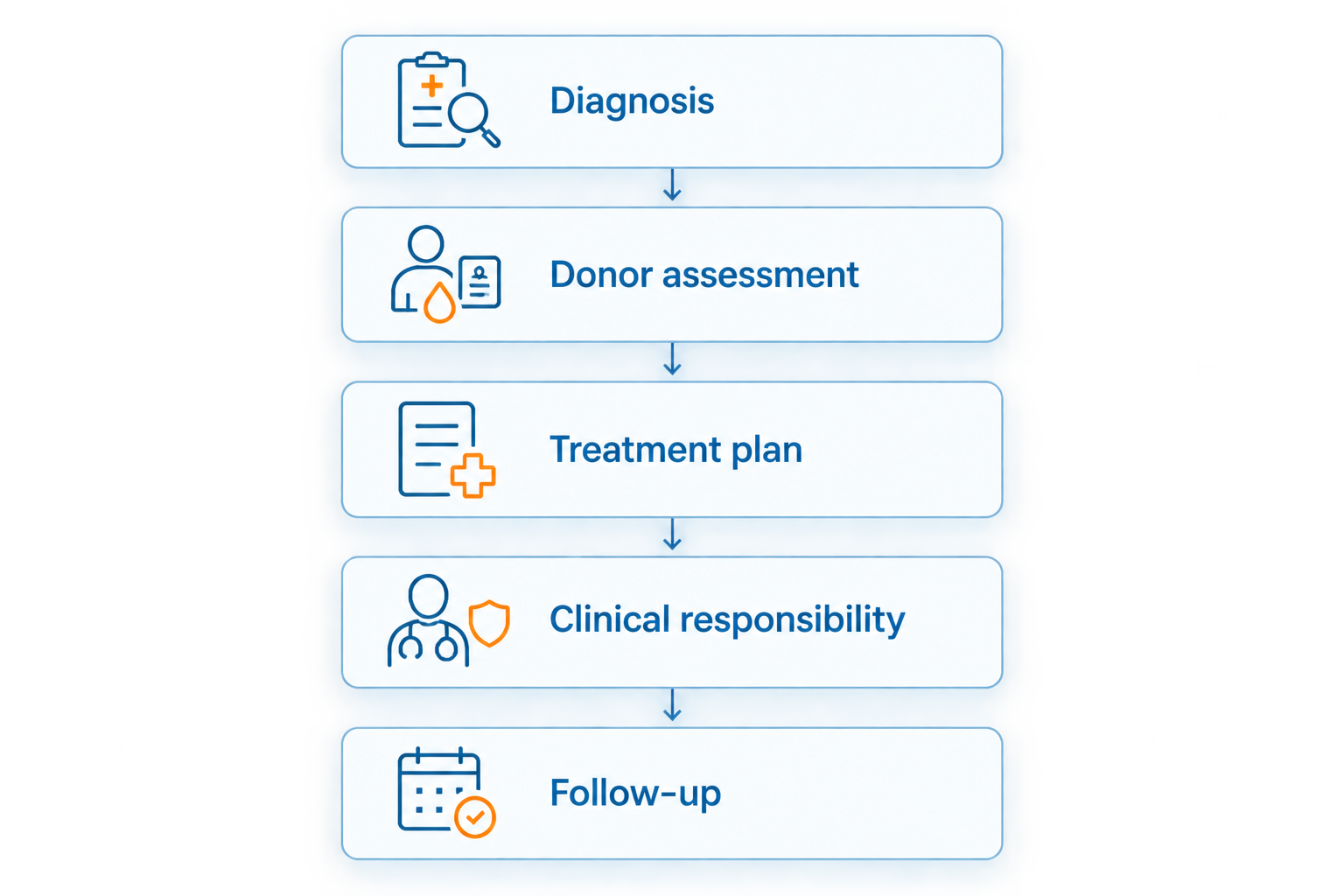
Use the same questions at every clinic. Comparable answers are more useful than collecting different procedure names or promotional packages.
- Diagnosis: What explains the hair loss, and does anything need investigation first?
- Donor assessment: What limits coverage, and how will the donor area be protected?
- Treatment plan: Why is surgery, medication or adjunctive care appropriate?
- Clinical responsibility: Who performs each stage and manages complications?
- Follow-up: How will healing, response and continuing hair loss be reviewed?
A written plan should connect these points. If the explanation moves straight from photographs to a procedure recommendation, ask for the clinical reasoning before making your decision.
When staying with DHI India is the right call
Staying with DHI India is reasonable when the assessing clinician explains your diagnosis, demonstrates a suitable donor plan and gives you clear information about the proposed surgery and follow-up. A second opinion does not create an obligation to switch.
Change providers to obtain a better-supported treatment plan, not simply a different acronym. If your current consultation answers the important clinical questions, another implantation label is not, by itself, a reason to move.
FAQ
What’s the best DHI India alternative in 2026?
iGraft is an alternative for patients comparing surgical and non-surgical hair restoration in Hyderabad, Pune, Bangalore and Vijayawada. The right provider still depends on your diagnosis, donor assessment and the proposed clinician-led plan.
Is FUE better than DHI?
FUE and direct implantation describe different stages of transplantation, so neither label alone establishes a better procedure. Compare extraction, placement, donor protection and the people performing each stage.
Should I see a dermatologist before choosing a transplant clinic?
Yes, seek a diagnostic medical assessment when the cause of your hair loss is unclear. Recent shedding, scalp symptoms or an uncertain diagnosis should be assessed before committing to surgery.
Can PRP or GFC replace a hair transplant?
PRP and GFC do not replace transplanted follicles because they do not move donor hair into a new area. Discuss whether an injection-based treatment has a role in managing your diagnosed condition.
What should I ask about the surgeon?
Ask who will assess you, design the hairline, perform extraction and placement, and manage postoperative concerns. Request the operating clinician’s credentials and clear responsibility for each stage.
How do I compare hair-transplant quotations?
Compare the clinical scope and responsibilities, not just the total. Ask what the proposal includes, what requires separate payment and how follow-up and complications are handled.
What should overseas patients check before travelling?
Confirm which assessments and follow-up visits require your physical presence before arranging travel. Ask how postoperative concerns will be managed after you return home and who will coordinate further care.
One last thing
Ask what the clinician recommends not treating. A useful consultation identifies limits as well as possibilities: an area to leave alone, a hairline to keep conservative or a procedure to defer.
For your 2026 decision, choose the plan that explains those boundaries clearly. Natural-looking hairlines depend on appropriate planning, not on selecting the most impressive procedure name.
Related guides
- Hair transplant clinics in Pune: how to choose a surgeon
- Hair transplant techniques ranked by sessions required
- Non-surgical hair treatments ranked by sessions