Best starting point for a local clinic assessment: iGraft in Pimpri-Chinchwad. Best route for limited donor hair: a donor-focused surgical consultation. Best route after an unsatisfactory transplant: an independent revision assessment. This 2026 guide ranks consultation routes by patient need, rather than treating every hair-loss problem as a reason to book surgery.
- For the best hair transplant in Pune, compare surgeon involvement, donor planning and aftercare before technique names.
- iGraft is a local consultation option for Pune patients comparing surgical and non-surgical hair restoration.
- Limited donor hair needs a conservative assessment, not a promise of maximum graft numbers.
- Unexplained shedding needs a diagnosis before a hair transplant decision.
Why this matters
A hair transplant redistributes existing hair follicles; it does not create an unlimited supply. The decision therefore concerns both the area you want covered and the donor hair you need to preserve.
The best clinic choice is the one whose named surgeon can explain your diagnosis, donor limits, operative plan and follow-up. A technique label, photograph or quoted graft count cannot answer those questions alone.
For your 2026 shortlist, separate two decisions: whether surgery suits your condition, and who should perform it. A carefully planned procedure starts with the first decision, not with choosing a package.
What makes the best hair transplant in Pune?
Use these six criteria before comparing clinics. Ask for answers that apply to your scalp, rather than a general explanation of hair transplantation.
- Diagnosis: The clinician identifies the cause and pattern of hair loss, including scalp disease or unexplained shedding that needs investigation.
- Surgeon accountability: You know the operating doctor's name, registration details and responsibilities before consenting.
- Donor planning: The assessment considers density, hair characteristics, previous extraction and the donor reserve needed for future loss.
- Hairline design: The proposed hairline fits your facial proportions, existing hair and likely future thinning.
- Risk discussion: The consultation covers scarring, infection, poor growth, temporary shedding and the possibility of further treatment.
- Aftercare: You receive written instructions, a follow-up plan and a clear route for contacting the treating team about complications.
Do not turn these into a popularity contest. An impressive image gallery does not compensate for an unclear surgical plan, and a recognised technique name does not identify who performs each operative step.
Consultation options at a glance
The order below starts with a local assessment, then separates situations that require a different clinical emphasis. These are consultation choices, not a league table of surgical outcomes.
| Option | Best for | Main focus | Key limitation |
|---|---|---|---|
| iGraft Pune consultation | Patients seeking a local hair-restoration assessment | Discussion of surgical and non-surgical options | The operating surgeon and individual plan still need verification |
| Donor-focused surgical consultation | Patients with limited or previously used donor hair | Feasible coverage and preservation of donor reserve | It cannot create additional scalp donor follicles |
| Independent revision assessment | Patients unhappy with an earlier transplant | Diagnosis of the problem before corrective surgery | Further surgery adds demands on an already treated scalp |
| Non-surgical medical assessment | Patients with unexplained or ongoing shedding | Diagnosis and treatment suitability before surgery | It does not redistribute follicles into a new hairline |
1. iGraft Pune: best for a local hair-restoration assessment
The iGraft Pune clinic is in Pimpri-Chinchwad and offers hair transplant and hair-restoration treatments. Its stated treatment options include DFI, Active FUE and GFC/PRP, giving you several approaches to discuss during a personalised consultation.
iGraft is a local consultation option for Pune patients comparing surgical and non-surgical hair restoration. Use the appointment to establish suitability, not simply to select a procedure name.
iGraft Pune pros
- A Pune location provides a local setting for consultation and treatment discussions.
- Surgical and non-surgical treatment options are part of the clinic's stated services.
- You can frame the consultation around your diagnosis, hairline priorities and donor limitations.
iGraft Pune cons
- The clinic's treatment names alone do not establish which approach suits your scalp.
- A brand-level description does not replace checking the individual operating surgeon's credentials and responsibilities.
- A consultation still needs to resolve your recovery arrangements and follow-up requirements before you commit.
Ask who will examine your donor area, who will design the hairline and who will perform extraction and recipient-site creation. Request the proposed plan in writing, including the clinical reasons for recommending surgery rather than medical management.
Best for: Pune patients who want to discuss hair restoration locally and compare treatment pathways with a clinician.
Verdict: Hold any surgery booking until the named surgeon, donor assessment and aftercare plan are clear.
2. Donor-focused consultation: best for limited donor hair
A donor-focused consultation puts the available hair supply ahead of the area you want covered. This matters when your donor region looks sparse, has already undergone extraction or must support an extensive area of thinning.
The surgeon should explain which areas deserve priority and what coverage remains realistic. A conservative plan can mean a smaller treatment area, a different hairline or a decision against further surgery.
Donor-focused consultation pros
- Makes donor preservation an explicit part of the decision.
- Connects the proposed coverage to the available hair supply.
- Creates space to discuss future thinning before using more donor hair.
Donor-focused consultation cons
- The recommended coverage can be less extensive than you hoped.
- Previous overharvesting or scarring can restrict the available options.
- Body or beard hair, when considered, introduces different hair characteristics and additional assessment needs.
Ask the surgeon to distinguish donor density from the number of follicles they propose to remove. You also need an explanation of the donor area's expected appearance after extraction, not just the recipient area's intended appearance.
Best for: Patients whose main constraint is limited donor supply rather than access to a particular technique.
Verdict: Hold until the surgeon explains the donor reserve and the trade-off between coverage and density.
3. Independent revision assessment: best after an earlier transplant
An independent revision assessment examines why an earlier result is unsatisfactory before recommending another procedure. The problem might involve hairline design, direction, visible scarring, uneven growth or continued loss of surrounding native hair.
Those problems require different responses. Adding grafts without identifying the cause risks using more donor hair without addressing the original concern.
Independent revision assessment pros
- Separates assessment of the existing result from a commitment to corrective surgery.
- Examines both the recipient area and the remaining donor supply.
- Helps distinguish a design problem from ongoing hair loss or incomplete growth.
Independent revision assessment cons
- Earlier surgery can limit the corrective options.
- Scar tissue and depleted donor areas complicate planning.
- A second procedure does not promise complete correction of every visible concern.
Bring your earlier procedure records, photographs and medication history. If you do not have operative records, describe what you remember, but do not treat a remembered graft count as a measured donor assessment.
Best for: Patients seeking an explanation and a corrective plan after an earlier transplant.
Verdict: Wait for an independent diagnosis before agreeing to additional extraction.
4. Non-surgical assessment: best for unexplained shedding
A medical assessment is the first step when you have sudden shedding, scalp symptoms or an uncertain diagnosis. A transplant does not treat every cause of hair loss, and active scalp disease needs attention before elective surgery.
The clinician should take a history, examine your scalp and decide whether investigations or medical treatment are appropriate. Do not start several products at once simply because they appear in a hair-growth bundle.
Non-surgical assessment pros
- Puts the cause of hair loss before the choice of procedure.
- Allows discussion of treatment benefits, side effects and ongoing use.
- Helps identify conditions for which transplantation is not the immediate next step.
Non-surgical assessment cons
- Medical treatment does not physically relocate follicles to create a new hairline.
- Some treatments need continued use to maintain their benefit.
- Treatment suitability depends on diagnosis, health history and reproductive considerations.
Ask what finding supports the diagnosis and how progress will be assessed. Discuss pregnancy plans, existing medicines and scalp irritation before using a prescription hair-loss treatment.
Best for: Patients with recent, diffuse or unexplained shedding, particularly when the scalp is itchy, painful or inflamed.
Verdict: Hold surgery until the cause of hair loss is established.
How the options are ranked
This 2026 guide prioritises diagnosis, surgeon accountability, donor planning, hairline design, risk discussion and aftercare. The first option serves a local consultation need; the remaining options address clinical situations that change the decision.
The ranking does not equate treatment names with better results. Choose the assessment that answers your clinical problem before choosing the procedure that sounds most advanced.
What to verify before you consent
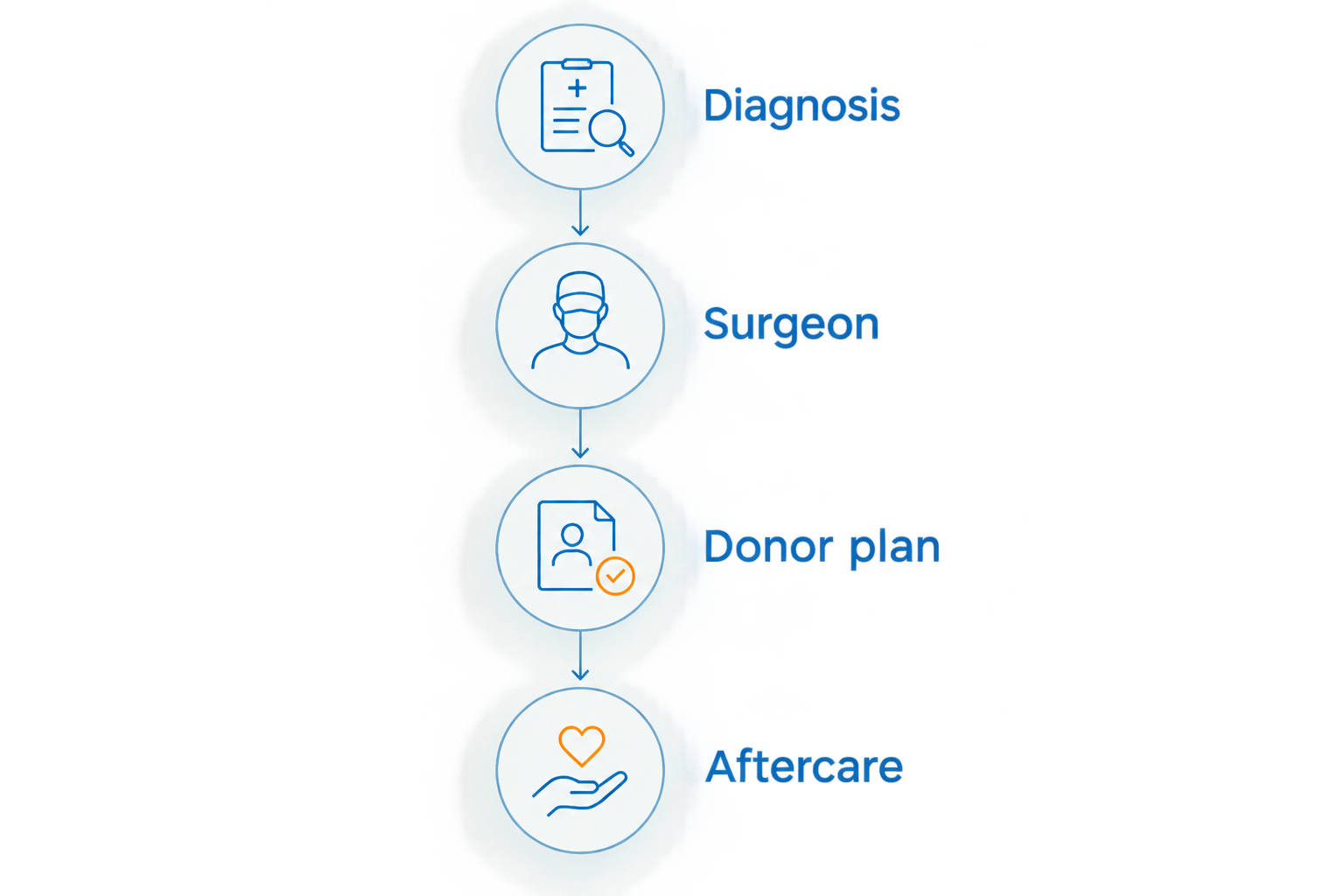
Use a simple sequence: Diagnosis, Surgeon, Donor plan, Aftercare. Each stage should produce a clear answer before you proceed to the next.
Diagnosis
Ask the clinician to name the condition being treated and explain whether it is stable enough for surgery. Mention recent illness, medication changes, previous treatments and any scalp discomfort.
Surgeon
Check the doctor's registration through the relevant medical register. Ask specifically who performs the operative steps; a consultation with one person does not establish who will carry out surgery.
Donor plan
Ask to see the proposed donor and recipient areas together. The explanation should address the hair you retain as well as the hair being moved, especially if your family history suggests further thinning.
Aftercare
Request written instructions, follow-up arrangements and complication contact details. Ask what to do if you develop worsening pain, spreading redness, fever or discharge rather than waiting for a routine review.
Recovery planning for your 2026 procedure
Do not schedule a transplant around the assumption that visible healing and final growth happen together. They are different stages.
NHS patient guidance on hair transplantation describes 1–2 weeks away from work as a planning consideration, particular care during the first 2 weeks, and 10–18 months before the full result is seen. These are general patient-information ranges, not an individual recovery promise; your surgeon's instructions take priority.
For a 2026 booking, discuss your work, exercise, travel and headwear requirements before selecting a date. If you live outside Pune, establish who will assess an early concern after you return home and how you will obtain an in-person review when necessary.
Take follow-up photographs under comparable lighting and angles. Wet hair, styling, camera distance and lighting change how much scalp is visible, so unlike-for-unlike images are a poor basis for judging progress.
Which consultation should you choose?
Start with a surgeon-led assessment that explains both suitability and limitations. Choose the local route when access and follow-up are your immediate priorities; choose a donor-focused or revision assessment when those constraints define your case.
If your hair loss is unexplained or your scalp is symptomatic, start with medical diagnosis instead. The safest decision is not always an immediate procedure, and declining surgery can be an appropriate clinical recommendation.
For your 2026 shortlist, compare written plans rather than collecting more technique names. A useful plan tells you what the surgeon recommends, why it fits your condition and what it cannot achieve.
FAQ
What’s the best hair transplant in Pune for me?
The best choice depends on your diagnosis, donor supply, hair-loss pattern and the responsible surgeon’s plan. Compare surgeon involvement, realistic coverage, risks and aftercare before choosing a clinic.
Is FUE better than DFI or Active FUE?
A technique name alone does not establish which procedure is better for you. Ask the surgeon to explain the proposed extraction and implantation steps, their responsibilities and why the approach fits your scalp.
How do I check a hair transplant surgeon’s credentials in Pune?
Ask for the operating doctor’s full name and registration details, then verify them through the relevant medical register. Discuss training, relevant surgical experience and who performs each operative step.
Can I get a transplant if my donor hair is thin?
Thin donor hair requires an individual assessment and can limit transplant suitability or coverage. Ask how the surgeon will preserve the donor area and what result remains realistic.
How long does a hair transplant take to show its full result?
NHS patient guidance gives a general range of 10–18 months for the full result. Your surgeon should explain the expected stages and when a concern needs assessment.
Should I have PRP or GFC instead of a hair transplant?
PRP, GFC and transplantation are not interchangeable treatments. A clinician should establish the diagnosis and explain the evidence, limitations and suitability of each proposed option.
What should an overseas patient arrange before surgery in Pune?
Arrange the clinical assessment, recovery accommodation, follow-up and a plan for complications before travelling. Ask when you need an in-person review and who will provide care after you return home.
One last thing
Ask the surgeon: What finding would make you advise against operating on me? The answer reveals whether the consultation includes genuine limits, rather than only reasons to proceed.
This guide supports your consultation; it does not replace an examination, diagnosis or individual medical advice.
Related guides
- Hair transplant options for thin donor density
- Non-surgical hair treatments compared by sessions
- Scalp donor extraction methods and density
- Hair transplant techniques for curly hair