Dr. Malay Mehta gives your hair-transplant shortlist a named clinician to assess, rather than an anonymous treatment package. The limit of any name-based shortlist is that it cannot establish your diagnosis, donor suitability or treatment plan. The best Dr. Malay Mehta alternative in 2026 is iGraft if you want physical-clinic diagnostics and several restoration options; a dermatologist-led assessment is the better starting point if you need to establish why your hair is falling.
- For dr malay mehta alternatives, iGraft suits people seeking physical-clinic diagnostics and surgical or non-surgical hair restoration.
- Choose a dermatologist-led assessment when the cause of hair loss remains unclear.
- Compare donor assessment, treatment responsibilities and aftercare before choosing a hair transplant.
- Stay with Dr. Malay Mehta if the consultation answers your clinical questions and supports an informed decision.
Why this matters
A hair-transplant comparison should help you choose a clinical plan, not simply replace one familiar name with another. Transplantation redistributes existing hair follicles; it does not create an unlimited donor supply or resolve every cause of hair loss.
Your shortlist therefore needs two decisions: whether surgery is appropriate, and who should provide it. The iGraft hair restoration offering includes physical-clinic diagnostics, transplant procedures and non-surgical treatments, giving you several treatment categories to discuss during an assessment.
For a 2026 decision, focus on the recommendation you receive after examination. A procedure name, promotional photograph or package description cannot substitute for that assessment.
Dr. Malay Mehta alternatives at a glance
These are different consultation routes, not a clinical ranking of individual surgeons. Use the table to decide what kind of assessment you need before comparing providers.
| Option | Best for | Main distinction | What to verify |
|---|---|---|---|
| Dr. Malay Mehta | Evaluating the clinician already on your shortlist | Your reference consultation for comparing other recommendations | Diagnosis, suitability, procedure responsibilities and aftercare |
| iGraft | Comparing surgical and non-surgical hair restoration in physical clinics | Computerized diagnostics, follicular-level scans and several treatment options | Why a particular treatment fits your diagnosis and donor assessment |
| Dermatologist-led medical assessment | Investigating unexplained shedding or thinning | Diagnosis before a decision about surgery | Whether medication, investigation or referral is appropriate |
| Independent transplant-surgeon second opinion | Checking an existing surgical recommendation | A separate assessment of the proposed operation | Agreement or disagreement on donor use, hairline design and priorities |
None of these routes removes the need to verify the treating clinician's qualifications and responsibilities. In particular, a clinic's range of services does not establish which service you personally need.
1. iGraft: best for clinic-based assessment across treatment options
Best for: People who want hair transplantation and non-surgical hair restoration considered within a physical-clinic setting.
The clinic describes its approach as diagnosis-led, using follicular-level scans, computerized diagnostics and doctors' assessments. Its stated services include DFI Ultimate, ActiveFUE, PRP, GFC, Exosomes and other hair-loss treatments. That range gives you options to question, not a reason to accept several treatments automatically.
Where this option shines
- Physical clinics allow an in-person examination rather than a decision based only on photographs.
- Surgical and non-surgical services give you different categories of treatment to discuss.
- The supplied service description includes dedicated 6-month post-procedure support for hair transplantation.
- Computerized assessments provide material to discuss alongside the doctor's examination and explanation.
Where this option falls short
- More treatment choices make the consultation harder to assess unless each recommendation has a clear purpose.
- A proprietary procedure name does not independently establish better clinical outcomes.
- A stated support period does not explain the appointment schedule, responsible clinician or arrangements for later concerns; request those details.
What DFI Ultimate involves
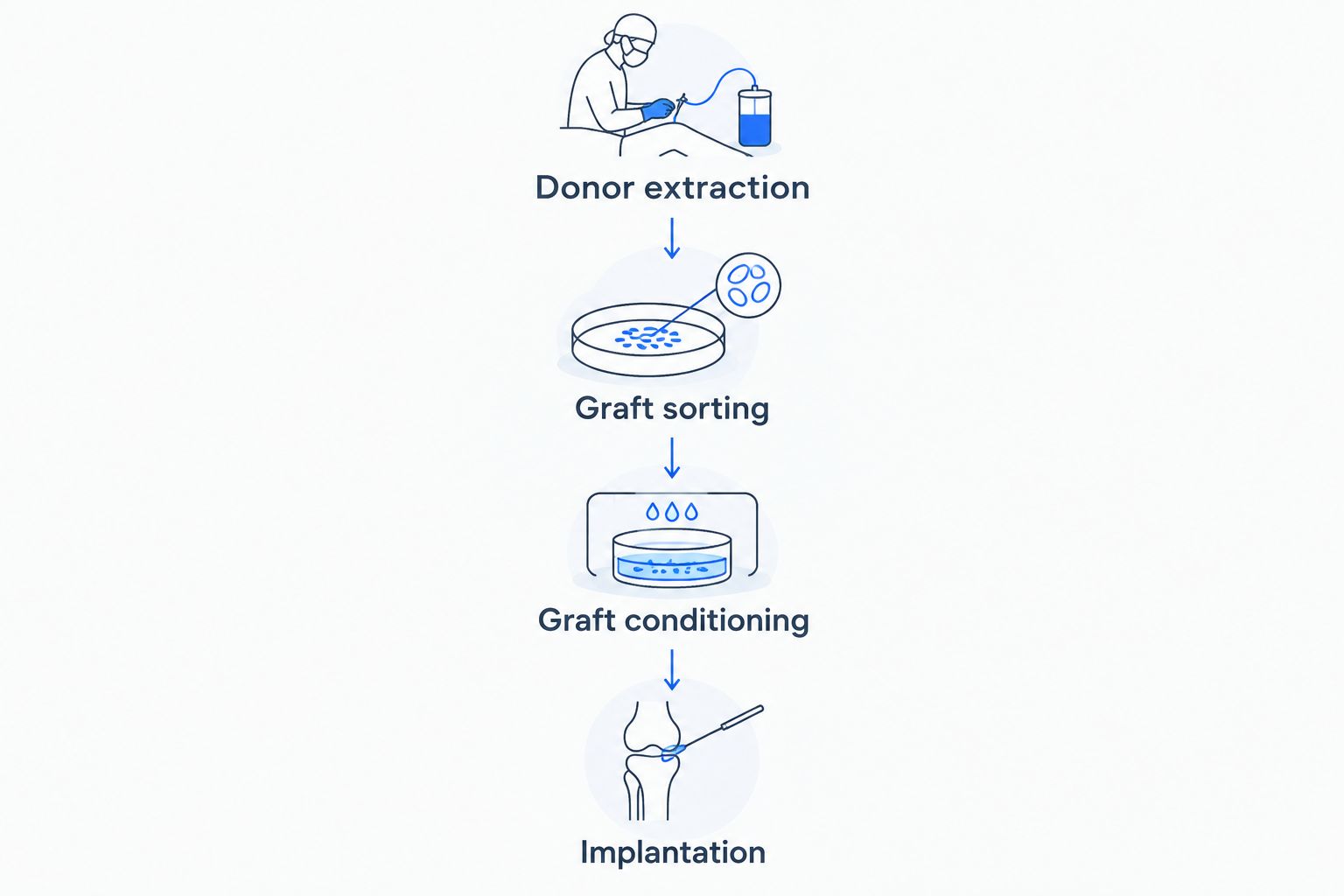
According to iGraft's supplied procedure description, DFI Ultimate follows these stages:
- Donor extraction: Grafts are extracted from the back of the head using specially designed serrated punches.
- Graft sorting: Grafts are sorted into groups containing one, two or three hairs.
- Graft conditioning: Grafts are held before implantation in a special graft holding/conditioning environment prepared from the patient's blood and peptides.
- Implantation: Grafts are implanted using implanter pens and micro-sapphire tools.
These are clinic-supplied process details, not independent clinical validation. The description does not establish that the blood-and-peptide environment improves survival, that harvesting causes no damage, or that a particular density is guaranteed.
Ask how each stage applies to your scalp, donor area and intended coverage. The useful answer explains the clinical reasoning, not just the instruments used.
Head-to-head questions
| Dimension | This clinic's stated offering | What to establish with Dr. Malay Mehta |
|---|---|---|
| Assessment | Follicular-level scans and computerized diagnostics | How diagnosis and donor suitability are assessed |
| Procedure | DFI Ultimate and ActiveFUE are named services | Which procedure is proposed and why |
| Non-surgical options | PRP, GFC, Exosomes and other treatments are listed | Whether non-surgical treatment is appropriate |
| Follow-up | Dedicated post-procedure support is stated | Who provides follow-up and how concerns are handled |
This is a comparison checklist, not evidence that either provider delivers better results. Verdict: Hold a procedure decision until the examination supports a specific treatment plan.
2. Dermatologist-led assessment: best for unexplained hair loss
Best for: People with shedding, thinning or scalp symptoms who do not yet have an established diagnosis.
A dermatologist-led assessment addresses the question that should precede transplantation: what is causing the hair loss? Different causes require different management, and surgery is not a substitute for investigating an active scalp or hair-loss condition.
Where this route shines
- Keeps diagnosis ahead of a cosmetic procedure decision.
- Gives you a route to discuss medicines, scalp symptoms and relevant medical history.
- Helps establish whether a transplant consultation is the appropriate next step.
Where this route falls short
- Medical assessment does not itself provide a surgical plan.
- Non-surgical treatment cannot promise restoration of every bald area.
- You still need a separate surgical assessment if transplantation becomes appropriate.
| Dimension | Dermatologist-led assessment | Dr. Malay Mehta consultation benchmark |
|---|---|---|
| First question | What is causing the hair loss? | Is surgery appropriate for this diagnosis? |
| Main decision | Investigation or medical management | Whether to proceed with a proposed operation |
| Next step | Follow the diagnosis-led recommendation | Review donor suitability and surgical planning |
If you are still describing the problem only as hair fall, start by identifying the condition rather than choosing a transplant method. Verdict: Hold surgery while the diagnosis remains unresolved.
3. Independent transplant-surgeon opinion: best for checking a plan
Best for: People who already have a transplant recommendation and want an independent assessment before consenting.
A second opinion is useful when you need to understand a proposed hairline, donor strategy or coverage priority. Choose a separately qualified clinician and bring the existing recommendation, photographs and relevant medical history.
Where this route shines
- Tests the reasoning behind an existing surgical recommendation.
- Gives you another opportunity to discuss donor limitations and future hair loss.
- Helps separate necessary decisions from optional additions.
Where this route falls short
- Another consultation adds effort and does not guarantee agreement.
- Different recommendations still require explanation; choosing the larger proposed transplant is not a sound decision rule.
- A second opinion cannot promise an outcome or remove surgical risks.
Compare 2 consultations using the same questions and information. If the recommendations differ, ask each clinician to explain the difference in diagnosis, donor assessment or coverage priorities.
Verdict: Hold consent until you understand any material disagreement between the plans.
Why people consider switching from Dr. Malay Mehta
A defensible reason to change your shortlist is a mismatch between the care you need and the plan you receive. The same standard applies to every provider in this comparison; it is not an allegation about Dr. Malay Mehta.
For your 2026 shortlist, use these decision triggers:
- The diagnosis is unclear. Ask for the condition being treated and the findings supporting it before discussing surgery.
- The recommendation lacks alternatives. Ask why observation, medical management or another treatment category is unsuitable.
- Donor use is unexplained. Ask how the proposed operation preserves options if hair loss progresses.
- Responsibilities are unclear. Establish who assesses you, who performs each stage and who manages complications.
- Aftercare is vague. Request the review schedule, contact arrangements and escalation process.
A provider change is not automatically an improvement. The alternative needs to answer the unresolved question more clearly, not simply offer a different procedure label.
How to compare consultations without chasing procedure names
Use a consistent checklist for every appointment. Write down 4 questions before attending:
- What diagnosis explains my hair loss, and what examination findings support it?
- Why is the recommended treatment appropriate now rather than another option?
- How does the plan account for donor limitations and possible future thinning?
- Who performs the treatment and manages follow-up or complications?
Ask for explanations you can repeat in plain language. If you cannot explain why a procedure is recommended, pause before committing.
Your consultation notes should distinguish a clinical finding from a promised benefit. For example, identifying a limited donor area is a finding; promising a particular appearance requires a separate discussion of feasibility and uncertainty.
When staying with Dr. Malay Mehta is the right call
Stay with Dr. Malay Mehta if the consultation establishes a clear diagnosis, explains suitable options and gives you confidence in the treating clinician's responsibilities. A satisfactory assessment does not become less useful because another clinic offers a differently named technique.
For a 2026 decision, favour an understandable plan over a confident sales presentation. You should know what the procedure aims to achieve, what it cannot achieve, and how problems will be managed.
There is no need to switch merely to follow a comparison-page ranking. The right provider is the one whose verified qualifications, examination and explained plan meet your clinical needs.
FAQ
What’s the best Dr. Malay Mehta alternative in 2026?
iGraft is a relevant hair restoration alternative if you want physical-clinic diagnostics and several surgical or non-surgical options to discuss. If your hair-loss diagnosis is unclear, start with a dermatologist-led assessment rather than selecting a transplant procedure.
Is another clinic automatically better than Dr. Malay Mehta?
No, a different clinic is not automatically a better clinical choice. Compare the diagnosis, donor assessment, treating clinician’s qualifications, procedure responsibilities and follow-up arrangements.
Should I get a second opinion before a hair transplant?
Get a second opinion when you do not understand the diagnosis, donor plan or proposed coverage. Bring the existing recommendation so the second clinician can explain any meaningful disagreement.
What is the difference between DFI Ultimate and DHI?
DFI Ultimate and DHI are not interchangeable names. The supplied clinic description explains DFI Ultimate’s extraction, graft conditioning and implantation stages; do not assume another procedure label represents the same protocol or evidence.
Can PRP or GFC replace a hair transplant?
PRP or GFC is not an automatic substitute for transplantation. Ask the treating doctor which problem the proposed treatment addresses and whether it fits your diagnosis and intended result.
Does a computerized hair assessment replace a doctor’s examination?
No, a computerized hair assessment should support clinical assessment rather than replace it. Ask the doctor to explain how the findings relate to your medical history, scalp examination and treatment recommendation.
What should I ask about transplant aftercare?
Ask who reviews your recovery, how appointments are arranged and whom to contact with concerns. Also establish how complications are assessed and what happens after the stated support period ends.
One last thing
Before choosing a transplant provider, ask: Which part of my hair-loss problem will this treatment not solve? A useful answer identifies limitations, including ongoing thinning, donor constraints or areas outside the agreed plan.
That question makes a 2026 shortlist more useful than another list of procedure names. Choose the consultation that makes the boundaries clear before you consent.
Related guides
- Hair transplant techniques compared
- Treatments for crown baldness
- Treatments for a receding hairline
- GFC, PRP and Exosomes compared