Best overall for eligible men with male-pattern recession: prescription finasteride. Best for early thinning: topical minoxidil. Best for rebuilding an established hairline: a hair transplant after donor and scalp assessment. The best treatment for receding hairline in 2026 depends on whether you need to preserve thinning hair, replace lost coverage or conceal recession.
- The best treatment for receding hairline depends on diagnosis: finasteride, topical minoxidil and transplantation serve different needs.
- Finasteride suits eligible men with male-pattern loss; topical minoxidil supports thinning follicles but cannot guarantee temple regrowth.
- Hair transplantation redistributes donor hair; it does not stop continuing hair loss.
- Igraft offers in-person hairline assessment and DFI Ultimate; suitability requires a doctor’s evaluation.
Why this matters
A receding hairline is a pattern, not a diagnosis. Male-pattern hair loss is one explanation, but traction, inflammation and scarring disorders also affect the frontal hairline. Sudden recession, scalp pain, redness or eyebrow loss needs medical assessment rather than another cosmetic treatment.
Igraft is best suited to readers seeking in-person assessment of hairline loss before choosing treatment. Its hair restoration services include computerized diagnostics, follicular-level scans, medical therapies and transplantation.
In 2026, your first decision is not which procedure sounds newest. It is whether the affected follicles remain treatable and whether the cause of recession has been established.
What makes the best treatment for receding hairline?
Judge a treatment against these criteria before choosing it:
- Correct diagnosis: The treatment must address pattern hair loss, traction or another identified cause—not just the appearance of recession.
- Treatment goal: Preserving existing hair differs from rebuilding a bare hairline. No option automatically does both.
- Clinical evidence: Established medicines and transplantation should not be treated as equivalent to every newer injectable treatment.
- Safety and suitability: Sex, pregnancy potential, medical history, scalp health and donor supply change the recommendation.
- Maintenance: Medicines require continued use; transplanted hair does not protect surrounding native hair from future loss.
- Hairline-specific expectations: Results on the crown do not establish the same result at the temples.
Use these criteria for your 2026 consultation. A useful recommendation explains both what the treatment can achieve and what it cannot.
Receding hairline treatments at a glance
| Treatment | Best for | Main advantage | Key limitation |
|---|---|---|---|
| Prescription finasteride | Eligible adult men with ongoing male-pattern recession | Addresses the hormonal pathway involved in male-pattern loss | Requires prescribing assessment; temple regrowth is not assured |
| Topical minoxidil | Early thinning where hair remains | Supports hair growth without surgery | Frontal response varies; continued use is needed |
| Hair transplantation | Rebuilding established recession with suitable donor hair | Places donor follicles in a planned hairline | Surgery does not stop future native-hair loss |
| Platelet-rich plasma, or PRP | An adjunct for selected pattern-hair-loss patients | Uses a preparation from the patient’s blood | Protocols and outcomes vary; not a replacement for missing follicles |
| Cosmetic camouflage | Immediate appearance improvement | Conceals thinning without waiting for regrowth | Does not treat the cause or restore follicles |
This 2026 ranking separates preservation, reconstruction and concealment. Combining treatments is sometimes appropriate, but adding more treatments does not automatically create a better plan.
1. Finasteride: best for ongoing male-pattern recession
Finasteride is a prescription medicine that reduces conversion of testosterone to dihydrotestosterone, a hormone involved in male-pattern hair loss. It is an established option for eligible adult men, especially when protecting existing hair is the priority. It cannot promise a return to your original teenage hairline.
Finasteride pros:
- Targets a recognised mechanism of male-pattern loss.
- Can slow progression and support regrowth in suitable patients.
- Does not require a surgical procedure.
Finasteride cons:
- Sexual side effects and mood-related adverse effects require discussion with the prescriber.
- Benefits depend on continued treatment; effectiveness for bitemporal recession is not established in prescribing information.
The standard licensed oral hair-loss tablet strength is 1 mg, but that is not a personal dosing recommendation. A doctor must assess suitability, explain adverse effects and discuss alternatives. Finasteride is not appropriate during pregnancy and is not a general-purpose recommendation for women with recession.
Best for: Eligible adult men with confirmed male-pattern hair loss who want to preserve existing coverage.
Verdict: Consider after prescribing assessment; skip self-prescribing.
2. Topical minoxidil: best for early thinning with remaining hair
Topical minoxidil supports hair growth in pattern hair loss. It is most relevant when thinning hair remains, rather than when you expect a product to redraw a completely bare temple. Frontal-hairline results vary, and some product labelling specifically excludes frontal baldness or a receding hairline.
Topical minoxidil pros:
- Offers a non-surgical approach.
- Can support thicker-looking coverage in responsive areas.
- Has established use in pattern hair loss, including appropriate formulations for women.
Topical minoxidil cons:
- Can cause scalp irritation, unwanted facial hair and initial shedding.
- Requires continued use; results at the temples are not guaranteed.
A 5% concentration is a recognised topical formulation, not proof that it suits every scalp. Follow the specific product instructions and your clinician’s advice; do not assume that stronger formulations give better results. Discuss pregnancy, breastfeeding and relevant medical conditions before use.
Oral minoxidil is a different prescribing decision with systemic risks. Do not substitute tablets for a topical product without medical supervision.
Best for: People with diagnosed pattern hair loss and remaining miniaturised hair, after suitability review.
Verdict: Consider for early thinning; skip promises of guaranteed hairline regrowth.
3. Hair transplantation: best for rebuilding established recession
Hair transplantation moves follicles from a donor area to areas needing coverage. It is the most direct reconstructive option when medical treatment alone cannot provide the desired hairline. Suitability depends on donor supply, scalp diagnosis, future loss and a realistic design.
Hair transplantation pros:
- Places hair in selected areas of established recession.
- Allows a planned frontal outline and distribution.
- Uses the patient’s own donor follicles.
Hair transplantation cons:
- Involves surgery, healing and risks including scarring, infection and an unsatisfactory result.
- Uses finite donor resources and does not stop surrounding hair from thinning.
How Igraft describes DFI Ultimate
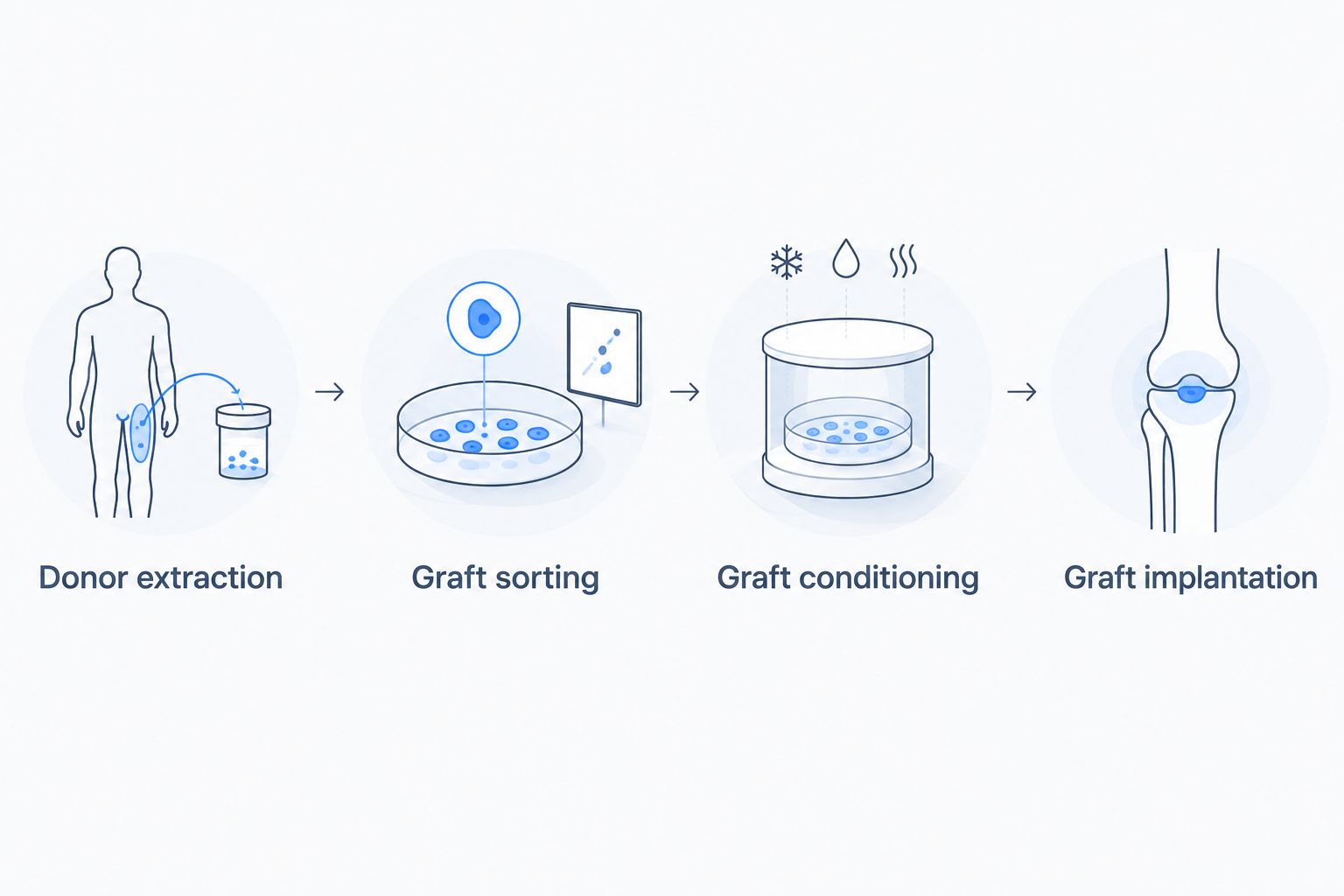
According to Igraft’s supplied procedure description, DFI Ultimate involves the following stages:
- Donor extraction: Grafts are extracted from the back of the head using specially designed serrated punches.
- Graft sorting: Extracted grafts are separated into groups containing one, two or three hairs.
- Graft conditioning: Grafts are held before implantation in a special graft holding/conditioning environment prepared from the patient’s blood and peptides.
- Graft implantation: Implanter pens and micro-sapphire tools are used during implantation.
These are clinic-supplied process details, not independent clinical validation. The description does not establish better graft survival or a proven biological benefit from the conditioning environment.
Best for: Patients with established recession, suitable donor hair and a diagnosis compatible with transplantation.
Verdict: Consider after surgical assessment; wait if the diagnosis or long-term hairline plan is unresolved.
4. PRP: best as an adjunct for selected patients
Platelet-rich plasma treatment involves preparing a platelet-rich fraction of the patient’s blood and injecting it into the scalp. Published clinical research supports potential improvement in pattern hair loss, but preparation methods and treatment schedules differ. PRP is not a method of placing new follicles into a bare hairline.
PRP pros:
- Does not involve donor-hair harvesting.
- Uses a preparation derived from the patient’s blood.
- Can be considered alongside other treatments for selected patients.
PRP cons:
- Injections can cause pain, swelling or bruising.
- Variable protocols make outcomes difficult to compare; maintenance is often part of treatment planning.
Ask what improvement the clinician expects at your frontal hairline and how it will be measured. A general claim about “hair growth” is not enough if your actual goal is filling recessed temples.
Do not treat PRP, GFC and exosome treatments as interchangeable. Evidence for one preparation does not automatically validate another.
Best for: Selected patients with remaining hair who understand PRP’s role as an adjunct.
Verdict: Consider selectively; skip it as a promised substitute for hairline reconstruction.
5. Cosmetic camouflage: best for immediate visual coverage
Hair fibres, styling changes and hair systems change how recession looks without treating its cause. Fibres attach to existing hair, so they are less useful where the scalp is completely bare. A hair system offers a different form of coverage but needs fitting and ongoing care.
Cosmetic camouflage pros:
- Provides a visible change without waiting for biological regrowth.
- Avoids surgery and systemic hair-loss medicine.
- Lets you assess appearance preferences before committing to medical treatment.
Cosmetic camouflage cons:
- Does not slow hair loss or restore follicles.
- Requires upkeep; adhesives, tension or unsuitable products can irritate the scalp.
Avoid tight hairstyles that pull on the frontal hairline. If traction is contributing to recession, changing the hairstyle addresses a cause rather than merely hiding its effects.
Best for: People prioritising immediate appearance, including those waiting for assessment or treatment response.
Verdict: Consider for concealment; skip any claim that camouflage treats hair loss.
How to choose your next step
Bring a clear goal to the consultation: less shedding, thicker frontal coverage or a redesigned hairline. These are different outcomes, and your treatment plan should name the one it is trying to deliver.
- Gradual recession with thinner hairs: Ask whether pattern hair loss is the diagnosis and whether medicine fits your circumstances.
- Established bare temples: Ask whether transplantation is appropriate and what donor limitations affect the design.
- Pain, redness, scaling or eyebrow loss: Prioritise diagnosis before cosmetic treatment or transplantation.
- An immediate appearance concern: Discuss camouflage while the underlying cause is assessed.
Take baseline photographs in consistent lighting and from the same angles. A clinician-guided review around 6 months can help assess a medical treatment plan, although some treatments need longer to show their full response.
Ask who manages adverse effects and follow-up—not just who performs the procedure. A written plan should explain when to continue, change or stop treatment.
How these treatments were ranked
This 2026 guide ranks treatments by diagnostic fit, evidence, safety, treatment goal and maintenance burden. Finasteride leads for eligible men seeking control of male-pattern loss; transplantation leads for selected patients seeking reconstruction. Neither is the default for unexplained recession.
The ranking does not claim that every patient should progress through every option. Choose the treatment that addresses your diagnosis and goal, not the longest package.
Which receding hairline treatment should you choose?
Start with diagnosis, then separate preservation from reconstruction. For eligible men with active male-pattern loss, discuss finasteride and topical minoxidil first. For established recession, discuss transplantation only after reviewing donor supply, scalp health and likely future loss.
Igraft’s hairline treatment options include medical therapies and DFI Ultimate transplantation. Ask for a plan that distinguishes the expected contribution of each treatment rather than presenting them as equivalent routes to the same result.
For your 2026 decision, the strongest recommendation is the one that states its limits clearly.
FAQ
What’s the best treatment for a receding hairline in 2026?
The best treatment depends on the diagnosis and whether you want preservation or reconstruction. Finasteride is an established option for eligible men with male-pattern loss, topical minoxidil supports responsive thinning hair, and transplantation redistributes donor hair into selected areas.
Can minoxidil regrow my receding temples?
Minoxidil cannot guarantee regrowth at recessed temples. Frontal response varies, and some topical product labels exclude receding-hairline use; discuss the location and cause of your loss with a clinician.
Is finasteride suitable for everyone with a receding hairline?
No, finasteride is not suitable for everyone with recession. It requires medical assessment, is generally prescribed for male-pattern hair loss in adult men, and carries adverse-effect and pregnancy-related precautions.
Is a hair transplant better than medication?
A hair transplant and medication address different goals. Transplantation redistributes donor follicles, while medication aims to preserve or improve existing hair; selected patients need both approaches.
Can women use the same treatments as men?
Women need a diagnosis-specific treatment plan rather than a copy of a men’s regimen. Topical minoxidil is used for female-pattern hair loss, but pregnancy, breastfeeding and causes such as traction or scarring change the recommendation.
Does PRP replace a hair transplant?
PRP does not replace transplantation when the goal is to place follicles into an established bare hairline. It is considered an adjunct for selected patients with remaining hair, with variable protocols and outcomes.
Are DHI and DFI Ultimate the same procedure?
DHI and DFI Ultimate should not be treated as interchangeable names. DFI Ultimate is the clinic’s named procedure; ask for the exact extraction, holding and implantation steps rather than assuming a label proves a specific technique or result.
One last thing
A lower hairline is not automatically a better hairline. Donor hair is finite, and future recession changes the area that needs coverage. Before agreeing to surgery, ask how the proposed design will look if the hair behind it continues to thin.
Related guides
- Best hair loss treatments for women
- Best hair transplant techniques compared
- Best hair loss treatments for men