Choose iGraft if you want a hair-transplant assessment that includes its DFI Ultimate procedure and a stated 6-month support period; choose DHI India if its consulting surgeon gives you a better-supported plan for your donor hair, coverage goals and follow-up. The deciding factor in 2026 is the clinical plan you receive, not the procedure name.
- iGraft vs DHI India should turn on diagnosis, donor planning and aftercare—not procedure names.
- iGraft hair transplant services include DFI Ultimate and ActiveFUE, with a stated 6-month post-procedure support period.
- Choose DHI India when its surgeon provides the better-supported individual treatment plan.
- DFI Ultimate and DHI are not interchangeable names; compare the actual proposed procedures.
Why this matters
A hair transplant redistributes existing hair; it does not create an unlimited supply of donor follicles. Your decision therefore needs to protect the donor area as well as address the visible thinning that brought you to the consultation.
Start with the hair-restoration services at iGraft, then request an equally specific assessment from DHI India. Compare the same questions at both appointments: what is causing the loss, whether surgery is appropriate, what coverage is realistic and who manages recovery.
For your 2026 shortlist, a documented diagnosis is more useful than a confident sales presentation. A named technique cannot establish suitability, prove better survival or guarantee the appearance of your result.
At a glance
This comparison separates clinic-supplied information from decisions that require an individual consultation. A conditional recommendation is not a claim that either provider delivers better clinical outcomes.
| Dimension | iGraft | DHI India |
|---|---|---|
| Best for | Patients seeking assessment for its named transplant options and stated support programme | Patients whose consultation produces the better-supported individual plan |
| Standout procedure detail | Clinic describes the extraction, sorting, holding and implantation stages of DFI Ultimate | Request the proposed procedure and its stages in writing |
| Diagnosis | Offers follicular-level scans and computerised hair assessments | Assess the diagnosis and reasoning provided at consultation |
| Donor planning | Judge the proposed extraction and coverage plan against your donor assessment | Prefer this option if its donor-preservation reasoning is stronger |
| Treatment range | Lists transplantation and non-surgical hair-loss treatments | Request the alternatives recommended for your diagnosis |
| Aftercare | States a dedicated 6-month post-procedure support period | Compare the written follow-up and complication-management arrangements |
| Pricing model | States per-graft pricing; request a complete written scope | Request the charging basis, inclusions and follow-up terms |
DFI Ultimate gives you a defined process to question
The clinic supplies a specific description of DFI Ultimate. That gives you concrete consultation questions, but a detailed process description is not independent evidence of better results.
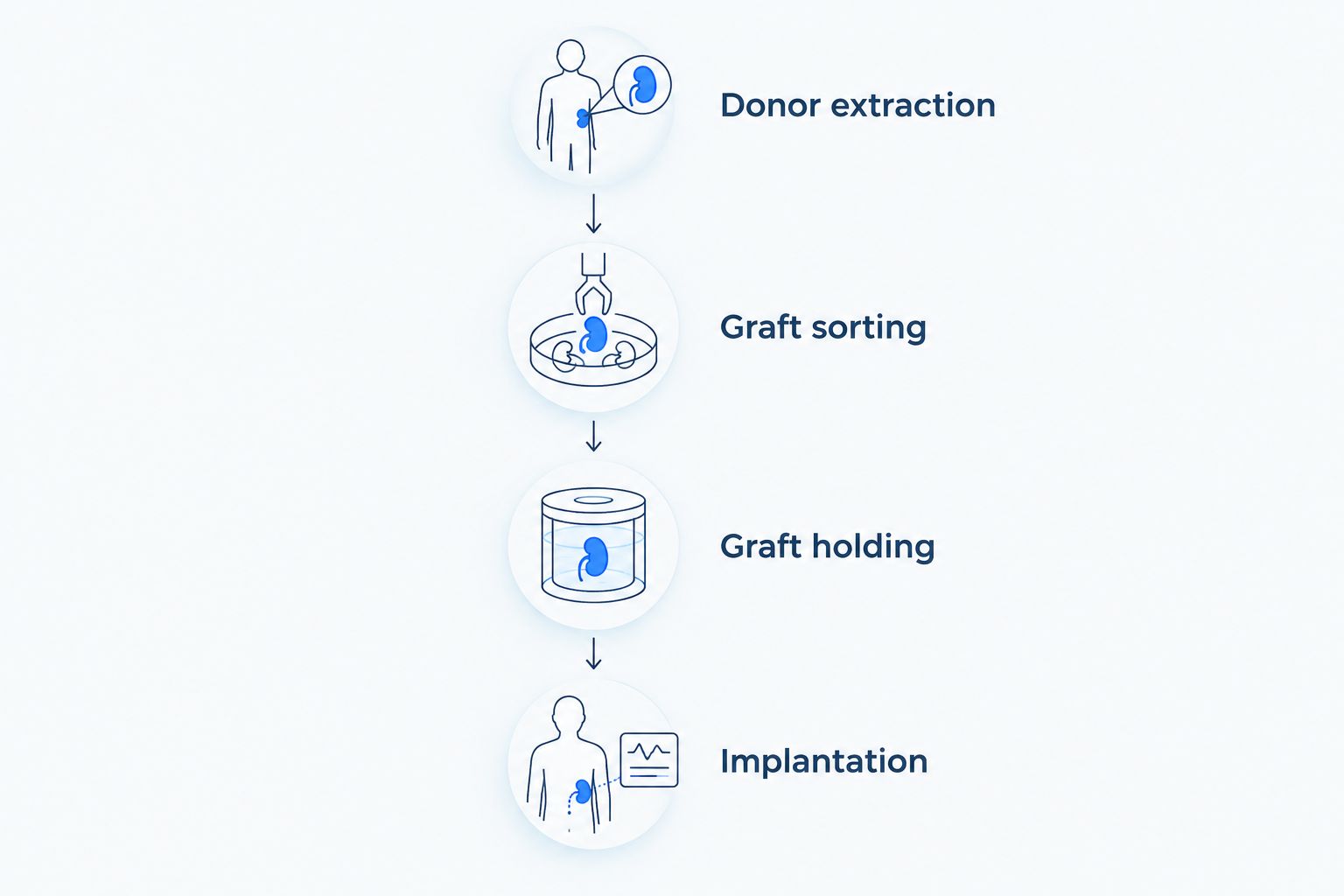
According to the clinic, DFI Ultimate involves these stages:
- Donor extraction: grafts are extracted from the back of the head using specially designed serrated punches.
- Graft sorting: extracted grafts are sorted into groups containing 1 hair, 2 hairs or 3 hairs.
- Graft holding: grafts are held before implantation in a special graft holding/conditioning environment prepared from the patient's blood and peptides.
- Implantation: implanter pens and micro-sapphire tools are used during implantation.
These are clinic-supplied proprietary process details, not independent clinical validation. The blood-and-peptide environment should not be interpreted as proof of improved graft survival or biologically enhanced roots.
Ask why each step is appropriate for your case, who performs it and how the team monitors graft handling. The useful answer connects the process to your assessment rather than repeating a procedure name.
The advantage here is specificity. The limitation is that specificity alone cannot establish superiority over a competing treatment plan.
DHI India wins if its individual plan is better supported
Choose DHI India when its surgeon explains your options more clearly and supports the recommendation with findings from your examination. This is a genuine reason to choose the competitor, even when another clinic provides a more detailed procedure description.
For example, you might arrive wanting extensive coverage but receive different recommendations about what your donor area can support. Prefer the plan that explains the trade-off between coverage, donor preservation and future hair loss—not simply the plan promising more grafts.
A stronger consultation should leave you able to answer:
- What diagnosis is being treated?
- Why is surgery appropriate now?
- Which areas take priority if donor hair is limited?
- What result is realistic for your hair characteristics?
- What happens if thinning continues outside the transplanted area?
The limitation applies equally to both providers: a persuasive consultation still needs a written plan. Do not treat a favourable impression, a procedure label or an attractive example photograph as a substitute for case-specific reasoning.
Diagnosis matters more than the assessment technology
The client offers follicular-level scans, computerised diagnostics and doctor-led assessment. Those services give you a route to discussing hair loss beyond its visible appearance.
Their value lies in what the findings change. Ask the clinician to explain whether the assessment supports transplantation, medical treatment, further investigation or a combination of approaches.
Neither provider wins diagnosis on a name alone. A scan is useful when its interpretation informs treatment; a confident recommendation without an explained diagnosis is not enough.
For your 2026 consultation, bring a treatment history, relevant medical information and photographs showing how the loss has changed. Ask whether the clinician needs further investigation before recommending a procedure.
You should leave understanding the problem being treated. If the explanation stops at the proposed graft count, the consultation has not answered the most important question.
Donor preservation is a tie until you compare the plans
Both options need to be judged against the same constraint: the donor hair available to you. Neither clinic should win this dimension before you see its assessment and proposed extraction pattern.
Ask each clinician to separate the plan into recipient-area priorities and donor-area limits. A hairline-focused plan and a crown-focused plan can allocate the same donor resource differently, so comparing only the total graft proposal misses the point.
Use these questions to make the plans comparable:
- Which donor areas have been assessed?
- What findings support the proposed extraction?
- How will the plan account for further hair loss?
- Which area receives priority if the full request is unsuitable?
- What are the limits of the expected cosmetic coverage?
Do not equate a larger proposal with a better proposal. The better-supported choice explains what should be left untreated as clearly as what should be treated.
That reasoning also helps you challenge an overly ambitious plan without needing to become an expert in surgical terminology.
A wider treatment menu helps only when the diagnosis supports it
The client's listed hair-restoration options include DFI Ultimate, ActiveFUE, GFC, PRP, exosomes and other hair-loss treatments. This allows you to ask about surgical and non-surgical approaches within the same clinic.
A broader menu is useful for discussing alternatives, not proof that every treatment belongs in your plan. A combination package still needs a clinical explanation for each component.
Ask what each proposed treatment is intended to address, what evidence supports its use for your diagnosis and how progress will be assessed. Also ask about risks, limitations and the consequences of declining an optional component.
DHI India is the better choice on this dimension if its consultation provides a more appropriate, better-explained recommendation for your condition. Offering fewer interventions is not a disadvantage when fewer are indicated.
The practical test is simple: can the clinician explain why this treatment is preferable to the alternatives for you? A long list of services does not answer that question.
Stated aftercare helps, but responsibility matters more
The client states that it provides 6 months of dedicated post-procedure support. That is a concrete commitment to discuss before consenting to treatment.
Duration does not explain the full service. Ask what the support includes, which reviews involve a doctor, how concerns are escalated and what arrangements apply if an in-person examination is needed.
DHI India wins on aftercare if its written arrangements better fit your location, medical needs and access to clinical review. Do not assume that a longer support period automatically means better access or more appropriate care.
Before booking in 2026, establish:
- Who receives routine recovery questions.
- How you contact a clinician about a medical concern.
- Which follow-up appointments are included.
- What requires an in-person visit.
- Who manages an unexpected problem.
Both providers should explain expected recovery, potential complications and when to seek urgent medical attention. Follow the treating clinician's instructions rather than relying on an article for postoperative care.
Pricing models: compare scope before the headline quote
The client describes transparent per-graft pricing. A per-graft model makes the proposed graft count central to the quotation, so ask how that count will be determined and documented.
For DHI India, request a written quotation explaining the charging basis and everything included. Do not assume the model matches another provider's, or that similarly worded quotations cover the same services.
The pricing winner is the provider whose written scope you understand—not automatically the smaller headline quote. Compare the proposed procedure, clinician responsibilities, medicines, reviews and any separately charged services before deciding.
For a useful 2026 comparison, request clarification on these points:
- What procedure and treatment area does the quotation cover?
- What changes if the final graft count differs from the estimate?
- Which recovery appointments and medicines are included?
- Are optional treatments clearly separated from the surgical plan?
- What written terms apply if the plan changes before treatment?
A transparent quotation supports a decision. It does not establish clinical suitability or replace informed consent.
Final verdict: choose the better-supported treatment plan
Choose iGraft if you want its named options assessed
iGraft hair transplant services are best suited to patients seeking assessment for DFI Ultimate or ActiveFUE alongside non-surgical options. Its supplied procedure description and stated support period give you specific points to examine at consultation.
Choose this route when the doctor explains why the proposed approach fits your diagnosis, donor assessment and expectations. Do not choose it solely because a proprietary name sounds more advanced.
Choose DHI India if its consultation gives you stronger reasoning
Choose DHI India if its surgeon provides the clearer diagnosis, more defensible donor plan and better-fitting follow-up arrangements. This profile suits a patient comparing consultations who receives a stronger individual recommendation there.
The condition matters: the winner is the documented plan, not an assumed advantage attached to the brand. Neither name establishes a guaranteed outcome.
| Dimension | Winner |
|---|---|
| Best fit for named DFI Ultimate assessment | iGraft |
| Better-supported individual recommendation | DHI India, when its consultation meets this condition |
| Described proprietary procedure stages | DFI Ultimate provides specific steps to question |
| Diagnostic quality | Tie until clinical reasoning is compared |
| Donor preservation | Tie until individual plans are compared |
| Treatment selection | The provider that justifies the appropriate treatment |
| Aftercare | The provider with the better-fitting written arrangements |
| Pricing clarity | The provider with the clearer complete scope |
FAQ
Is iGraft better than DHI India for a hair transplant?
Neither provider can be named the universal clinical winner from a procedure name. Choose the clinic that provides the better-supported diagnosis, donor plan, informed-consent discussion and follow-up arrangements for your case.
Are DFI Ultimate and DHI the same procedure?
DFI Ultimate and DHI are not interchangeable names. DFI Ultimate is the client’s named procedure; ask each provider to explain the actual extraction, handling and implantation steps proposed for you.
What does the DFI Ultimate process involve?
The clinic describes donor extraction with serrated punches, sorting by hairs per graft, a blood-and-peptide graft holding/conditioning environment, and implantation using implanter pens and micro-sapphire tools. These are clinic-supplied descriptions, not independent proof of better results.
Does a blood-and-peptide holding environment guarantee better survival?
A description of a blood-and-peptide graft holding/conditioning environment does not establish better graft survival. Ask for appropriate clinical evidence before accepting a superiority claim.
What should I compare in hair-transplant quotations?
Compare the proposed procedure, graft-count basis, clinician responsibilities, medicines, reviews and separately charged services. Request written clarification where the scope differs so the quotations support a fair decision.
Should I choose the clinic that recommends more grafts?
A larger graft recommendation is not automatically better. Ask how the proposed extraction fits your donor assessment, coverage priorities and likely need to plan for further hair loss.
What should I ask about support after surgery?
Ask who handles medical concerns, which reviews are included and when an in-person examination is required. A stated support period is useful only when you understand the access and responsibilities attached to it.
One last thing
Ask both clinicians what they would advise against doing in your case. Their answer tests whether the recommendation recognises limits rather than simply matching your request.
A useful answer explains the trade-off: an unsuitable treatment, an overambitious coverage goal or a reason to delay surgery. That discussion can tell you more than another explanation of a procedure name.
Related guides
- Hair transplant techniques compared
- Treatments for crown baldness
- Treatments for a receding hairline
- GFC, PRP and exosomes compared