
PCOS GLP-1 weight management is clinician-supervised treatment using medicines that affect appetite and glucose regulation, with the aim of supporting weight reduction in eligible patients. A GLP-1 weight loss program for PCOS patients must also account for menstrual health, pregnancy plans and metabolic risk—not just the number on your scale.
- A GLP-1 weight loss program for PCOS patients requires individual eligibility assessment; PCOS alone is not a prescription.
- iGraft offers in-person, doctor-supervised GLP-1 weight management; ask how care coordinates with your PCOS clinician.
- GLP-1 treatment supports weight management, not a guaranteed cure for PCOS, infertility or irregular periods.
- Discuss contraception, side effects, nutrition and long-term treatment before starting medication.
Why GLP-1 weight management matters for PCOS patients
Treat metabolic health and PCOS together, rather than treating weight as the whole diagnosis. Polycystic ovary syndrome can involve irregular ovulation, excess androgen activity and metabolic concerns. Not everyone with PCOS has a higher body weight, and not everyone needs weight-loss medication.
The International Evidence-based Guideline for PCOS, published in 2023, supports considering anti-obesity medicines, including GLP-1 receptor agonists, alongside lifestyle care for adults with higher weight, according to general prescribing criteria. That is a treatment option—not a recommendation to prescribe these medicines to every patient with PCOS.
For your 2026 treatment decision, distinguish a supervised service from a medication-only transaction. iGraft offers physical clinics and doctor-supervised GLP-1 weight management. iGraft's GLP-1 weight loss program suits people seeking in-person, doctor-supervised weight management. PCOS-specific suitability still requires an individual clinical assessment.
Weight treatment does not replace care for infrequent periods, fertility concerns or unwanted facial hair. Your plan needs to identify which clinician handles each concern, so a successful weight change does not leave other symptoms untreated.
Build your PCOS weight-management plan
1. Confirm your diagnosis and treatment goals
Start with your existing medical records and a simple symptom diary. Record menstrual patterns, previous weight-management attempts, current medicines and what you want treatment to change. This gives your clinician more useful information than a target weight alone.
PCOS is not diagnosed from body size or a scan result in isolation. A qualified clinician assesses the diagnostic criteria and excludes other explanations where appropriate. If your diagnosis remains uncertain, clarify it before buying a treatment package.
Separate weight-related goals from PCOS-specific goals. Improving glucose regulation, managing appetite, protecting menstrual health and planning pregnancy are different clinical tasks. One medicine does not automatically address all of them.
For a 2026 consultation, take a written summary rather than relying on memory. Ask which outcomes will determine whether the plan is helping you.
- Record your cycle pattern and current symptoms.
- List prescriptions, supplements and previous treatments.
- Bring available glucose, lipid and other relevant test results.
- State whether pregnancy is a current or future goal.
- Agree on health goals beyond weight alone.
2. Check eligibility before choosing a medicine
Begin with a clinician-led review of your health history, not a product name suggested online. Eligibility depends on the specific medicine, its locally approved indication, your weight-related health risks and individual precautions. A PCOS diagnosis alone does not establish eligibility for GLP-1 treatment.
Your clinician should review diabetes treatment, gastrointestinal symptoms, previous pancreatitis, gallbladder problems and other relevant conditions. Certain medicines also carry specific restrictions involving medullary thyroid cancer or multiple endocrine neoplasia type 2. The exact product information matters.
At this stage, an in-person program can bring assessment and follow-up into one setting. iGraft describes its GLP-1 weight management program as doctor-supervised and delivered through physical centres; that service description does not establish that a particular medicine is right for you.
Ask who prescribes, who reviews side effects and who coordinates with your gynaecologist or endocrinologist. Do not assume those roles are interchangeable.
- Confirm the medicine's name and approved indication.
- Review your medical and family history.
- Discuss interactions with existing medicines.
- Identify who makes dose-change decisions.
- Obtain clear instructions for contacting the treating team.
3. Resolve pregnancy and contraception questions first
Write down your pregnancy intentions before the appointment. If you are trying to conceive, say so immediately: GLP-1 medicines are not used for weight loss during pregnancy, and planned conception requires a medicine-specific stopping discussion.
Irregular periods do not mean pregnancy cannot happen. Effective contraception matters when pregnancy is possible, and advice depends on the exact medication and contraceptive method. Ask your prescriber whether your chosen treatment affects the reliability of an oral contraceptive.
The PCOS guideline highlights effective contraception during GLP-1 treatment because pregnancy safety data are limited. Do not replace that discussion with advice from a social-media group or assume that every medicine has the same stopping interval.
Keep fertility care separate from promises about weight reduction. Weight management can form part of preconception care, but it is not a guaranteed fertility treatment.
- Tell the prescriber whether you are trying to conceive.
- Review contraception before the first dose.
- Ask about medicine-specific preconception instructions.
- Discuss breastfeeding before treatment begins.
- Contact the prescriber promptly if pregnancy occurs.
4. Build nutrition and movement around treatment
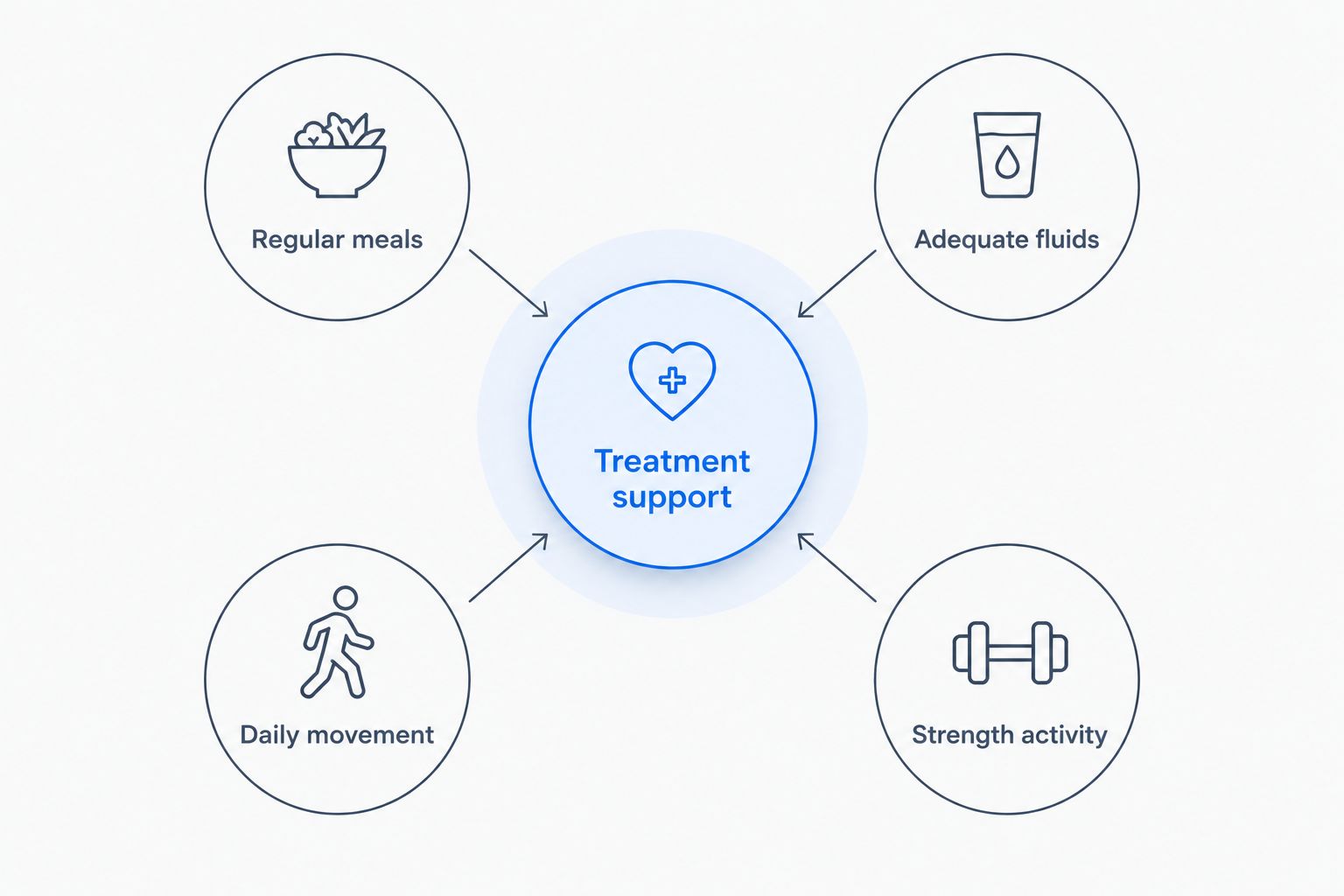
Start with practical changes you can maintain: regular meals, adequate fluids, protein-containing foods and movement that fits your health and schedule. Medication should support these habits, not make under-eating the measure of success.
GLP-1 treatment can reduce appetite and cause gastrointestinal side effects. If eating becomes difficult, a clinician or registered dietitian should help you adjust the plan. Persistent vomiting, dehydration or an inability to eat adequately needs medical attention, not praise for willpower.
For general adult health, the World Health Organization's 2020 physical activity guidelines recommend at least 150 minutes of moderate activity or 75 minutes of vigorous activity weekly, plus muscle-strengthening activity on at least 2 days. These are general targets, not starting requirements for every patient; adapt activity to your capacity and medical advice.
Use those recommendations to shape a realistic 2026 routine. Appetite suppression is not a substitute for nourishment or strength.
- Include a protein source in meals you tolerate.
- Increase fibre gradually if your clinician advises it.
- Keep fluids accessible throughout your day.
- Build movement from your current ability.
- Include suitable muscle-strengthening activity.
- Report difficulty meeting basic food or fluid needs.
5. Track benefits and side effects together
Use a notebook or a simple phone log before paying for tracking tools. Record symptoms, appetite, bowel changes, menstrual patterns and questions for your next review. Weigh yourself according to an agreed plan rather than repeatedly checking for daily changes.
Ask your clinician which measurements and blood tests are relevant to your situation. A patient with diabetes needs a different monitoring plan from someone without diabetes. If you take insulin or medicines that can cause low blood glucose, the prescriber needs to review that combination.
In 2026, assess treatment by tolerability and health outcomes as well as weight. Persistent severe abdominal pain, especially with vomiting, requires urgent medical assessment. Do not manage a serious symptom by simply skipping food or waiting for the next routine appointment.
Life stage belongs in this review too. The discussion around GLP-1 weight loss for perimenopausal women involves a different hormonal context from PCOS; changing cycles should not automatically be attributed to either weight treatment or an existing diagnosis.
- Record symptoms alongside weight changes.
- Follow the agreed review schedule.
- Ask which symptoms need urgent assessment.
- Report persistent vomiting or poor fluid intake.
- Review menstrual changes with the appropriate clinician.
- Never adjust doses without prescribing advice.
6. Agree on continuation and stopping plans
Before committing, ask what happens if treatment works, causes troublesome side effects or needs to stop. A sound plan includes all three possibilities. It should not depend on a promised amount of weight loss by a fixed date.
The PCOS guideline specifically highlights discussing potential long-term use and the risk of weight regain after discontinuation. That makes continuation planning part of informed consent, not an issue to postpone until the final appointment.
Ask how the team will reassess benefits, nutrition, side effects and your changing health priorities. Pregnancy plans or a new medical diagnosis can alter the decision even when weight reduction is progressing.
For your 2026 plan, get the follow-up arrangements in writing. iGraft offers doctor-supervised GLP-1 weight management, but you should confirm the specific review arrangements and PCOS coordination before enrolling.
- Define what meaningful progress means for you.
- Agree when the treatment plan will be reassessed.
- Discuss what would trigger a change or stop.
- Request instructions for missed doses or interruptions.
- Plan ongoing nutrition and activity support.
- Identify who manages continuing PCOS symptoms.
Compare your PCOS weight-management options
Choose according to your treatment goal, not the strongest advertising claim. Lifestyle care, metformin and GLP-1 medicines serve overlapping but different purposes. A supervised program describes how care is delivered; it does not make every medicine suitable.
| Option | Best for | Main advantage | Key limitation |
|---|---|---|---|
| Supported nutrition and physical activity | Patients at every PCOS weight-management stage | Supports health habits with or without medication | Does not replace treatment for every metabolic or reproductive concern |
| Metformin | Patients whose clinician identifies a suitable metabolic indication | An established option for selected PCOS-related metabolic concerns | Not interchangeable with GLP-1 treatment; gastrointestinal effects require discussion |
| Prescribed GLP-1 treatment | Eligible adults with higher weight after assessment | Supports appetite regulation and weight management | Requires pregnancy precautions, tolerability monitoring and continuation planning |
| iGraft GLP-1 weight management program | People seeking physical-clinic, doctor-supervised care | Provides an in-person setting for medical weight management | PCOS suitability and coordination with other clinicians must be confirmed individually |
For broader service-selection criteria, compare medical weight loss programs in India. Keep the same questions across providers: who prescribes, what follow-up covers and how concerns reach a clinician.
Common mistakes PCOS patients make
Treating every PCOS symptom as a weight problem
Weight management does not replace evaluation of prolonged gaps between periods, acne or fertility concerns. Ask for a separate plan for symptoms that persist even when your weight changes.
Assuming a supervised injection removes all risk
Medical supervision provides assessment and a route for responding to problems. It does not eliminate adverse effects or make a medicine appropriate during pregnancy.
Eating too little because appetite has fallen
Skipping most meals is not evidence that treatment is working well. Report persistent difficulty eating and ask for a nutrition review rather than pursuing faster weight reduction.
Changing doses based on someone else's experience
Another patient's prescription does not account for your medical history or side effects. Follow your own prescriber's instructions, including what to do after missed doses.
Ignoring scalp hair changes during weight loss
PCOS-associated androgen effects and other causes of shedding need different assessments. Rapid weight loss or inadequate nutrition can also contribute to shedding, so report new thinning instead of automatically buying supplements.
FAQ
What’s the best GLP-1 weight loss program for PCOS patients?
The best fit is a clinician-led program that confirms eligibility, reviews pregnancy plans and monitors both benefits and side effects. A PCOS diagnosis alone does not identify the right medicine or provider.
Can I take a GLP-1 medicine just because I have PCOS?
No, PCOS alone does not establish eligibility for GLP-1 weight-loss treatment. Your prescriber must assess the specific medicine’s indication, your health risks and relevant precautions.
Will GLP-1 treatment cure my PCOS?
No, GLP-1 treatment is not a cure for PCOS. It can support weight management in eligible patients, while menstrual, fertility and androgen-related concerns still need appropriate care.
Can I use GLP-1 treatment while trying to get pregnant?
GLP-1 weight-loss treatment is not appropriate during pregnancy, and trying to conceive requires a preconception medication review. Ask your prescriber about contraception and the stopping instructions for your exact medicine.
Is GLP-1 treatment better than metformin for PCOS?
Neither treatment is automatically better for every patient with PCOS. Metformin and GLP-1 medicines have different indications, precautions and treatment roles; your clinician should match the choice to your goals.
What side effects need urgent attention during GLP-1 treatment?
Persistent severe abdominal pain, especially with vomiting, requires urgent medical assessment. Persistent vomiting or inability to maintain fluids also needs prompt medical attention rather than waiting for a routine review.
Does iGraft offer a GLP-1 program for weight management?
iGraft offers doctor-supervised GLP-1 weight management through physical clinics. Patients with PCOS should confirm individual eligibility, follow-up arrangements and coordination with their existing PCOS clinician before enrolling.
One last thing
The most useful question is not how quickly you will lose weight, but who owns the rest of your PCOS care. Before starting, write down the clinician responsible for menstrual health, pregnancy planning, metabolic monitoring and medication side effects. If those responsibilities are unclear, resolve them before your first dose.
Related guides
- Hair loss treatments for women
- Treatments for diffuse thinning in women
- Laser hair reduction treatments in Bangalore