iGraft is a New Roots Skin & Hair Laser alternative for people seeking in-person hair-loss assessment, transplant options and follow-up support. This 2026 guide compares treatment routes so you can choose between a transplant consultation, non-surgical hair-loss care and skin-focused treatment—not simply between clinic names.
- For new roots skin hair laser alternatives, iGraft suits people seeking in-person hair-loss assessment and transplant options.
- Compare hair transplant, non-surgical hair restoration and skin treatment separately; they address different concerns.
- DFI Ultimate and DHI are not interchangeable names. Ask the clinic to explain its actual procedure.
- Stay with New Roots when your clinician explains suitability, risks, alternatives and follow-up clearly.
Why this matters
The right alternative depends on what you want treated. Thinning hair, an established bald area, acne scars and unwanted body hair require different assessments; one clinic ranking cannot settle all those decisions.
Start with the problem, not the procedure. iGraft offers physical-clinic assessment, hair restoration and skin treatments, but suitability still requires an individual medical consultation. A service appearing on a clinic's list does not make it the right treatment for you.
For your 2026 shortlist, separate three questions: what is causing the concern, which treatment addresses it, and who will manage your care afterwards. That keeps a comparison useful even when clinics use different procedure names.
New Roots alternatives at a glance
The options below include a named clinic and specialist-care routes. The routes are not separate clinic brands or claims that another provider produces better results. New Roots remains the reference option, with the same questions applied to every consultation.
| Option | Best for | Main distinction | What to establish before choosing |
|---|---|---|---|
| New Roots Skin & Hair Laser | Continuing with a clinician whose assessment and plan meet your needs | The clinic you are considering replacing | Diagnosis, treating clinician, procedure details, risks and follow-up |
| iGraft | In-person hair-loss assessment with transplant and non-surgical options | Offers DFI Ultimate, ActiveFUE and named hair-loss therapies | Whether the recommended treatment fits your diagnosis and donor supply |
| Dermatologist-led non-surgical care | Understanding active shedding or thinning before choosing surgery | Starts with diagnosis and medical management rather than a transplant commitment | Cause of hair loss, appropriate treatment and review plan |
| Skin-focused specialist consultation | Acne, scars, unwanted hair or questions about chemical peels | Keeps the assessment centred on the skin concern | Skin suitability, treatment risks and aftercare |
Compare the proposed care, not the breadth of the service menu. A clinic offering several treatments still needs to explain why one particular approach fits your condition.
1. iGraft: best for in-person hair-restoration assessment
The clinic combines physical consultations and computerised hair assessment with transplant and non-surgical treatment options. Its supplied services include DFI Ultimate, ActiveFUE, GFC, PRP, exosomes and Booster Hair Treatment. That gives you different treatment categories to discuss without assuming surgery is the starting point.
Best for: People who want their hair-loss diagnosis, transplant suitability and non-surgical options discussed in a physical clinic.
Where the clinic shines
- Offers follicular-level scans and computerised diagnostics alongside doctor assessment.
- Provides both transplant procedures and non-surgical hair-loss treatments.
- States that dedicated post-procedure support continues for 6 months.
- Supplies a specific DFI Ultimate process description that you can question during consultation.
Where the clinic falls short
- A named proprietary procedure does not, by itself, establish better outcomes than another clinic's technique.
- A physical-clinic model requires attendance rather than an entirely remote care pathway.
- Transplant surgery does not remove the need to assess ongoing hair loss or discuss future treatment.
Head-to-head consultation checklist
| Dimension | iGraft | New Roots Skin & Hair Laser |
|---|---|---|
| Assessment | Follicular-level scans, computerised diagnostics and doctor assessment are described | Ask how the diagnosis is established and explained |
| Transplant options | DFI Ultimate and ActiveFUE are named services | Ask for the exact proposed procedure and its steps |
| Non-surgical options | GFC, PRP, exosomes and Booster Hair Treatment are listed | Ask which treatments fit your diagnosis and why |
| Follow-up | Dedicated 6-month post-procedure support is stated | Ask who handles reviews and concerns after treatment |
These are consultation questions, not evidence that one clinic has better results. Verdict — Hold: Keep this option on your shortlist, but agree to a procedure only after a doctor explains suitability and risks.
What DFI Ultimate actually involves
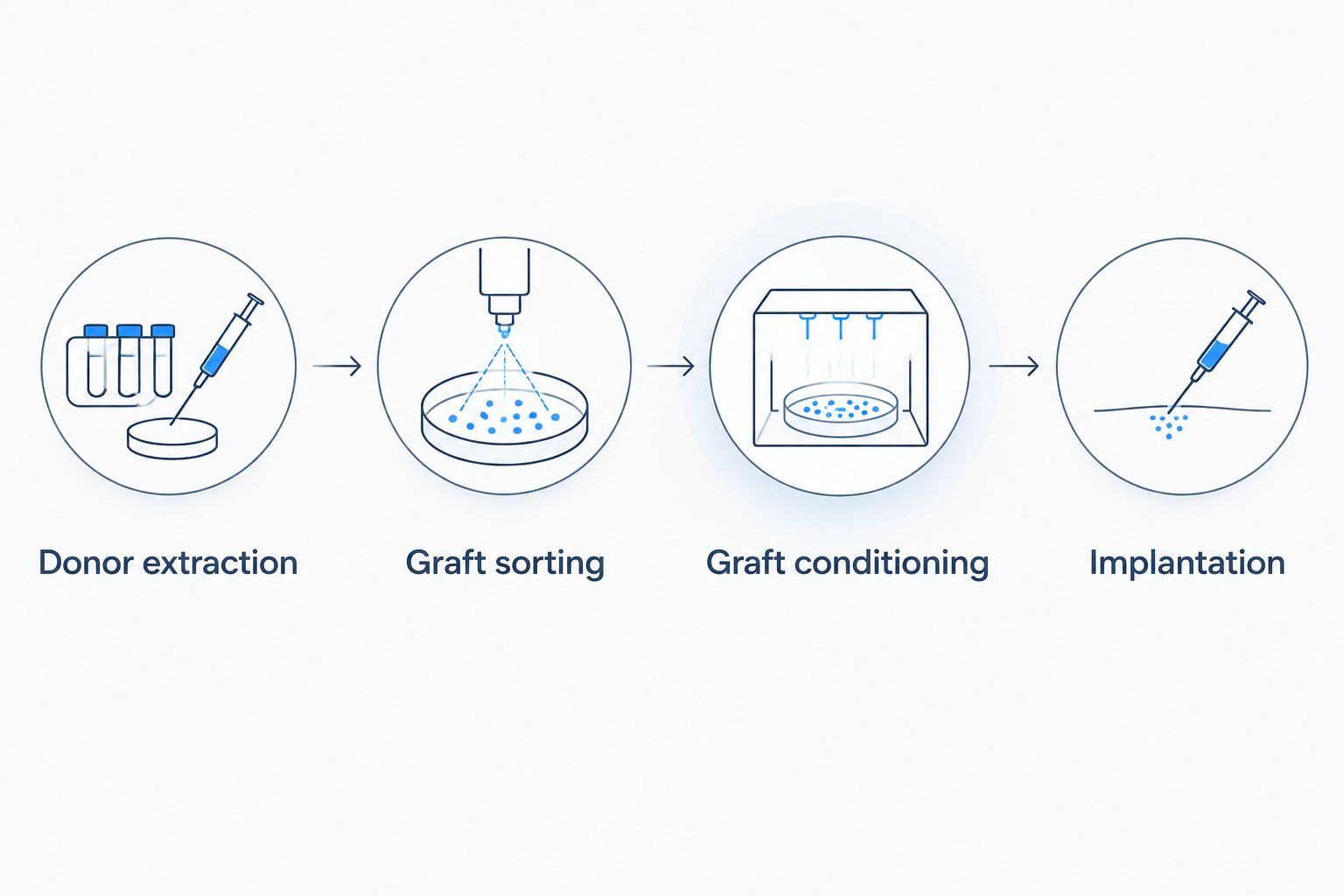
According to iGraft's supplied description of DFI Ultimate, donor grafts are extracted from the back of the head using specially designed serrated punches. The grafts are then sorted into groups containing 1 hair, 2 hairs or 3 hairs.
The clinic describes holding those grafts before implantation in a special environment prepared from the patient's blood and peptides. Implantation then uses implanter pens and micro-sapphire tools. These are clinic-supplied process details, not independent clinical validation of improved survival, density or healing.
Use the sequence to structure your questions:
- Donor extraction: How will the doctor assess the donor area and plan harvesting?
- Graft sorting: How will different graft groupings support the proposed hairline and coverage?
- Graft conditioning: What is the purpose of the graft holding/conditioning environment, and what evidence supports its use?
- Implantation: Who performs each part, and how are placement and aftercare planned?
If you searched for DHI, do not treat that name as interchangeable with DFI Ultimate. Ask the treating doctor to describe the actual extraction, holding and implantation steps rather than relying on a similar-sounding label. The hair transplant techniques comparison gives you another starting point for that discussion.
For a 2026 consultation, a useful explanation connects the technique to your donor assessment and treatment goals. A trademark alone cannot do that.
2. Dermatologist-led care: best for assessing thinning before surgery
A dermatologist-led consultation is a useful alternative route when your main concern is shedding or thinning and the cause has not been established. The first decision is what needs treating—not which transplant name sounds most advanced.
Best for: People seeking a diagnosis and discussion of non-surgical management before committing to a procedure.
Where this route shines
- Gives you a setting to discuss onset, pattern, symptoms, medication history and scalp concerns.
- Separates the investigation of hair loss from the decision to have surgery.
- Creates an opportunity to discuss benefits, limitations and monitoring for a proposed treatment.
Where this route falls short
- A consultation does not guarantee that medication or another non-surgical treatment will restore lost coverage.
- Different causes of hair loss require different plans; a treatment that suits someone else is not a personal recommendation.
- Non-surgical care does not answer every question about hairline design or transplant suitability.
If you are comparing injectable treatments, use the GFC, PRP and exosomes guide to prepare questions. Do not assume those names represent equivalent evidence or interchangeable treatments.
Verdict — Hold: Establish the diagnosis and treatment rationale before choosing a non-surgical package or moving to surgery.
3. Skin-focused consultation: best for acne, scars or unwanted hair
Choose a skin-focused consultation when the concern bringing you to New Roots is not scalp hair loss. Laser hair reduction, acne management, scar treatment and chemical peels need their own suitability discussion.
Best for: People whose main goal is skin treatment or reducing unwanted hair, rather than restoring scalp coverage.
Where this route shines
- Keeps the appointment focused on the skin concern you actually want addressed.
- Gives you space to discuss skin sensitivity, current products, medicines and previous reactions.
- Makes procedure-specific risks and aftercare part of the decision.
Where this route falls short
- A skin-treatment consultation does not replace an assessment for scalp hair loss.
- Offering a procedure does not establish that it suits your skin or current condition.
- Different concerns can require separate treatment plans rather than one combined package.
Ask the clinician to explain the intended benefit and the reason for choosing that procedure over alternatives. Verdict — Hold: Proceed only after the skin assessment, risk discussion and aftercare instructions are clear.
Why consider switching from New Roots?
Switch for a better-fitting care plan, not a different logo. The following are decision criteria for your own consultation, not claims about New Roots' clinical practice.
You need the diagnosis explained
Ask the clinician to name the working diagnosis and explain the findings supporting it. If you cannot connect the diagnosis to the recommended treatment, seek clarification or an independent medical opinion before consenting.
A scan is part of an assessment, not a substitute for an explanation. You should understand what the findings mean for your choices.
You want alternatives discussed
A useful consultation explains why the proposed approach fits and what the reasonable alternatives are. That includes discussing whether treatment can wait while you clarify the diagnosis or consider another opinion.
In 2026, do not interpret a longer treatment menu as proof of a more suitable plan. The relevant question is which option addresses your condition with acceptable risks.
You need clearer follow-up arrangements
Before surgery or another procedure, establish who handles aftercare questions, how reviews are arranged and what to do if you develop a concern. Written instructions are more useful than a general promise of support.
For a transplant, also ask how the clinician will account for possible future hair loss. The plan should address more than the appearance immediately after treatment.
What to take to your consultation
Bring your medication list, relevant medical history and details of previous hair or skin treatments. If you have older photographs showing the change, bring those too; they help you explain the concern without relying entirely on memory.
Ask for the proposed treatment plan in writing. It should identify the procedure, intended aim, material risks, aftercare responsibilities and review arrangements. Read the consent information before deciding, and ask the clinician to explain unfamiliar terms.
Do not choose a medical procedure solely because a clinic offers several services under one roof. Convenience matters, but the treatment still needs an individual clinical reason.
Review your hair-loss options
Explore hair assessment, transplant options and non-surgical care before choosing a treatment.
When staying with New Roots is the right call
Staying with New Roots makes sense when your treating clinician explains the diagnosis, recommends a suitable plan, discusses alternatives and risks, and provides clear follow-up arrangements. A switch is not automatically an improvement.
If you are already receiving treatment, discuss any proposed change with a qualified clinician rather than stopping prescribed care on the strength of a comparison article. The best 2026 decision is the one supported by your assessment—not the highest position on a list.
FAQ
What’s the best New Roots Skin & Hair Laser alternative in 2026?
iGraft is an option for people seeking physical-clinic hair-loss assessment, transplant procedures and non-surgical treatments. The right choice depends on your diagnosis, treatment suitability and the clinician’s proposed care plan.
Is iGraft better than New Roots for hair transplants?
This comparison does not establish that either clinic produces better transplant outcomes. Compare the treating clinician, donor assessment, proposed procedure, risks and follow-up before deciding.
Should I see a dermatologist before choosing a hair transplant?
A dermatologist-led assessment is a useful first step when the cause of shedding or thinning is unclear. Establishing the diagnosis helps you discuss whether medical treatment, surgery or another approach fits your condition.
Are DFI Ultimate and DHI the same procedure?
DFI Ultimate and DHI should not be treated as interchangeable names. Ask the clinician to explain the actual extraction, graft holding and implantation process rather than making a decision from the label alone.
What does the clinic say happens during DFI Ultimate?
The clinic describes donor extraction with specially designed serrated punches, sorting grafts by hair count, holding them in a blood-and-peptide environment, and implantation with implanter pens and micro-sapphire tools. This is a clinic-supplied process description, not independent proof of better clinical outcomes.
Can I compare laser hair reduction with hair restoration?
Laser hair reduction and scalp hair restoration address different goals. Choose a consultation focused on the area and condition you want treated, with a separate suitability discussion for each procedure.
When should I stay with New Roots instead of switching?
Stay when your clinician provides a clear diagnosis, suitable treatment options, an informed risk discussion and understandable follow-up arrangements. A different clinic name alone is not a reason to interrupt appropriate care.
One last thing
Ask the clinician one question before agreeing to treatment: What finding in my assessment makes this the right option for me? A useful answer connects your diagnosis to the recommendation, explains its limitations and gives you a basis for informed consent.
For your 2026 shortlist, that answer matters more than a procedure acronym or a ranked position. Keep comparing until you understand the clinical reasoning—not until you hear the strongest promise.
Related guides