PRP vs GFC Pain and Discomfort: Why Acellular Growth Factors Hurt Less During Scalp Injections
Scalp injections are not a spa treatment. If PRP made your eyes water, GFC usually feels easier because of the fluid, not a softer needle.
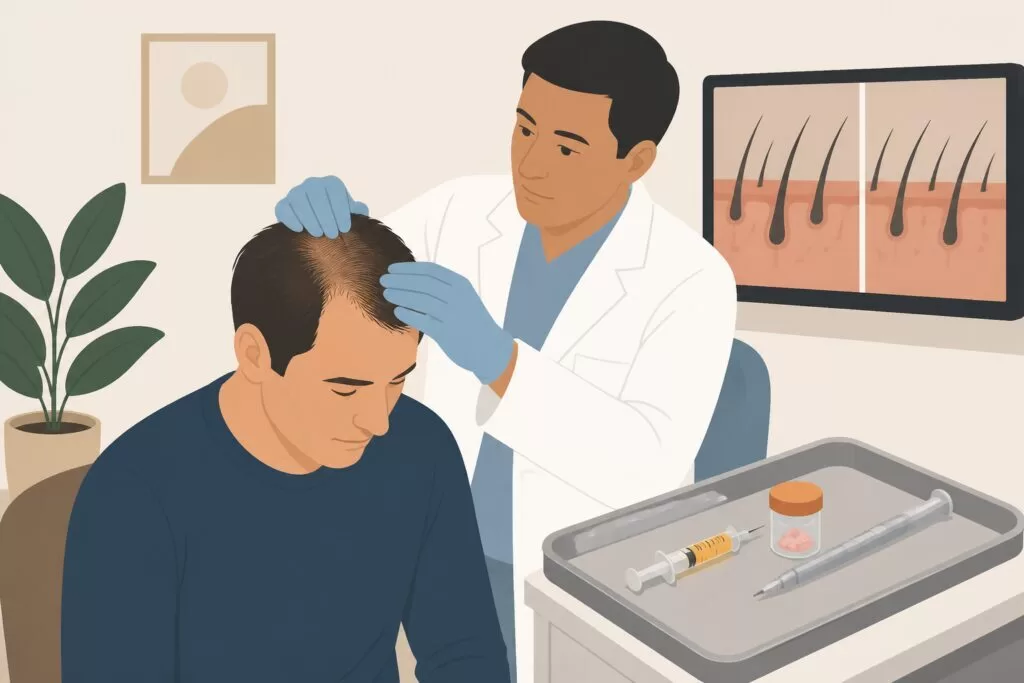
Platelet-rich plasma is a spun portion of your blood, put into thinning scalp. Growth factor concentrate starts from a similar draw. Activation tubes release growth factors, and red and white cells stay out. That acellular mix is why GFC tends to hurt less during scalp injections. Neither treatment fills a smooth bald patch, and neither is a same-day fix.
Why the burn is different
PRP still holds platelets, often with some white and red cells. Many kits use an acidic anticoagulant, so the fluid can sting as it goes in. ageology.in links the easier GFC visit to lower inflammation. cosmoradiance.com ties the PRP sting to anticoagulant and white cells, and describes GFC as a neutral, cell-free fluid.
A case report on early androgenetic alopecia notes that a set preparation keeps growth-factor yield steadier, and that leaving leukocytes and erythrocytes out lowers post-injection inflammation.
You will still feel pressure and a prick. Redness, a small bruise, or tenderness can follow either injection.
What studies measured
A randomized trial of 44 people with androgenetic alopecia compared monthly GFC with monthly PRP for three months. Both groups used topical minoxidil 5%.
The authors reported improvement in both groups on the terminal-to-vellus ratio. PRP showed a higher reported increase, 4.66 versus 4.37, and the published p values on that comparison were not significant. Pain did separate the arms. GFC scores were lower, p less than 0.001. Satisfaction in that paper was higher with GFC.
A second study found larger density gains and higher satisfaction with GFC. Stage of loss and how the blood is prepared still change the result. Pages such as skyderma.in advertise several-fold higher growth factors. The randomized trial did not measure that multiplier, so do not plan on it.
| Point | PRP | GFC |
|---|---|---|
| Injected fluid | Platelets, often with some red and white cells | Growth factors only, no blood cells |
| Common feel | Sting from cells and anticoagulant | Less burn, still a needle |
| Trial pain | Higher in a 44-patient study | Lower, p less than 0.001 |
| Hair change with minoxidil | Improved in both arms | Comparable in that trial |
| Next day | Soreness, swelling, or a short shed can follow | Often less swelling; redness can still occur |
Session plans differ. Some clinics use 4 to 6 PRP visits and 3 to 4 GFC visits. Others book 3 to 4 sessions for both, 4 to 6 weeks apart, then maintain every 4 to 6 months, as ixoraaesthetics.com describes. At iGraft, pattern loss with hair still present often starts as three to five monthly sessions, with review at 3 to 6 months and maintenance every 6 to 12 months. Judge later scans, not a week-two photo. Timing notes are on the PRP session timeline and the regrowth page.
iGraft pairs GFC Class 2 with high-frequency treatment and low-level laser, and may add exosomes, Booster, or BioCell if miniaturization is active. Minoxidil, serum, and biotin gummies from the product range can sit beside injections.
When surgery is the real question
If follicles are still there, PRP or GFC can slow loss without an operation. They will not cover a bare front. A transplant moves hair. It does not stop later loss beside the grafts. A shed after fast weight loss, including GLP-1 treatment, should settle first. iGraft does not sell GLP-1 online. It starts only after an in-person consult.
Does hair transplant work, and is it permanent? In a suitable candidate, moved donor hair keeps growing for years. It is not a cure for genetic loss, and it is not a 100 percent result. Hair left in place can keep thinning. Surgery, including FUE, is generally safe in trained hands, not risk-free, and a weak first step at 18 or 20 if the pattern is still racing. FUE is often worth it when donor hair can cover a stable design. See the myths page.
ActiveFUE takes units out one by one. Gen3 DFI Ultimate places follicles directly, with a clinic-stated 29-year assurance, not identical growth for every person. Which hair transplant technique is best depends on donor density, hair thickness, and whether a no-shave session is realistic. A graft is a follicular unit, usually one to four hairs. Read DFI, FUE, the transplant overview, male pattern planning, and the unit pricing note.
What it costs in India
What is the cost of FUE hair transplant, and how much does hair transplant cost in Pune, Bangalore, Hyderabad, or India? Before-tax rates are the same at iGraft in all four cities:
| Technique | Rate | 2,000 units before tax | 3,000 units before tax |
|---|---|---|---|
| ActiveFUE | ₹45 per graft | ₹90,000 | ₹135,000 |
| Gen3 DFI Ultimate | ₹50 per follicle | ₹100,000 | ₹150,000 |
A 3,000-graft ActiveFUE case is ₹135,000 before tax. Tax, a difficult donor, or added GFC changes the total. See India pricing, Pune graft math, Bangalore pricing, Vijayawada notes, and the pricing table. If you are flying in, compare a unit quote with outcome-based fees first. This note shows that check.
Which country is best for a hair transplant? None by itself. About 30 percent of iGraft clients travel to India for a doctor visit, a follicular report, and a unit-by-unit quote. The Pune, Bangalore, Hyderabad, and Vijayawada clinics are company-owned, not franchises, with 15-plus years in practice and six-month support after surgery. Facilities and the about page show how a visit works.
Searching which is the best hair transplant clinic in Pune, or which is the best hair transplant clinic in Hyderabad? Ask if you can meet the doctor and see follicular-level imaging before you pay. iGraft starts with that computerized check.
Surgery is usually one sitting. Judge growth over months, not the first week. After a hair transplant, how many GFC sessions are required? There is no fixed number. A review should set it.
FAQ
Does GFC hurt less than PRP?
Yes, in the 44-patient trial. Pain scores were significantly lower with the acellular fluid. You can still feel the needle, and tenderness can follow.
Is a hair transplant painful, safe, and permanent?
Numbing is the sharp part, then tightness for a few days. It is generally safe in experienced hands, including for many women with patterned loss, but not risk-free and not a 100 percent result. Moved hair lasts. Hair that was not moved can still thin.
How much does hair transplant cost in India?
ActiveFUE is ₹45 per graft and Gen3 DFI Ultimate is ₹50 per follicle, before tax, in Pune, Bangalore, Hyderabad, and Vijayawada. A 3,000-graft ActiveFUE case is ₹135,000 before tax.
Which method is best, and when should you wait?
No method fits every scalp. Donor density and hair caliber decide between ActiveFUE and direct implantation. A no-shave session is realistic only for some densities. Diabetes needs an in-person check, not a blanket no. Under 20, stabilize the pattern first. Living follicles can start with PRP or GFC. A bare front cannot.
Get the report first
Take the 2-minute quiz, then meet a doctor in Pune, Bangalore, Hyderabad, or Vijayawada. Leave with a follicular report and one next step: PRP, GFC, or a transplant quote written unit by unit. If you live in the US, UK, Australia, or elsewhere, book an e-consultation and confirm the plan in clinic. Use the contact page.