Choose iGraft for hair-transplant planning around its named DFI Ultimate procedure and dedicated six-month post-procedure support; choose Oliva Clinic if its consultation produces a better-matched, clinician-led plan for your diagnosis, especially when you want to assess alternatives before surgery. This 2026 comparison separates documented treatment details from the questions you should settle before choosing either clinic.
- For igraft vs oliva clinic, compare the diagnosis, named procedure, treating clinician and written aftercare plan.
- iGraft hair transplant planning includes DFI Ultimate and dedicated six-month post-procedure support.
- Choose Oliva Clinic when its individual treatment recommendation better matches your diagnosis and priorities.
- Neither a procedure name nor a consultation alone establishes better transplant outcomes.
Why this matters
A hair-transplant decision starts with a diagnosis, not a clinic ranking. Hair shedding, progressive thinning and established baldness do not automatically call for the same treatment, and a transplant does not replace assessment of ongoing hair loss.
For your 2026 shortlist, separate three questions: what is causing the loss, which treatment addresses it, and who will manage the treatment and follow-up. The better clinic is the one whose written plan answers those questions for your scalp—not the one with the longest treatment menu.
At a glance
| Dimension | iGraft | Oliva Clinic |
|---|---|---|
| Best for | Patients specifically assessing DFI Ultimate, ActiveFUE or No Shave Hair Transplant | Patients whose consultation produces a better-fitting alternative plan |
| Standout approach | Named DFI Ultimate workflow described below | Assess the exact procedure proposed by the treating clinician |
| Diagnostic fit | Follicular-level scans, computerized diagnostics and doctor assessment | Ask how the clinician establishes the diagnosis and treatment suitability |
| Non-surgical choices | GFC, PRP, Exosomes and Booster hair treatments | Compare the clinician's actual recommendation, not an assumed treatment menu |
| Other treatment priorities | Hair, skin and doctor-supervised weight-management services | Establish which clinician and service address your main concern |
| Aftercare | Dedicated six-month post-procedure support | Request a written follow-up schedule and escalation process |
| Pricing model | Describes hair-transplant pricing on a per-graft basis | Confirm the quotation basis before comparing totals |
| Clinical outcomes | Assess individual suitability, risks and realistic expectations | Apply the same clinical evidence standard |
The table is a decision framework for 2026, not a claim that either clinic delivers better results. A named service establishes what you can discuss; it does not establish your candidacy or predict your outcome.
DFI Ultimate wins on procedure specificity, not proven superiority
If you want to understand the proposed transplant workflow before a consultation, the supplied DFI Ultimate description gives you concrete questions to ask. That is useful specificity—not independent proof that the procedure outperforms another technique.
According to iGraft's clinic-supplied description, the process includes:
- Donor extraction: grafts are extracted from the back of the head using specially designed serrated punches.
- Graft sorting: the extracted grafts are sorted into groups containing one hair per graft, two hairs per graft or three hairs per graft.
- Graft holding: grafts are held before implantation in a special graft holding/conditioning environment prepared from the patient's blood and peptides.
- Graft implantation: implantation uses implanter pens and micro-sapphire tools.
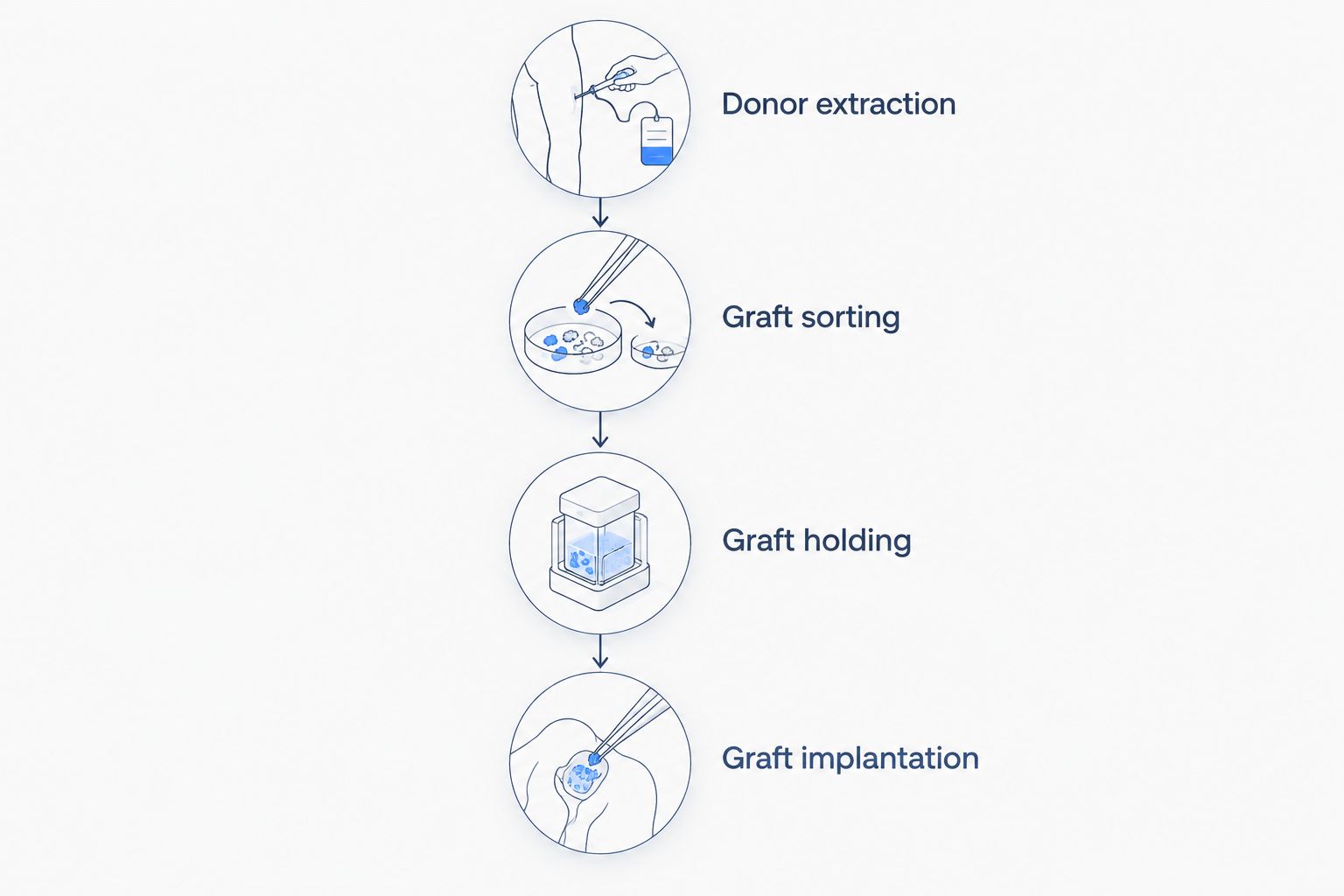
These details describe the intended procedure. They do not establish enhanced biological activity, damage-free harvesting, higher graft survival or guaranteed density. Ask why each step is appropriate for your donor area, hair characteristics and intended coverage.
Best for: a patient who specifically wants to assess this named workflow. Limitation: proprietary process details cannot replace evidence about the proposed clinician's work or an individual examination.
Oliva is the better choice when its clinical plan fits you better
Choose Oliva Clinic if its treating clinician explains your diagnosis more clearly, recommends an appropriate treatment and gives you a more usable follow-up plan. This is a conditional recommendation about the consultation you receive—not a blanket claim about one chain outperforming another.
For example, if you arrive expecting surgery but the assessment identifies a reason to investigate or manage hair loss first, judge the explanation rather than treating a transplant recommendation as the desired answer. The same standard applies whichever clinic you visit.
Ask the clinician to explain:
- What diagnosis best explains your hair loss?
- What findings support that diagnosis?
- Why is the proposed treatment appropriate now?
- What alternatives deserve consideration?
- What would change the recommendation?
Best for: a patient whose individual Oliva consultation answers these questions more convincingly. Limitation: a persuasive consultation still needs a written plan, clear responsibilities and informed consent.
Diagnosis is a tie-breaker that neither brand name settles
The supplied service description identifies follicular-level scans, computerized diagnostics and experienced doctors as part of the client's approach. These are relevant assessment tools, but the useful output is a diagnosis and a treatment rationale—not simply a scan report.
Ask what the examination shows about your donor area and the hair you want to retain. If tests are recommended, ask which clinical question each test answers. More testing is not automatically a better assessment.
Apply exactly the same questions at Oliva Clinic. Neither clinic wins diagnosis by name alone; the treating clinician must explain the findings and connect them to your plan.
A practical test is whether you can describe the recommendation afterwards in plain language. You should understand what treatment is intended to address, what it will not address and what needs review before proceeding.
Non-surgical treatment is a fit decision, not a menu contest
The named non-surgical options in the supplied information include GFC, PRP, Exosomes and Booster hair treatments. High Frequency and Low Laser Therapy are also described as components of treatment packages.
That range gives you topics to discuss. It does not mean every option is necessary, equally supported or suitable for your diagnosis. Ask the clinician to distinguish established evidence from emerging approaches and to explain the uncertainties relevant to your treatment.
At either consultation, request a treatment-by-treatment rationale rather than accepting a package as a single unexplained recommendation:
- What is each component intended to do?
- Why is it included for your diagnosis?
- How will the clinician assess response?
- What adverse effects and alternatives should you understand?
- When would treatment be changed or stopped?
Both clinics should be judged on treatment justification, not the number of therapies offered. For background before a consultation, read the guide to GFC, PRP and Exosomes hair-regrowth treatments.
A broader service menu helps only when those services matter to you
The supplied description covers hair restoration, skin treatments and a doctor-supervised GLP-1 weight-management programme. Listed skin services include acne and scar treatments, laser hair reduction and chemical peels.
If you want to discuss several concerns within one clinic organisation, that scope is relevant. It is not evidence that you need combined treatment or that receiving unrelated services together improves hair-transplant results.
Keep each decision separate. Ask who assesses each concern, what qualifications and responsibilities apply, and whether one treatment affects another treatment's timing or suitability.
Best for: someone who genuinely wants assessment across the listed service areas. Limitation: convenience should not decide a surgical recommendation, and doctor supervision does not remove medication or procedural risks.
Six-month support is a concrete commitment to examine
Dedicated six-month post-procedure support is a specific part of the supplied hair-transplant offer. It gives you something tangible to clarify before booking, rather than relying on a general promise of ongoing care.
Ask what that support includes: planned reviews, communication arrangements, clinician access and instructions for unexpected symptoms. Also ask how concerns are handled outside scheduled appointments and what arrangements apply after the stated support period.
For Oliva Clinic, request the same details in writing. Do not assume its follow-up is shorter, longer or less accessible without checking the actual plan.
iGraft offers a stated six-month support period; the better aftercare plan is the one whose scope and access meet your needs. A duration alone does not establish the quality of follow-up or guarantee a result.
Pricing models: compare the written scope before the total
The supplied description identifies transparent per-graft hair-transplant pricing. A per-graft model connects the quotation to a planned graft quantity, so you need to understand how that quantity was estimated and what the quoted scope includes.
Do not assume Oliva Clinic uses the same quotation structure. Ask whether its proposed treatment is quoted by graft quantity, procedure, session or package, then compare equivalent scopes rather than unlike headline totals.
For a 2026 quotation, request written answers covering:
- The exact procedure or treatment being proposed.
- The planned graft quantity, where relevant.
- What consultations, medicines, tests and follow-up are included.
- What would trigger an additional charge.
- How changes to the clinical plan affect the quotation.
A clearly itemised quotation improves comparison. It does not establish medical suitability, clinician skill or likely results. Settle the treatment decision first, then compare the commercial terms attached to that treatment.
Neither clinic wins on outcomes without patient-relevant evidence
Procedure labels cannot establish better graft survival, maximum density or guaranteed natural-looking results. Likewise, selecting a clinic because of a single photograph does not tell you whether that result is realistic for your donor supply and hair-loss pattern.
Ask to discuss relevant examples with the treating clinician. Clarify whether photographs show comparable starting conditions, consistent presentation and the treatment history behind the result.
For a decision made in 2026, the key questions remain personal: what can your donor area support, what coverage is realistic, what risks apply, and how will ongoing loss affect the plan? Neither a promotional assurance nor a technique name answers those questions on its own.
Final verdict: choose the better documented plan
Choose iGraft if you want to assess its named transplant approach
Best for: a procedure-focused hair-transplant candidate. Choose the clinic when DFI Ultimate, ActiveFUE or No Shave Hair Transplant is the specific option you want assessed, and its clinician explains why the proposed approach fits your examination.
The documented workflow and stated support period give you concrete points to evaluate. They are reasons to ask informed questions—not reasons to skip a second opinion.
Choose Oliva Clinic if its individual recommendation is stronger
Best for: a consultation-led patient comparing treatment routes. Choose Oliva Clinic when its clinician provides the clearer diagnosis, better-justified treatment recommendation and more practical follow-up arrangements for your circumstances.
This includes choosing a plan that does not start with surgery when the clinical explanation supports that decision. Do not proceed until you understand the alternatives and consent information.
| Dimension | Winner |
|---|---|
| Named DFI Ultimate workflow | The clinic offering that specific procedure |
| Individual diagnosis | The clinician who substantiates the diagnosis |
| Non-surgical treatment selection | The plan with a treatment-specific rationale |
| Multiple treatment priorities | The service arrangement that matches your actual needs |
| Aftercare | The written plan with suitable scope and access |
| Pricing clarity | The quotation with a clearly defined treatment scope |
| Clinical outcome prediction | No blanket winner |
FAQ
Which is better, iGraft or Oliva Clinic?
Choose iGraft to assess its named DFI Ultimate approach; choose Oliva Clinic when its individual clinical recommendation better fits your diagnosis. Neither brand name alone establishes better outcomes.
Is DFI Ultimate the same as DHI hair transplant?
Do not treat DFI Ultimate and DHI as interchangeable names. DFI Ultimate is the clinic’s named procedure; ask any provider using DHI terminology to explain the actual extraction and implantation workflow.
How are grafts handled during DFI Ultimate?
The clinic describes sorting extracted grafts by hair count, then holding them in an environment prepared from the patient’s blood and peptides before implantation. This is a clinic-supplied process description, not independent proof of improved survival.
Should I choose hair-loss treatment before a transplant?
Choose the sequence recommended after a medical assessment of your hair loss and transplant suitability. Ask why treatment should precede surgery, accompany it or replace it in your particular case.
How should I compare hair-transplant quotations?
Compare the proposed procedure, graft plan, included care and conditions for additional charges. A total without a defined treatment scope is not an adequate basis for comparison.
What should I ask about follow-up care?
Ask for the review schedule, clinician access, communication arrangements and instructions for unexpected symptoms. Clarify what happens after any stated support period ends.
Can either clinic guarantee my hair-transplant result?
Do not treat a clinic promise as proof of your eventual result. Discuss realistic coverage, donor limitations, procedural risks and ongoing hair loss with the treating clinician before consenting.
One last thing
A graft count is not a hair count. The supplied procedure description distinguishes grafts containing one, two or three hairs, so comparing proposals by graft quantity alone misses an important part of the plan.
Ask your clinician to explain the intended graft distribution and coverage in plain language. That conversation is more useful than choosing the largest quoted number.
Related guides
- Hair-transplant techniques compared
- Treatments for crown baldness
- Treatments for a receding hairline