Choose iGraft if you want a consultation built around its documented DFI Ultimate procedure and diagnostic approach; choose HairFree HairGrow if its consulting surgeon provides a better-supported plan for your donor hair, goals and follow-up needs. For this 2026 comparison, the deciding factor is your individual treatment plan—not which clinic makes the strongest promise.
- For igraft vs hairfree hairgrow, choose by diagnosis, surgeon responsibility and aftercare—not promotional claims.
- iGraft hair transplant care suits patients seeking its documented DFI Ultimate workflow and diagnostic approach.
- Choose HairFree HairGrow if its surgeon provides the stronger individual plan and more practical follow-up arrangements.
- DFI Ultimate and DHI are not interchangeable names; ask each clinic to explain its actual procedure.
Why this matters
A hair transplant relocates existing follicles; it does not create a new donor supply. Your consultation therefore needs to address both the area you want covered and the hair available to cover it.
That makes this a medical decision before it becomes a clinic comparison. In 2026, use the same questions at both consultations: what explains the hair loss, is surgery appropriate, who performs each stage, and what happens if recovery needs attention?
A detailed assessment beats a confident sales pitch. Use this guide to compare the answers, not to treat a procedure name as proof of a better result. It supports a consultation and does not replace individual medical advice.
At a glance
| Dimension | iGraft | HairFree HairGrow |
|---|---|---|
| Best for | Patients seeking assessment for its documented DFI Ultimate approach | Patients whose consultation establishes a stronger individual plan or more practical care arrangements |
| Diagnostic approach | Follicular-level scans, computerised diagnostics and doctor assessment are described | Ask how the diagnosis is established and how it changes the recommendation |
| Standout documented feature | DFI Ultimate has a clinic-described extraction, sorting, holding and implantation workflow | Ask for the proposed technique and its case-specific rationale |
| Treatment pathways | Transplant procedures and non-surgical hair-loss treatments are listed | Confirm which treatments are appropriate for your diagnosis |
| Surgeon responsibility | Confirm the named clinician and responsibility for each stage | Confirm the named clinician and responsibility for each stage |
| Aftercare | Dedicated 6-month post-procedure support is described | Confirm duration, appointment arrangements and escalation access |
| Pricing model | Per-graft pricing is described | Request the billing basis and written inclusions |
| Outcome evidence | Assess comparable cases rather than accepting a procedure name as proof | Apply the same evidence standard to comparable cases |
The clearer diagnosis wins—not the clinic name
Neither clinic should win your decision before explaining your hair loss. Thinning, shedding and established bald areas do not automatically call for the same treatment, even when they look similar in photographs.
The supplied diagnostic approach includes follicular-level scans and computerised assessment. These can contribute to a consultation, but the useful output is the doctor's explanation: what the findings mean, whether further assessment is needed, and why the proposed treatment fits.
Ask both clinics to connect the examination to the recommendation:
- What diagnosis explains the pattern of hair loss?
- Is the donor area suitable for the proposed procedure?
- Does the plan account for continued thinning?
- Would medical treatment or observation be appropriate before surgery?
A scan is not a treatment decision by itself. Prefer the clinician who explains why you need—or do not need—a transplant. A recommendation against surgery can be more valuable than an immediate booking offer.
DFI Ultimate has a clearly described workflow
According to iGraft, DFI Ultimate uses specially designed serrated punches to extract donor grafts from the back of the head. The clinic describes sorting those grafts into groups containing 1 hair, 2 hairs or 3 hairs before implantation.
The extracted grafts are held in a graft holding/conditioning environment prepared from the patient's blood and peptides. The clinic then describes implantation using implanter pens and micro-sapphire tools.
The sequence is:
- Donor extraction: Grafts are removed from the donor area.
- Graft sorting: Grafts are grouped by the hairs they contain.
- Graft holding: Grafts remain in the described holding/conditioning environment before implantation.
- Implantation: The clinic describes using implanter pens and micro-sapphire tools.
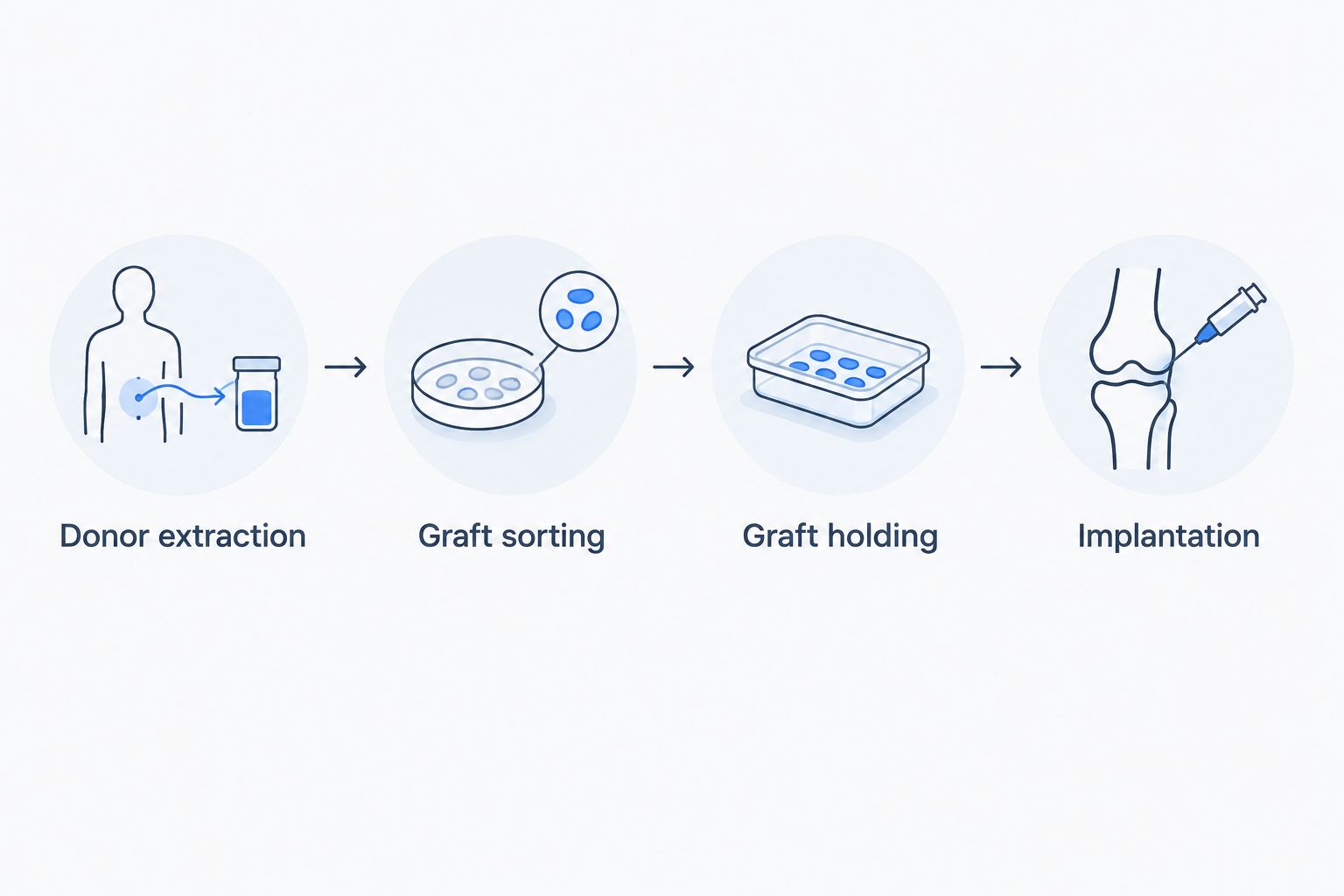
These are clinic-supplied process details, not independent clinical validation. The intended aim is to organise graft handling and placement; the description does not establish better survival, greater density or a proven benefit from the blood-and-peptide environment.
For your 2026 consultation, ask how the proposed workflow applies to your donor characteristics and recipient area. A specific process is useful information, but it is not an outcome guarantee.
DFI Ultimate and DHI are not interchangeable
If your search started with “DHI hair transplant”, do not assume that DFI Ultimate is another spelling of the same service. Ask the clinician to explain the actual extraction, holding and implantation steps rather than comparing abbreviations alone.
Likewise, do not infer how HairFree HairGrow performs a procedure from a treatment label. A fair comparison requires each clinician's description of the proposed operation and the reason for recommending it.
More treatment options help only when the diagnosis supports them
The listed services include ActiveFUE hair transplant, GFC, PRP, Exosomes and Booster hair treatments, alongside DFI Ultimate. That creates several consultation pathways, but a longer treatment menu does not establish that a combination is necessary or effective for you.
The documented range is a reason to ask better questions, not to buy more treatments. Ask which recommendation addresses your diagnosis, what evidence supports it, and how the clinician will assess your response.
For either clinic, separate the immediate objective from the long-term plan. An intervention intended to address ongoing thinning is not the same decision as moving follicles into a bald area.
Request a plain-language explanation of each proposed component:
- What problem is this intended to address?
- What benefit is realistic in my case?
- What are the risks and alternatives?
- What finding would justify changing or stopping the treatment?
Do not accept a package as a substitute for an explanation. Each component should have a stated purpose, including when several treatments are recommended together.
HairFree HairGrow wins if its surgeon offers the stronger plan
Choose HairFree HairGrow if its consulting surgeon gives you the more convincing individual surgical plan. That is a conditional recommendation about the consultation—not a claim that one clinic's surgeons are better.
A stronger plan explains the proposed hairline, the area prioritised for coverage, donor limitations and how future loss affects the design. It also identifies who is responsible for the operation and which stages other team members perform.
Ask the same questions at both clinics. Who assesses you? Who designs the hairline? Who performs extraction and implantation? Who reviews a concern after the procedure?
The advantage belongs to the clinic that answers clearly and puts the agreed responsibilities in writing. A familiar procedure name does not compensate for uncertainty about the person making clinical decisions.
Bring your own priorities to that discussion. Restoring a frontal outline and covering a crown are different planning problems; the surgeon should explain what the available donor hair can reasonably support.
HairFree HairGrow wins if follow-up is more practical for you
Choose HairFree HairGrow if it offers the more workable follow-up arrangement for your circumstances. Establish that through specific appointment and escalation details, not an assumption about location or convenience.
The supplied offer for the other clinic includes dedicated 6-month post-procedure support. That is a defined period, but duration alone does not tell you who responds, which reviews are included or how an in-person concern is handled.
Ask both clinics:
- Who handles routine recovery questions?
- How do you reach a clinician with a concern?
- Which reviews require an in-person visit?
- What happens if you return home after treatment?
For your 2026 decision, compare the practical arrangements against your work, travel and home commitments. An advertised support period is useful only when you understand how to use it.
Neither convenience nor a long support period proves better surgery. Treat access as a separate decision: the operative plan must be suitable, and the recovery arrangements must be usable.
Per-graft billing makes scope clearer—not results better
iGraft describes per-graft pricing, so compare the proposed treatment scope as well as the billing unit. A graft is not synonymous with a single hair; the described sorting process includes grafts containing different numbers of hairs.
Ask HairFree HairGrow to specify its billing model in writing. Establish whether the proposal is calculated per graft or organised as a package, then compare what each written proposal includes.
A per-graft model links the bill to a stated graft quantity. A package groups services into a defined scope. The useful trade-off is between a visible billing unit and bundled inclusions—not an automatic advantage for either clinic.
Your 2026 written proposal should identify the recommended procedure, planned graft quantity, assessment, medicines, reviews and any separately billed services. Ask how the clinic handles a change between the planned procedure and what is clinically appropriate on the day.
Do not choose a larger graft proposal simply because it looks more generous. Ask the surgeon to justify the quantity against donor capacity, coverage priorities and future needs.
Neither clinic wins on promises alone
Photographs and procedure descriptions serve different purposes. A workflow explains what a clinic says it does; photographs show selected appearances. Neither, by itself, establishes the result you will receive.
Ask both clinics for cases relevant to your pattern of loss and proposed treatment. Look for consistent lighting, useful angles, the time since treatment and an explanation of any accompanying therapy.
The important comparison is not whose gallery contains the most dramatic transformation. It is whose clinician can explain the limits of the comparison and the uncertainty in your own case.
Treat guaranteed density, guaranteed naturalness and damage-free harvesting as claims requiring evidence. Hair transplantation is a medical procedure, with risks that include bleeding, infection, scarring and an unsatisfactory cosmetic result. Your clinician should discuss those risks alongside expected benefits and alternatives.
Final verdict: choose the plan that fits your case
Choose iGraft if you want its documented DFI Ultimate pathway
Best for: A patient who wants assessment for the clinic-described DFI Ultimate workflow, access to its listed hair-loss treatment pathways and a defined post-procedure support period.
The benefit is a specific starting point for discussion. The limitation is equally clear: proprietary process details do not prove better results than another clinic, and suitability still requires an individual medical assessment.
Choose HairFree HairGrow if its consultation is stronger for you
Best for: A patient whose HairFree HairGrow consultation produces the better-supported surgical plan, clearer clinician responsibilities or more workable follow-up access.
The benefit must be demonstrated in your consultation. Do not assume a particular technique, treatment range or aftercare arrangement; require those details before making the decision.
One-glance decision scorecard
| Dimension | Winner |
|---|---|
| Best fit | The clinic whose recommendation matches your diagnosis and priorities |
| Diagnostic assessment | The clinician who explains the findings and treatment rationale |
| Documented procedure detail | DFI Ultimate provides a specific clinic-described workflow |
| Treatment pathways | The clinic that justifies each recommended treatment |
| Surgeon responsibility | HairFree HairGrow if its named team's plan and responsibilities are clearer |
| Follow-up access | HairFree HairGrow if its confirmed arrangements work better for you |
| Pricing model | Neither automatically; compare billing basis and written scope |
| Outcome evidence | Neither on promises alone |
FAQ
Is iGraft better than HairFree HairGrow?
iGraft is the documented fit if you specifically want assessment for its DFI Ultimate workflow and diagnostic approach. Choose HairFree HairGrow if its consultation establishes a stronger individual plan, clearer responsibilities or better follow-up access for you.
What is DFI Ultimate hair transplant?
DFI Ultimate is the clinic’s named hair-transplant procedure. Its supplied description includes donor extraction with serrated punches, graft sorting, a blood-and-peptide graft holding/conditioning environment, and implantation using implanter pens and micro-sapphire tools; these details are not independent proof of better outcomes.
Is DFI Ultimate the same as DHI hair transplant?
No—DFI Ultimate and DHI should not be treated as interchangeable service names. Ask each clinic to explain the actual extraction, graft-handling and implantation steps proposed for your case.
How do I compare the two clinics’ treatment proposals?
Compare the diagnosis, named clinician, procedure, planned graft quantity, written inclusions and follow-up arrangements. Ask each surgeon to explain why the recommendation fits your donor hair and future hair-loss needs.
Does a bigger graft count mean a better transplant?
No—a bigger graft count does not automatically mean a better transplant. The plan must account for donor capacity, placement, coverage priorities and future hair loss.
What should I ask about aftercare before booking?
Ask who provides aftercare, how to reach a clinician, which reviews require attendance and how concerns are escalated. A stated support period does not explain those arrangements by itself.
Can either clinic guarantee my final result?
Do not treat a guaranteed result as established by a clinic name or procedure description. Ask the treating clinician to explain realistic expectations, risks, alternatives and the limits of the available evidence.
One last thing
Before booking in 2026, ask each clinician to identify what would make them advise against your requested procedure. That answer reveals how the recommendation accounts for limitations—not just benefits.
Choose the consultation that explains the boundary of treatment as clearly as the treatment itself. Keep the written plan, clinician responsibilities and aftercare arrangements together before you consent.
Related guides
- Hair transplant techniques compared
- Treatments for crown baldness
- Treatments for a receding hairline
- Hair regrowth treatments compared: GFC, PRP and Exosomes