Female Forehead Reduction vs FUE Hair Transplant
A high female hairline can make the forehead lead the face even when density behind it is fine. You have two established options. Forehead reduction, also called surgical hairline advancement, slides the scalp forward and removes forehead skin. An FUE hair transplant places follicular units in front of hair you already have. The scar, the wait, and the follicle angle do not match.
In Pune, Bangalore, Hyderabad, or Vijayawada, match the method to scalp mobility, hair stability, and the shape you want.
What each operation changes
Forehead reduction uses a trichophytic incision so some hairs can grow through the closure. Surgeons report advancement from about 1.5 cm to 5 cm in selected women, with averages near 2.1 cm. Height drops when the dressing comes off, because native hair moves with the scalp. It is kept for a minority of patients, often 15 to 20 percent: a loose scalp, stable frontal hair, and no prior coronal brow lift.
latimes.com describes surgical lowering as advancing the whole scalp, so the line can drop by one to several centimeters in one procedure.
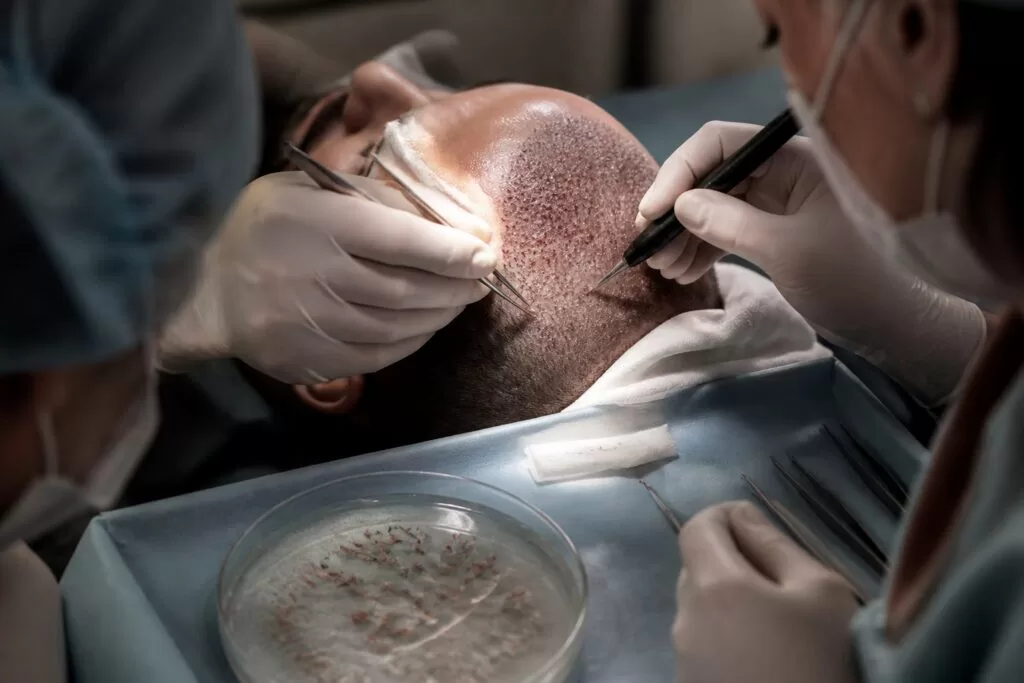
FUE, or strip harvest, commonly supplies 800 to 2,800 grafts in female hairline cases. A graft is a tissue unit with one or more follicles. You can round the frontotemporal corners, which advancement rarely does. Growth often starts near month 4, and most people judge the result at 8 to 12 months.
| Factor | Forehead reduction | FUE hair transplant |
|---|---|---|
| Timing | Immediate height change | Growth over 8 to 12 months |
| Scar | Fine line at the new hairline | No forehead line with FUE |
| Shape | Limited temple rounding | Full control of the edge |
Scars
Reduction leaves a linear scar at the new hairline. A trichophytic closure hides in thick, stable hair, but it can widen or show if the front later thins. FUE does not place a long scar on the forehead. Donor sites are small punches at the back and sides. FUT leaves a linear donor scar under existing hair. A tight scalp can still take grafts. Neither path is scarless.
Recovery
Reduction often takes 90 minutes to two hours. Many patients look presentable the next day with hair brushed forward. Washing commonly starts on day three, and sutures come out around one week. Frontal sensation can stay reduced for months because nerve branches are cut at the incision. One series reported about 80 percent of feeling back by a year. Shock loss and telogen effluvium are known risks.
A large transplant can fill most of a working day. Gentle washing may start on day two. Fuller activity, including gym work, is often delayed until about day six. Grafts used to round temples or cover a reduction scar are often delayed 3 to 4 months. Risks include incomplete growth, shock loss, folliculitis, and a possible second session. Anesthesia helps on the day. The days after are not painless, and density is not instant.
Follicle angles
Advancement keeps your original follicle direction, so the new border is dense and fairly straight.
Transplant design is angle work. Sites, sometimes as small as 0.5 mm, must follow directions that change from the midline to the temple. Single-hair grafts soften the edge. Multi-hair units sit behind them for mass.
At iGraft Global Hair Services, a computerized follicular checkup maps donor supply before a technique is chosen. ActiveFUE and Gen3 DFI Ultimate, a direct follicle implant method, are planned from that scan.
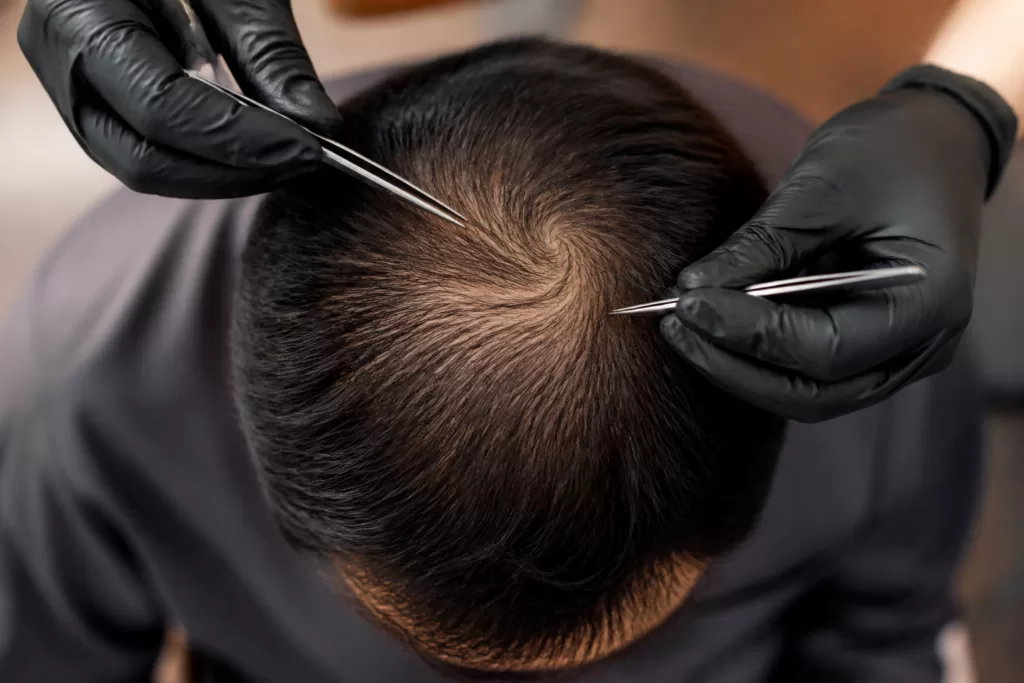
If the edge is still shedding, start with GFC or PRP. Surgery on miniaturizing hair can waste grafts and, after reduction, can expose a scar. iahrs.org notes that women need a donor check, since diffuse thinning can weaken the supply, and medical care may slow loss without reversing it.
Cost and which method fits
What is the cost of an FUE hair transplant, and how much does hair transplant surgery cost in India? On the pricing table, ActiveFUE is ₹45 per graft and Gen3 DFI Ultimate is ₹50 per follicle. At the ActiveFUE rate, 2,000 grafts are ₹90,000 and 3,000 grafts are ₹135,000 before added therapy. Unit pricing is easier to audit than a flat fee that hides the count.
The same rates apply in company-owned clinics. See Pune pricing, Bangalore pricing, Vijayawada pricing, and the India cost guide. Hyderabad uses the same unit price. treatmentroomslondon.com lists female hairline lowering transplants at about £5,000 to £8,000 after a consult. Which country is best for a hair transplant is the place where a doctor examines you and prices by graft.
About 30 percent of patients come from the USA, the UK, and Australia to this 15-year-old practice. DFI includes a 29-year assurance and six months of follow-up, not a growth guarantee.
Does hair transplant work, and is FUE worth it? In a stable candidate it can be a lasting way to lower a female hairline. It is not 100 percent successful. The best hair transplant clinic in Pune or Hyderabad is the team that scans the follicle, sets the angle, and sees you at six months. See common myths.
Who should choose which path
Choose reduction only with enough scalp movement, often 1.3 cm or more by hand, high frontal density, no blood supply problem from old brow surgery, and acceptance of the hairline scar.
Choose a transplant for temple rounding, edge thinning, a tight scalp, a prior brow lift, or no forehead scar. Which technique is best depends on the exam. FUE avoids a forehead line, direct implantation sets the angle, and strip can supply more grafts if you accept a donor scar. A weak donor, diabetes, very young age, or active shedding may mean you should wait.
FAQ
How far can each method lower my hairline?
Reduction can move dense native hair 1.5 cm or more, sometimes several centimeters. A transplant builds the edge graft by graft. Shape often matters more than distance.
Will the scar show with hair up?
It might after reduction if the front later thins. After FUE, a well-angled line should not read as a scar. Donor dots can remain.
Is hair transplant safe and permanent for women?
It can be safe and lasting when donor hair is stable, but it is not guaranteed and will not stop loss behind the new edge. Shock loss and poor growth are real risks.
What is the cost of 3,000 grafts in India?
A graft is the moved unit, often one to four follicles. At ₹45, 3,000 ActiveFUE grafts are ₹135,000. At ₹50 per follicle, 3,000 Gen3 DFI follicles are ₹150,000. The bill follows the count measured in Pune, Bangalore, Hyderabad, or Vijayawada.
Can I avoid shaving, and when should I book?
A no-shave plan is possible when density allows it, not on every scalp. Book when the edge is stable and you can protect it for the first week. No month is best.
Can both operations be combined?
Yes, often 3 to 4 months later.
Book the mapping first
Tell us whether you care more about overnight height, a rounded temple, or both. We will scan the scalp and name the cleaner fit. Start with the two-minute quiz or see how iGraft is set up. Sit with the plan before you sit with the procedure.