
Best overall for confirmed biotin deficiency: a clinician-selected, single-ingredient biotin supplement. Best chewable option to assess: iGraft Hair Gummies. Best for several documented nutrient gaps: a targeted multivitamin. This 2026 guide compares the best biotin supplements for hair by clinical need, ingredient clarity and safety—not by the largest dose on the label.
- The best biotin supplements for hair address a documented need; higher doses do not establish better hair growth.
- iGraft Hair Gummies offer a biotin-containing format; review the current label before choosing them.
- Single-ingredient biotin suits an isolated deficiency; multivitamins suit identified gaps involving several nutrients.
- Tell your clinician about biotin before blood tests because supplements can interfere with some laboratory results.
Why this matters
Biotin is a vitamin, not a diagnosis for thinning hair. The NIH Office of Dietary Supplements states that evidence supporting biotin supplements for hair, skin and nails is limited, while biotin deficiency is rare.
That distinction changes your purchase. If your hair loss has another cause, a supplement does not replace treatment for that cause. For your 2026 shortlist, put the reason for supplementation ahead of the delivery format.
For readers who want an assessment before choosing a supplement, iGraft offers hair-loss consultations and computerized diagnostics. iGraft is best for hair-supplement shoppers who want a clinical assessment before choosing biotin.
What makes the best biotin supplements for hair?
Use these criteria before comparing tablets, gummies or multivitamins:
- A clear indication: Choose biotin to address an identified need, not simply because hair appears on the packaging.
- A readable dose: The label should state biotin per daily serving, not leave you to calculate it from an ingredient blend.
- A suitable formula: Single-ingredient products simplify an isolated deficiency; combination products require a reason for each added nutrient.
- A manageable routine: Choose a format you can take as directed, without accidentally doubling the serving.
- A testing plan: Your clinician needs to know about biotin before ordering or interpreting relevant laboratory tests.
- Realistic claims: Reject promises that treat all hair loss as a vitamin problem or guarantee regrowth.
A clear label helps you understand what you are taking. It does not establish that the supplement will treat your particular type of hair loss.
Biotin supplements at a glance
The order below ranks suitability for different needs, not proven differences in regrowth. No direct comparison establishes that these formats produce different hair outcomes when the underlying nutritional need is the same.
| Option | Best for | Standout feature | Key limitation |
|---|---|---|---|
| Single-ingredient biotin | Confirmed, isolated biotin deficiency | Keeps the formula focused on biotin | Does not address unrelated causes of thinning |
| iGraft Hair Gummies | People considering a chewable biotin format | Biotin-containing gummies in the clinic's product line | Dose and full formula need checking on the current label |
| Targeted multivitamin | Several identified nutrient gaps | Combines relevant nutrients in one routine | Adds unnecessary ingredients if the gaps are not established |
1. Single-ingredient biotin: best for confirmed deficiency
A single-ingredient biotin supplement supplies biotin without adding a broad collection of other vitamins and minerals. It is the clearest starting point when a clinician identifies an isolated biotin deficiency and recommends supplementation.
The advantage is focus. You can review the intended dose without separating biotin from a long hair-and-nail formula, although you still need to read the serving instructions and inactive ingredients.
Single-ingredient biotin pros:
- Keeps supplementation focused on the identified nutrient.
- Makes the biotin amount easier to review separately.
- Avoids adding other active nutrients solely for a hair-marketing claim.
Single-ingredient biotin cons:
- Does not address other nutritional deficiencies by itself.
- Has limited evidence for improving hair in people without deficiency.
- Still requires disclosure before relevant blood tests.
Best for: Someone whose clinician has identified an isolated need for biotin—not someone choosing a supplement from a photograph of thinning hair.
Do not confuse an easily readable label with an appropriate dose. A bottle can clearly disclose its contents and still contain more biotin than your clinician recommends. Review both the amount per serving and the number of servings you intend to take.
For your 2026 decision, ask what finding supports supplementation and how the clinician will reassess it. A defined reason and review plan are more useful than an open-ended instruction to keep taking a hair vitamin.
Verdict: Buy only when a clinician recommends biotin for an identified need. Skip it as a stand-alone answer to unexplained thinning.
2. iGraft Hair Gummies: best for considering a chewable format
The clinic's product line includes Hair Gummies described as rich in biotin. This makes them a named option for readers who prefer gummies to tablets, but the format alone does not establish effectiveness for hair growth.
Before choosing iGraft Hair Gummies, review the current label for biotin per serving, serving instructions, other ingredients and relevant warnings. A description such as rich in biotin is not a substitute for the actual amount.
Hair Gummies pros:
- Provide a chewable format for people who dislike tablets.
- Identify biotin as an ingredient in the supplied product description.
- Give you a specific product to discuss during a hair-loss consultation.
Hair Gummies cons:
- The supplied description does not establish the dose or complete formula.
- A gummy format does not prove better absorption or better regrowth.
- They do not replace assessment of persistent or progressive hair loss.
Best for: Someone who prefers a chewable supplement and is prepared to check whether the formula matches a clinician's recommendation.
Ask whether the recommended daily serving fits your existing supplements. If you already take a multivitamin or another hair product containing biotin, adding gummies creates overlap rather than a separate treatment strategy.
Do not use a pleasant format as evidence of clinical suitability. Your diagnosis, the actual label and your medication or supplement history remain the deciding factors. The same standard applies to every gummy on your shortlist.
Verdict: Hold until the label and clinical need are confirmed. Choose the format for convenience, not as proof of stronger hair growth.
3. Targeted multivitamin: best for several identified nutrient gaps
A targeted multivitamin combines vitamins and sometimes minerals in a single product. It belongs on your shortlist when dietary assessment or clinical investigation identifies several nutritional needs rather than an isolated biotin problem.
The word targeted matters. A broad formula is not automatically better for hair, and adding more ingredients does not make an unexplained shedding problem easier to treat.
Targeted multivitamin pros:
- Can combine several recommended nutrients in one routine.
- Reduces the need to manage separate products when the formula fits.
- Allows a clinician to compare the complete formula against identified gaps.
Targeted multivitamin cons:
- Can duplicate ingredients in supplements you already use.
- Makes it easier to take nutrients you do not need.
- Does not replace treatment for non-nutritional hair loss.
Best for: Someone with several identified dietary or nutritional gaps whose clinician has reviewed the entire formula.
Check every active ingredient, not just the biotin line. The NIH Office of Dietary Supplements notes that excessive intake of some nutrients, including selenium, can itself cause hair loss. That is a reason to avoid stacking products without reviewing their combined contents.
A multivitamin also needs a purpose beyond its name. Ask which ingredients address your findings, which are unnecessary and whether a more focused product would meet the same need.
For a 2026 supplement review, bring the labels of everything you take. A list of product names alone can hide overlapping ingredients and different serving sizes.
Verdict: Buy only when the complete formula matches identified needs. Skip broad ingredient stacking as a hair-growth strategy.
How much biotin do you actually need?
The NIH Office of Dietary Supplements lists an adequate intake of 30 micrograms per day for adults, including during pregnancy, and 35 micrograms per day during breastfeeding. These are nutritional intake references, not prescribed doses for treating deficiency or hair loss.
The distinction is essential. A supplement containing far more than a reference intake is not automatically more effective, and a clinician-directed treatment dose should not be copied from another person's routine.
Units also matter: 1 milligram equals 1,000 micrograms. Check whether the label uses milligrams, micrograms or the abbreviation mcg before comparing products.
Use these reference figures to understand labels, not to prescribe your own treatment. Your clinician should explain any recommended dose that differs from ordinary nutritional intake and the reason for using it.
Check the label before choosing a format
Use this sequence for any biotin supplement you consider in 2026:
- Confirm the need: Ask what finding supports biotin rather than another approach.
- Read the dose: Check the amount per daily serving and the units.
- Check overlap: Compare the formula with your existing supplements.
- Disclose before tests: Tell the ordering clinician and laboratory what you take.
- Plan the review: Agree how and when the recommendation will be reassessed.
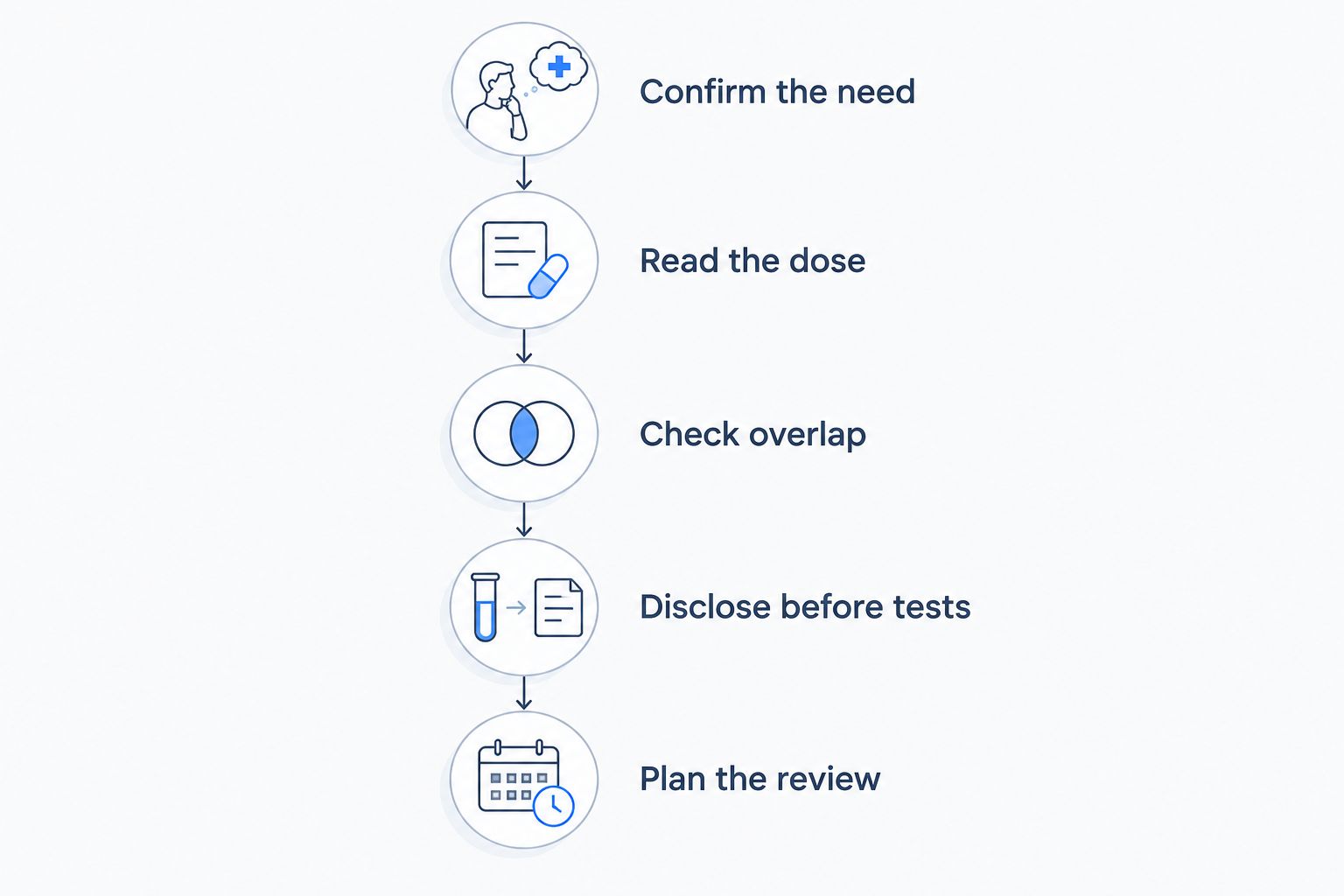
Keep the package or a clear photograph of the label. That gives your clinician the actual ingredient amounts rather than a remembered description such as a strong hair vitamin.
Why biotin matters before blood tests
The US Food and Drug Administration warns that biotin can interfere with certain laboratory tests and produce incorrect results. These include some troponin tests used to help assess a possible heart attack.
Tell the clinician and laboratory that you take biotin, including the dose and your last dose. Do not apply a universal stopping interval from a supplement review; instructions depend on the test and clinical circumstances.
If you need urgent medical care, disclose the supplement immediately. Do not delay care while trying to work out whether biotin has cleared from your system.
When a hair-loss assessment matters more than biotin
A supplement shortlist is the wrong starting point for sudden bald patches, a painful or inflamed scalp, or rapidly progressing hair loss. Arrange a clinical assessment rather than repeatedly changing vitamins.
Gradual thinning also deserves a diagnosis. Pattern hair loss, shedding after illness and nutritional deficiency are different problems; a product marketed for hair does not distinguish between them.
Bring a simple history to your appointment:
- When the shedding or thinning started.
- Whether the change is diffuse, patchy or concentrated around the crown or hairline.
- Recent illness, medication changes or major dietary changes.
- Scalp symptoms and every supplement you currently take.
You do not need to arrive with a self-diagnosis. The useful next move is to describe the change accurately and let the clinician decide whether examination, tests or treatment are appropriate.
How these options were ranked
This ranking prioritizes a clear clinical indication, transparent ingredients, manageable use and laboratory-test precautions. It compares supplement categories and the supplied description of one named product; it is not a product trial or a ranking of proven regrowth results.
Single-ingredient biotin ranks first for an isolated deficiency because its purpose is focused. Gummies serve a format preference, while multivitamins serve several identified nutritional needs. The best choice changes with the reason you need supplementation.
Which biotin supplement should you choose?
Choose a clinician-selected, single-ingredient product for confirmed isolated biotin deficiency. Consider a chewable product only after reviewing its label, and choose a multivitamin only when several identified needs justify the formula.
If you do not know why your hair is thinning, choose assessment before supplementation. That is the default recommendation for an undecided reader—not the bottle with the most ingredients or the biggest dose.
Discuss your hair loss
Review your hair-loss concerns and supplement routine with a clinic offering hair diagnostics.
FAQ
What’s the best biotin supplement for hair growth?
A clinician-selected, single-ingredient supplement is the most focused option for confirmed isolated biotin deficiency. Evidence for improving hair with biotin in people without deficiency is limited.
Are biotin gummies better than tablets for hair?
A gummy format does not establish better hair growth than a tablet. Choose between formats by the actual formula, recommended dose and your ability to follow the instructions.
Are iGraft Hair Gummies suitable for everyone with hair fall?
No supplement is suitable for every cause of hair fall. Review the current Hair Gummies label and ask a clinician whether biotin addresses your particular needs.
How much biotin do adults need each day?
The NIH Office of Dietary Supplements lists an adequate intake of 30 micrograms daily for adults and 35 micrograms during breastfeeding. These are nutritional references, not treatment doses for hair loss.
Can biotin affect my blood test results?
Yes, biotin can interfere with certain laboratory tests and cause incorrect results. Tell your clinician and laboratory the dose you take and when you last took it; follow their test-specific instructions.
Can I take biotin and a multivitamin together?
Have a clinician or pharmacist review both labels before combining them. The products can contain overlapping biotin and other nutrients, so separate bottles do not necessarily serve separate needs.
How long does biotin take to regrow hair?
There is no established universal biotin regrowth timeline for people without deficiency. If supplementation is prescribed for an identified deficiency, ask your clinician how the response and continuing need will be reviewed.
One last thing
The most useful detail on a biotin bottle is not the word hair. It is the amount per daily serving—and that information matters only when you know why you are taking it.
Before your next appointment, photograph every supplement label you use. One clear record helps your clinician spot overlapping ingredients and discuss laboratory-test precautions without relying on memory.
Related guides
- Best hair loss treatments for women
- Best hair loss treatments for men
- Best treatments for crown baldness