
Skin treatment for brides is a personalised skincare and clinical-care plan aimed at healthier, calmer skin before the wedding. This 2026 guide explains how to choose treatments around your skin concern, ceremony schedule and recovery needs—not a promise of flawless skin by a fixed date.
- Choose skin treatment for brides by diagnosis, not by the name of a bridal package.
- iGraft skin treatments suit brides seeking in-clinic care for acne, scars or unwanted hair.
- Chemical peels, acne care and laser hair reduction address different concerns; they are not interchangeable.
- Keep your established skincare routine stable near the wedding and follow your clinician’s recovery advice.
Why skin treatment matters for brides
Your wedding creates a fixed deadline, but your skin does not recover according to an invitation. Makeup trials, outdoor photography, travel and several ceremonies also affect when you can comfortably schedule a treatment.
The right bridal plan treats a defined concern without creating an avoidable last-minute recovery problem. Active acne, acne marks, indented scars and unwanted facial hair need different assessments. A treatment chosen for someone else’s bridal photographs is not automatically suitable for you.
For your 2026 wedding plan, separate what needs medical attention from what needs gentle daily care. Persistent acne deserves assessment; a desire for brighter photographs does not automatically justify a procedure. iGraft offers skin treatments covering acne, scars, laser hair reduction and chemical peels, but suitability still depends on an individual consultation.
Build your bridal skin treatment plan
1. Identify your main skin concern
Start with a written description of what bothers you. Use ordinary language: painful breakouts, flat brown marks, uneven texture, dryness or unwanted upper-lip hair. You do not need to diagnose yourself before speaking to a clinician.
Choose up to 3 concerns and rank them. This keeps the consultation focused and helps you distinguish a necessary treatment from an optional addition. Bring 2 photographs taken in similar lighting to show changes; photographs support the conversation but do not replace an examination.
Treating the wrong concern wastes your preparation time. A flat mark after a spot is not the same problem as a depressed acne scar, even when both are described as acne damage.
- List your main concerns in priority order.
- Record when each concern started or changed.
- Note whether breakouts hurt, itch or leave marks.
- Bring clear photographs without filters.
- Tell the clinician about previous treatment reactions.
2. Stabilise your everyday skincare
Begin with the routine you already tolerate rather than a shopping list of bridal products. A gentle cleanser, suitable moisturiser and sun protection provide a simpler baseline than several new exfoliants introduced together. Your clinician can adjust this routine around diagnosed conditions and prescribed medicines.
For sun protection, choose a broad-spectrum sunscreen with SPF 30 or higher and follow its application directions. SPF is a protection rating, not a guarantee that pigmentation will disappear. Outdoor ceremonies also call for practical shade and protective clothing where possible.
Introduce only 1 new product at a time so you can identify a reaction. If a product causes persistent burning, swelling or a rash, stop using it and seek medical advice rather than treating irritation as evidence that it is working.
- Keep cleansing gentle rather than repeatedly scrubbing.
- Use a moisturiser your skin tolerates.
- Include broad-spectrum SPF 30 or higher.
- Avoid adding several exfoliating products together.
- Share your complete product list at the consultation.
3. Book an assessment before choosing a procedure
A consultation should establish what the concern is, whether treatment is appropriate and how it fits your wedding schedule. A package name cannot answer those questions. Start with an examination, not a commitment to every service on a menu.
For brides considering iGraft skin treatments, ask which of the clinic’s acne, scar, chemical-peel or laser hair reduction services addresses the identified concern. The advantage is access to in-clinic assessment and treatment options; the limitation is that no service list establishes your eligibility or predicts your result.
Your 2026 consultation should also cover current medicines, allergies, previous pigmentation after irritation and any pregnancy, breastfeeding or pregnancy plans. These details affect treatment choices. Ask who will perform the procedure and whom you should contact if recovery does not follow the instructions provided.
- Request an explanation of the diagnosis.
- Ask why the proposed treatment fits your concern.
- Disclose medicines, supplements and allergies.
- Discuss pregnancy, breastfeeding or pregnancy plans.
- Request written preparation and aftercare instructions.
4. Match the treatment to the problem
Choose an intervention only after its purpose is clear. Acne care aims to control breakouts; scar treatment addresses a different problem. Chemical peels use controlled exfoliation, while laser hair reduction targets unwanted hair. Combining the names into a bridal package does not make them interchangeable.
Choose the treatment for the diagnosis, then fit it to the calendar. Ask what improvement is realistic, what the treatment will not address and whether a simpler approach meets your immediate needs. If the explanation stays vague, do not agree to the procedure yet.
A useful decision sequence is: identify the concern, confirm the diagnosis, choose an appropriate option, then plan recovery. Keep this sequence intact even when your preparation time feels short.
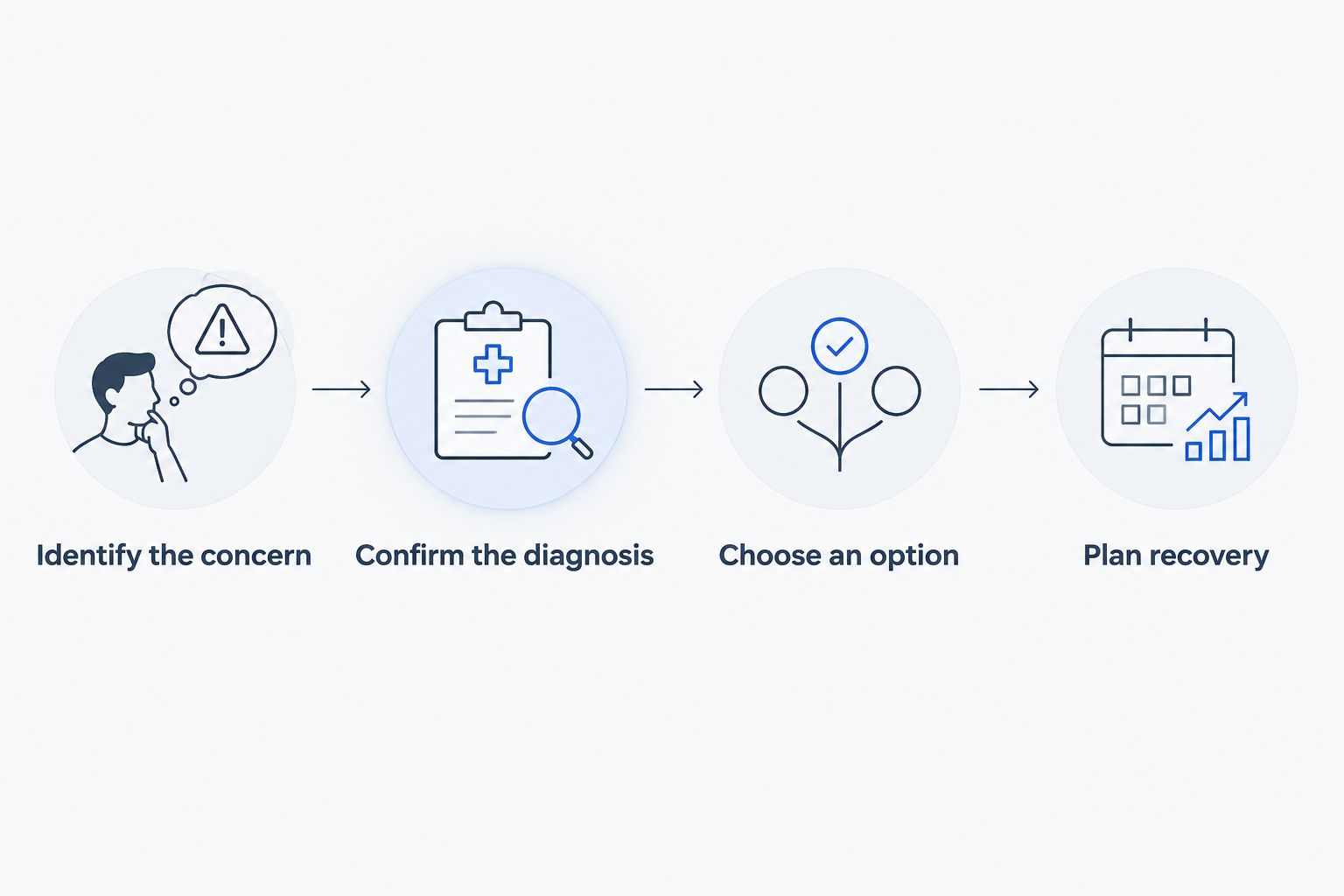
Your written plan should explain the expected benefit and the trade-off. Redness, irritation or changes in pigmentation matter when choosing an elective procedure before a photographed event; ask about risks specific to your skin and the proposed treatment.
- Ask which concern each proposed treatment addresses.
- Separate active breakouts from residual marks and scars.
- Request an explanation of relevant risks.
- Ask what happens if treatment causes irritation.
- Decline additions without a clear purpose.
5. Schedule around every wedding event
Use the earliest important event as your scheduling reference, not just the wedding ceremony. Your engagement photographs, makeup trial, mehendi and other functions all belong on the same calendar. Include travel and days when attending a follow-up would be difficult.
There is no universal last-safe-treatment date for every peel, laser procedure or skin type. The treatment details, your skin’s response and your clinician’s advice determine the recovery plan. Ask for this plan before booking, including when makeup, exercise and usual skincare can resume.
For a 2026 destination wedding, tell the clinician about expected sun exposure and travel before treatment. Do not compress appointments or increase treatment intensity simply because the ceremony is approaching. If there is insufficient recovery time, deferring an elective procedure is a reasonable decision.
- Share the dates of every photographed event.
- Include travel and outdoor activities in the schedule.
- Confirm restrictions on makeup and skincare.
- Arrange the recommended follow-up before travelling.
- Leave elective procedures out if recovery cannot fit.
6. Review progress without chasing perfection
Review the original concern rather than adding a new goal at every appointment. Compare photographs taken under similar conditions, discuss symptoms and report side effects. Different lighting or makeup can change how your skin looks without showing a treatment effect.
Ask what counts as a useful response and when the plan should be reconsidered. Do not increase applications, combine active products or book an additional procedure independently because progress feels slow. A clinician-led adjustment is different from stacking treatments out of deadline pressure.
Near the wedding, protecting settled skin is more useful than experimenting for an undefined glow. Agree on a simple event-week routine and know how to obtain advice if you develop a reaction or painful breakout.
- Compare progress against your original priorities.
- Record irritation and other unwanted changes.
- Keep follow-up appointments recommended by your clinician.
- Confirm which products to continue or pause.
- Request a clear contact route for treatment concerns.
Compare bridal skin treatment options
For brides planning treatment in 2026, the best option depends on the concern—not on how many procedures a package includes. This table compares purposes and limitations; it does not establish personal suitability or rank treatments by effectiveness.
| Option | Best for | Main advantage | Key limitation |
|---|---|---|---|
| Gentle home skincare | Brides maintaining comfortable skin without a diagnosed treatment need | Supports a consistent daily routine | Does not replace medical care for persistent acne or treat established indented scars |
| Clinician-led acne care | Brides with ongoing breakouts | Targets active acne with an individual plan | Needs review; prescribed treatments can cause irritation |
| Chemical peel treatments | Brides assessed as suitable for controlled exfoliation | Offers a targeted approach to selected surface concerns | Irritation, peeling and pigmentation changes are relevant risks; recovery varies |
| Clinician-led scar care | Brides concerned about established acne scars | Allows treatment selection around scar type and skin assessment | Improvement is not the same as complete scar removal |
| Laser hair reduction | Brides seeking reduction of unwanted hair | Targets hair growth rather than relying only on repeated temporary removal | Requires suitability assessment; burns and pigment changes are possible risks |
These options can have different roles within a plan, but more treatment is not automatically better. Ask the clinician to justify each component and explain which concern should be addressed first. You can accept assessment without committing to every proposed procedure.
Discuss your bridal skin concerns
Explore iGraft’s skin services and ask which options fit your concern and wedding schedule.
Common mistakes brides make
Choosing a package before an assessment
A bridal label describes the intended customer, not a diagnosis. Start with the concern you want treated and ask which parts of the package serve that concern. Leave out procedures that do not have a clear purpose for you.
Treating marks and scars as the same problem
Flat discolouration and changes in skin texture require different assessments. Ask the clinician to identify what you are seeing before judging a treatment by someone else’s result. Photographs alone do not establish whether two people have the same condition.
Hiding recent products or procedures
Tell the clinician about salon peels, bleaching, waxing, home exfoliants and prescribed skincare. Recent irritation and other treatments can affect procedure planning. Include products used only occasionally, not just your daily routine.
Booking a first-time procedure just before an event
A friend’s uncomplicated recovery does not establish your recovery time. Give your clinician the actual event dates and accept a recommendation to postpone. Makeup should not be treated as a substitute for allowing irritated skin to recover.
Ignoring pregnancy plans during bridal preparation
Pregnancy plans are relevant to skincare and medical treatment selection. Discuss them privately with the clinician before starting prescribed acne care or elective procedures. Do not stop prescribed medicines without advice from the treating clinician.
FAQ
What is the best skin treatment for brides?
The best skin treatment for brides is the one matched to a diagnosed concern and a realistic recovery window. Active acne, pigmentation, scars and unwanted hair need different assessments; no single bridal package suits everyone.
When should I start bridal skin treatment?
Start with an assessment before committing to a procedure or wedding-week appointment. Share all event dates so the clinician can plan treatment, review and recovery around your schedule rather than use a universal countdown.
Is a chemical peel better than a facial before my wedding?
A chemical peel is not automatically better than a facial before a wedding. The procedures have different purposes, and a peel requires assessment of the intended benefit, skin suitability and recovery risks.
Can I get laser hair reduction before my wedding?
Laser hair reduction is an option for brides assessed as suitable for it. Discuss the treatment area, skin response, expected course and restrictions before scheduling it around ceremonies or travel.
Can bridal skin treatment remove acne scars completely?
Bridal skin treatment should not be presented as a guarantee of complete acne scar removal. A clinician needs to assess the scar type and explain realistic improvement, risks and whether treatment fits your available time.
What does iGraft offer for bridal skin concerns?
iGraft offers skin treatments covering acne, scars, chemical peels and laser hair reduction. These services address different concerns, so an individual assessment should determine which option, if any, belongs in your bridal plan.
What should I do if a new product burns before my wedding?
Stop using a new product that causes persistent burning and seek medical advice. Avoid adding exfoliants or home remedies to correct the reaction, and seek urgent care for severe swelling, breathing difficulty or other severe symptoms.
One last thing
For your 2026 wedding, make the makeup trial a comfort check as well as a colour check. Tell the makeup artist about clinician-provided restrictions and report stinging or irritation rather than covering it with another layer. Calm, comfortable skin is a better final-week goal than trying an unfamiliar treatment for extra brightness.
Related guides
- Laser hair reduction treatments in Bangalore
- Hair loss treatments for women
- New Roots Skin Hair Laser alternatives