Best overall for female pattern hair loss: topical minoxidil. Best for trigger-related shedding: treating the underlying cause. Best for immediate coverage: hair camouflage. The best treatment for diffuse thinning in women in 2026 depends on the diagnosis; iGraft offers in-person hair-loss assessment before treatment selection.
- Topical minoxidil is the best treatment for diffuse thinning in women when female pattern hair loss is confirmed.
- Trigger-related shedding needs cause-specific care, not an automatic package of hair regrowth procedures.
- Prescription medicines, PRP and low-level laser therapy require different safety checks and treatment expectations.
- iGraft offers in-person hair-loss assessment; treatment selection should follow diagnosis rather than a procedure name.
Why this matters
Diffuse thinning describes how hair loss looks, not what causes it. Female pattern hair loss, telogen effluvium, thyroid disorders, iron deficiency and inflammatory scalp conditions can all reduce visible fullness, but they do not require the same treatment.
A gradually widening part suggests a different problem from sudden shedding after illness, childbirth or substantial weight loss. More than one condition can occur together. Treating only the shedding trigger will not necessarily address underlying female pattern hair loss.
Your first decision in 2026 is whether you need treatment for follicle miniaturisation, excessive shedding, scalp disease or a combination. Pain, burning, marked scaling, patchy loss or shiny areas without visible follicle openings need prompt medical assessment rather than a cosmetic treatment package.
What makes the best treatment for diffuse thinning?
Use these criteria before comparing procedures or buying products:
- Diagnosis fit: Does the treatment address your identified condition rather than thinning in general?
- Clinical evidence: Is there established evidence for female pattern hair loss, or only preliminary research?
- Safety fit: Does the plan account for pregnancy, breastfeeding, medicines and relevant medical conditions?
- Maintenance burden: Can you follow the application schedule, attend appointments and continue necessary treatment?
- Measurable progress: Will consistent photographs and scalp examination distinguish improvement from normal fluctuations?
- Honest limitations: Does the explanation separate reduced shedding, regrowth and cosmetic coverage?
No treatment wins every category. A medicine can support regrowth without correcting an iron deficiency; a hairpiece can improve coverage without changing follicle activity.
Best options at a glance for 2026
The ranking below assigns each option a different role. It is not a recommendation to combine everything.
| Treatment or option | Best for | Main role | Key limitation |
|---|---|---|---|
| Topical minoxidil | Confirmed female pattern hair loss | Supports hair growth with continued treatment | Needs ongoing use; irritation and unwanted facial hair can occur |
| Cause-specific treatment | Trigger-related shedding | Addresses an identified medical, nutritional or physiological cause | Does not automatically treat coexisting pattern hair loss |
| Prescription antiandrogens | Selected women needing additional medical treatment | Targets androgen-related effects on susceptible follicles | Requires prescribing, pregnancy precautions and individual safety checks |
| Platelet-rich plasma | An optional procedure alongside established care | Uses injections prepared from the patient's blood | Protocols vary and results are not guaranteed |
| Low-level laser therapy | Women preferring a non-drug adjunct | Uses a suitable light-based device | Device evidence and treatment demands differ |
| Hair camouflage and hair systems | Immediate improvement in visible coverage | Conceals thinning without waiting for regrowth | Does not treat the cause or restore follicles |
1. Topical minoxidil: best for female pattern hair loss
Topical minoxidil is the strongest starting option on this list when a clinician confirms female pattern hair loss. It supports growth in affected follicles, but it does not diagnose the cause of thinning or replace treatment for scalp inflammation or nutritional deficiency.
Common formulations include 2% solution and 5% foam. Application instructions depend on the formulation and local product labelling; do not assume that using more produces better results.
Topical minoxidil pros:
- Has established evidence for female pattern hair loss.
- Can be applied at home without an injection procedure.
- Provides a medical starting point against which progress can be assessed.
Topical minoxidil cons:
- Can cause scalp irritation, unwanted facial hair and an initial increase in shedding.
- Requires continued use to maintain treatment-related benefits.
- Is generally avoided during pregnancy and breastfeeding; discuss reproductive plans before starting.
Best for: Women with confirmed female pattern hair loss who can maintain regular application.
Allow several months before judging progress. A review around 6 months is more useful than switching products after a few weeks, although your clinician should review troublesome symptoms sooner.
Verdict: Hold until the diagnosis and product instructions are clear; then prioritise topical minoxidil for suitable female pattern hair loss.
2. Cause-specific treatment: best for trigger-related shedding
Telogen effluvium causes increased shedding when more hairs enter the resting phase after a trigger. Illness, childbirth, major dietary restriction, some medicines and medical disorders are recognised triggers; the correct response depends on the history and examination.
Cause-specific treatment means correcting a confirmed problem, not taking a general hair supplement indefinitely. Blood tests should answer a clinical question rather than form an automatic shopping list.
Cause-specific treatment pros:
- Addresses the reason for shedding when a treatable trigger is identified.
- Avoids unnecessary procedures for a problem that needs medical or nutritional care.
- Can identify health issues requiring attention beyond hair appearance.
Cause-specific treatment cons:
- Visible fullness takes time to recover after the trigger resolves.
- An obvious trigger does not exclude coexisting female pattern hair loss.
- Supplements do not correct every cause of shedding and can be harmful when taken unnecessarily.
Best for: Women with increased shedding after an identifiable event or with symptoms suggesting an underlying disorder.
Bring a timeline of illnesses, medicine changes, menstrual changes and dietary changes to the appointment. Do not stop a prescribed medicine without discussing it with its prescriber.
Verdict: Hold off on procedure packages until the shedding trigger has been assessed.
3. Prescription antiandrogens: best for selected women needing more treatment
A clinician can consider an antiandrogen such as spironolactone for selected women with female pattern hair loss. This is a prescription decision, not a universal next step after an unsuccessful shampoo.
Acne, increased facial hair or irregular periods also deserve discussion because they can change the assessment. Hair thinning alone does not establish a hormonal disorder.
Prescription antiandrogen pros:
- Offers an additional medical approach when topical treatment alone is insufficient or unsuitable.
- Can be considered alongside minoxidil under medical supervision.
- Allows treatment to account for relevant androgen-related symptoms.
Prescription antiandrogen cons:
- Can cause adverse effects, including dizziness and menstrual changes.
- Requires pregnancy precautions and review of other medicines and medical conditions.
- Monitoring requirements depend on the medicine and individual risk factors.
Best for: Women whose clinician identifies a suitable role for prescription treatment after assessing diagnosis, health history and reproductive plans.
Do not borrow another person's prescription or copy a dose from a hair-loss forum. Oral minoxidil is a separate prescription option with different risks; it is not an antiandrogen or a direct substitute for topical instructions.
Verdict: Hold until a qualified prescriber confirms suitability and explains monitoring.
4. Platelet-rich plasma: best as an optional procedural adjunct
Platelet-rich plasma, or PRP, involves preparing a platelet-containing fraction from your blood and injecting it into the scalp. Research supports potential benefit in pattern hair loss, but preparation methods, treatment schedules and study quality vary.
PRP should have a defined purpose in your plan. It is not a replacement for investigating sudden shedding, and it does not establish that a nutritional or hormonal problem has been corrected.
PRP pros:
- Offers a clinician-delivered option for women considering a procedural adjunct.
- Uses a preparation derived from the patient's own blood.
- Can be discussed alongside established medical treatment rather than instead of it.
PRP cons:
- Involves injections, with discomfort, bruising and procedural risks.
- Does not have a single standardised protocol across clinics.
- Does not guarantee regrowth or remove the need for ongoing assessment.
Best for: Selected women with diagnosed pattern hair loss who understand the uncertainty and want to discuss an additional procedure.
At iGraft, hair-loss services include PRP and other clinic treatments. Ask which diagnosis a proposed procedure addresses, how progress will be documented and what happens if the response is inadequate. Different procedure names do not establish equivalent evidence.
Verdict: Hold until the indication, alternatives and review plan are explained.
5. Low-level laser therapy: best for a non-drug adjunct
Low-level laser therapy uses a light-based device intended to support hair growth. Some devices have clinical evidence for pattern hair loss, but that evidence should not be transferred automatically to every cap, comb or clinic machine.
Check the exact device and instructions. A treatment label alone tells you little about whether the studied protocol matches the device being offered.
Low-level laser therapy pros:
- Offers a non-drug approach without scalp injections.
- Can fit into a clinician-directed plan for pattern hair loss.
- Includes home-use formats for people who can follow the required schedule.
Low-level laser therapy cons:
- Requires repeated use and a realistic commitment to the instructions.
- Evidence varies between devices and study designs.
- Does not correct an underlying medical or nutritional cause of shedding.
Best for: Women with confirmed pattern hair loss who prefer a non-drug adjunct and can evaluate device-specific evidence.
Ask what outcome the device is intended to improve and how that outcome will be measured. Regulatory status is not a promise that an individual will regain their previous density.
Verdict: Hold until the exact device, evidence and treatment commitment are clear.
6. Hair camouflage: best for immediate visible coverage
Hair fibres, a changed hairstyle, toppers and hair systems can reduce the visibility of thinning without waiting for biological regrowth. These are appearance options, not treatments for the underlying condition.
Choose coverage that feels comfortable and avoids pulling on existing hair. Adhesives, clips and attachment methods deserve attention when the scalp is sensitive.
Hair camouflage pros:
- Improves visible coverage without waiting for a medicine to work.
- Can be used while medical assessment or treatment continues.
- Lets you choose an appearance goal separately from a regrowth goal.
Hair camouflage cons:
- Does not stop shedding or treat follicle miniaturisation.
- Requires upkeep, and some attachment methods can irritate or pull on hair.
- Fit and appearance depend on the option and your remaining hair.
Best for: Women who want immediate cosmetic support, including those who do not want medical treatment.
You do not need to postpone cosmetic coverage until every medical option has been tried. Tell your clinician about scalp irritation or traction from a system.
Verdict: Buy only after checking comfort, attachment and maintenance requirements.
How the 2026 ranking works
The ranking prioritises diagnosis fit, established evidence, safety, maintenance and measurable progress. Topical minoxidil leads for female pattern hair loss; cause-specific treatment leads when shedding is driven by an identified trigger. Procedures sit below these because they require additional selection and do not replace diagnosis.
The medical distinctions follow established patient guidance from the American Academy of Dermatology and the British Association of Dermatologists on female pattern hair loss and telogen effluvium. This is a treatment-selection guide, not an individual prescription or a claim of comparative clinic testing.
Which treatment should you choose in 2026?
Start with diagnosis, not the most elaborate treatment package. iGraft hair-loss consultations suit women seeking an in-person assessment before choosing treatment.
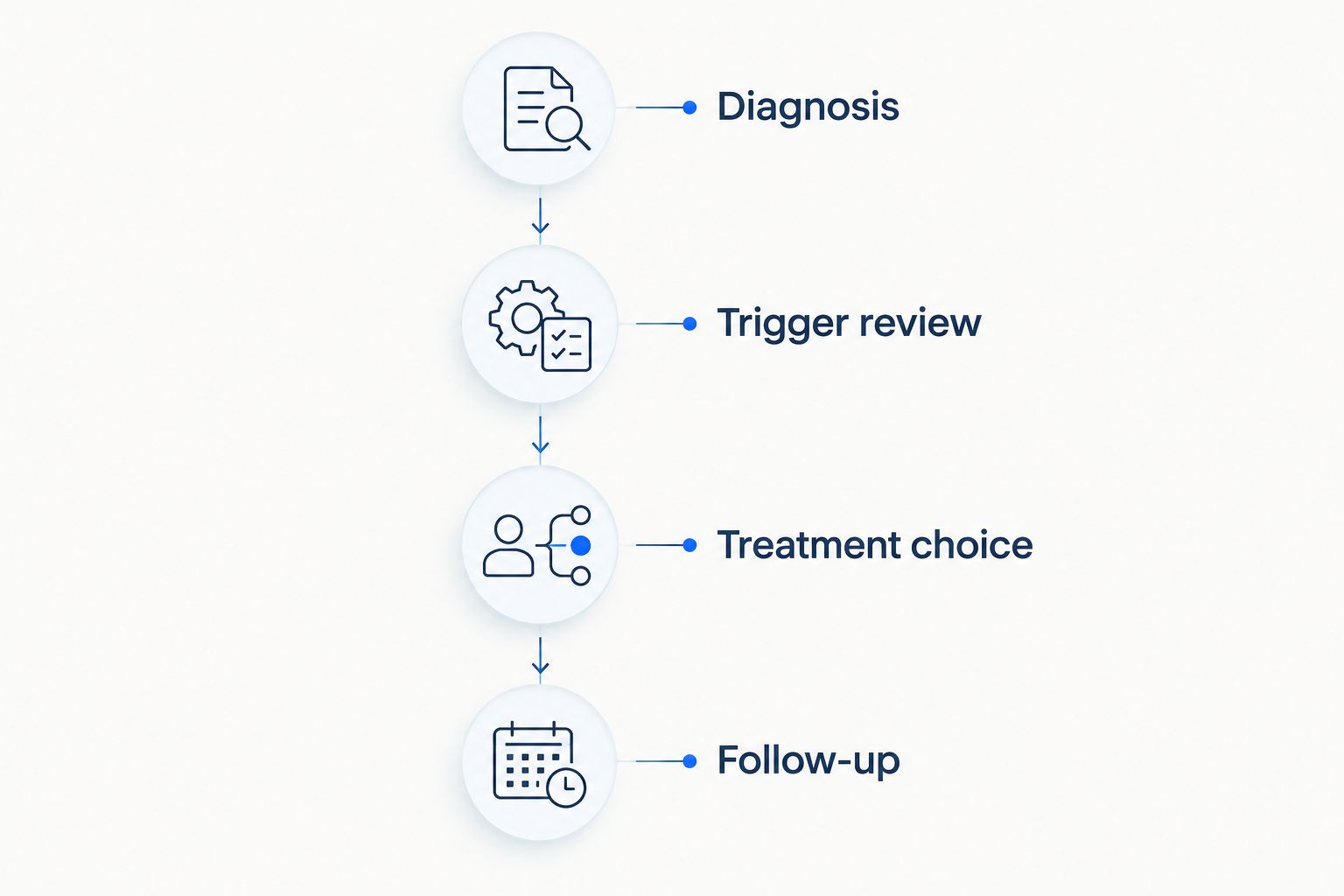
Use this appointment sequence:
- Diagnosis: Ask what condition explains the distribution and timing of your thinning.
- Trigger review: Discuss health changes, medicines, nutrition and reproductive plans.
- Treatment choice: Separate essential treatment from optional additions and cosmetic coverage.
- Follow-up: Agree on photographs, review timing and reasons to contact the clinician sooner.
Take baseline photographs with the same parting, lighting and camera position you will use at follow-up. A wet-hair photograph and a styled dry-hair photograph are not a fair comparison.
For an iGraft appointment, bring your current medicines, previous treatment details and any existing test results. Ask for a plan you can realistically maintain, rather than starting several additions without knowing their individual purpose.
FAQ
What’s the best treatment for diffuse thinning in women in 2026?
Topical minoxidil is a leading treatment for confirmed female pattern hair loss, but diffuse thinning needs a diagnosis first. Trigger-related shedding, scalp disease and nutritional deficiency require different care.
Can diffuse thinning in women grow back?
Regrowth depends on the cause and whether the follicles remain capable of producing hair. Trigger-related shedding often improves after the cause resolves, while female pattern hair loss usually needs ongoing management.
Is 5% minoxidil always better than 2% minoxidil?
No single formulation is best for every woman. The choice depends on the product’s instructions, tolerability, medical circumstances and ability to follow the application schedule.
Is PRP better than minoxidil for diffuse thinning?
PRP is not a universal replacement for minoxidil. Topical minoxidil has an established role in female pattern hair loss, while PRP is an optional procedure with variable protocols and outcomes.
Should I take iron or biotin for thinning hair?
Do not start iron or biotin simply because your hair is thinning. Treatment should address a demonstrated deficiency or another clinical indication; biotin can also interfere with some laboratory tests.
Can I use hair-loss medicines while pregnant or breastfeeding?
Do not start or continue hair-loss medicines during pregnancy or breastfeeding without medical advice. Minoxidil and antiandrogen treatment require specific review, including when you are planning pregnancy.
How long should I wait before judging a treatment?
Hair-growth treatment generally needs several months before meaningful assessment. A review around 6 months is useful for topical minoxidil, but adverse effects, scalp symptoms or rapid worsening need earlier attention.
Is a hair transplant suitable for diffuse thinning in women?
A hair transplant is not the default treatment for diffuse thinning. Suitability depends on a stable diagnosis, donor-hair quality and the distribution of loss; diffuse involvement of the donor area can make surgery unsuitable.
One last thing
Less shedding and more density are different outcomes. You can notice fewer hairs during washing before your part looks fuller, and cosmetic coverage can improve appearance without changing either measure. Agree on the outcome you are tracking before deciding that treatment has succeeded or failed.
Related guides
- Best hair loss treatments for women
- Hair regrowth treatments compared: GFC, PRP and exosomes
- Best treatments for crown baldness