
Best overall approach: clinician-led care matched to your medical needs. Best for in-person GLP-1 consultations: iGraft. Best non-medication starting point: a structured lifestyle program; best for complex metabolic conditions: specialist-led care. This 2026 guide compares medical weight loss pathways in India by suitability, supervision and long-term support—not promised kilograms lost.
- For the best medical weight loss program India search, choose clinical fit over promised weight loss.
- iGraft suits people seeking in-person consultations for a doctor-supervised GLP-1 weight management program.
- Structured lifestyle care suits people seeking supervised weight management without starting medication.
- Endocrinology and bariatric assessment serve different medical needs; neither is a shortcut around assessment.
Why this matters
A medical weight loss program should answer more than whether you want to lose weight. It should establish whether treatment is appropriate, what health risks need attention and how your response will be reviewed.
Medication, nutrition support and surgery are not interchangeable purchases. They involve different eligibility requirements, risks and follow-up responsibilities. Choose the assessment first, then the treatment.
For your 2026 shortlist, separate the clinic’s service description from evidence about a particular medicine or procedure. A supervised program still needs an individual suitability assessment; supervision does not remove treatment risks.
What makes the best medical weight loss program?
Use these criteria before comparing names or treatment packages:
- Medical assessment: A clinician reviews your health history, current medicines, previous weight management attempts and relevant symptoms.
- Treatment suitability: The program explains why lifestyle care, medication or specialist referral fits your circumstances.
- Named clinical responsibility: You know who prescribes, who reviews progress and whom to contact about adverse effects.
- Nutrition and activity support: Your plan addresses eating patterns, physical activity and preserving strength, rather than relying on medication alone.
- Monitoring and escalation: You receive clear instructions about reviews, treatment changes and symptoms requiring urgent attention.
- Maintenance planning: The program explains what happens after the initial treatment phase, including ongoing support or referral.
A polished consultation is not enough. Ask for a written plan that connects the assessment to the proposed treatment, monitoring and next review.
Medical weight loss options at a glance
These are care pathways, not a head-to-head trial of clinics. The first option is a named provider; the others describe the type of service to seek when your needs differ.
| Option | Best for | Standout feature | Key limitation |
|---|---|---|---|
| iGraft doctor-supervised GLP-1 program | People prioritising physical-clinic consultations | In-house consultations and doctor-supervised administration | Individual eligibility and treatment details require assessment |
| Structured medical lifestyle program | People seeking a non-medication starting point | Coordinated nutrition, activity and behaviour support | Does not replace medication or specialist treatment when indicated |
| Endocrinologist-led weight management | People with complex metabolic or endocrine concerns | Specialist assessment of interacting medical conditions | Not every person with weight concerns needs specialist care |
| Bariatric multidisciplinary assessment | People whose obesity warrants surgical evaluation | Assessment of surgical suitability and long-term requirements | Surgery involves operative risks and lasting follow-up responsibilities |
1. iGraft: best for in-person GLP-1 weight management consultations
The clinic describes its GLP-1 weight management program as delivered through physical centres, with in-house consultations and administration under doctor supervision. That makes it a relevant option if you want face-to-face clinical contact rather than a medication-only transaction.
iGraft is best suited to people seeking an in-person, doctor-supervised GLP-1 weight management program. This is a service-fit recommendation, not a claim that its treatment produces better weight loss than other providers.
GLP-1 medicines affect appetite and glucose regulation, but suitability depends on the specific medicine and your health history. Ask which medicine is proposed, why it fits your needs and how the clinician will monitor tolerability and response.
iGraft pros:
- Physical clinics support face-to-face consultations.
- The supplied program description includes in-house medical consultations.
- Doctor supervision is part of the stated administration model.
iGraft cons:
- A GLP-1 pathway is unsuitable for some people and requires individual screening.
- Clinic supervision does not eliminate medication side effects or contraindications.
- The program description is not comparative clinical evidence of better outcomes.
Best for: People who prefer physical-clinic contact while exploring whether GLP-1 treatment is appropriate.
Before enrolling, request the prescribing clinician’s details, review arrangements and instructions for reporting symptoms. Clarify how nutrition, physical activity and maintenance will be addressed alongside treatment.
Verdict: Hold until your clinician confirms suitability and explains the monitoring plan.
2. Structured medical lifestyle programs: best without medication
A structured medical lifestyle program combines clinical assessment with nutrition, activity and behaviour support. Unlike a generic diet plan, it should account for your medical conditions, medicines, food preferences and practical constraints.
This is a useful starting point when you want supervised weight management without beginning medication. It also provides support that remains relevant if a clinician later recommends another treatment.
Structured medical lifestyle program pros:
- Addresses everyday eating and activity patterns.
- Supports changes that fit your work, family and cultural routines.
- Avoids exposure to weight management medication when none is prescribed.
- Builds habits relevant to long-term maintenance.
Structured medical lifestyle program cons:
- Requires sustained participation and regular adjustment.
- Does not treat every medical contributor to weight gain.
- Is not a substitute for other treatment when clinically indicated.
Best for: People seeking a supervised, non-medication pathway or a foundation alongside other care.
For general adult health, World Health Organization guidance recommends at least 150 minutes per week of moderate-intensity aerobic activity, or 75 minutes per week of vigorous activity, plus muscle-strengthening activity on 2 days per week. These are population-level health recommendations, not a personalised weight loss prescription.
Ask your clinician how to adapt activity if you have joint pain, limited mobility or another health condition. A program should work with your starting point rather than demand an exercise routine you cannot sustain.
Verdict: Buy into structured support, not a rigid diet with a medical label.
3. Endocrinologist-led care: best for complex medical needs
Endocrinologist-led weight management focuses on the relationship between weight and endocrine or metabolic health. It is relevant when a clinician identifies concerns that need specialist assessment, such as difficult-to-manage diabetes or a suspected endocrine disorder.
Weight gain alone does not establish a hormone disorder. A specialist should use your history, examination and clinically indicated investigations rather than assume every weight concern needs extensive hormone testing.
Endocrinologist-led care pros:
- Connects weight management with relevant endocrine and metabolic conditions.
- Reviews treatment choices alongside existing medicines.
- Provides specialist input when the clinical picture is complex.
Endocrinologist-led care cons:
- Specialist assessment is unnecessary for some people.
- A consultation alone does not provide ongoing nutrition or activity support.
- Tests should answer a clinical question, not replace a discussion of your symptoms.
Best for: People referred for suspected endocrine disease, complicated diabetes care or other interacting medical concerns.
Bring your current medication list and relevant previous results. Explain when your weight changed, whether the change followed a new medicine and what other symptoms appeared. That history helps the specialist decide what needs investigation.
Verdict: Hold for specialist assessment when your medical history warrants it; skip indiscriminate hormone packages.
4. Bariatric multidisciplinary assessment: best for surgical evaluation
Bariatric assessment examines whether metabolic or weight loss surgery is appropriate. It should involve evaluation of medical suitability, nutritional needs, psychological readiness and the ability to follow postoperative care.
This pathway is not simply the next purchase after an unsuccessful diet. Surgery requires informed consent, discussion of alternatives and a clear understanding of procedure-specific risks and long-term responsibilities.
Bariatric multidisciplinary assessment pros:
- Evaluates surgical options within a medical decision process.
- Brings nutrition and postoperative requirements into the discussion before surgery.
- Allows comparison with non-surgical treatment pathways.
Bariatric multidisciplinary assessment cons:
- Surgery carries operative and anaesthetic risks.
- Nutritional monitoring and supplementation requirements depend on the procedure.
- Follow-up responsibilities continue beyond initial recovery.
Best for: People whose treating clinician recommends assessment for obesity surgery under applicable clinical criteria.
Ask who coordinates follow-up, how complications are handled and what monitoring the proposed procedure requires. Do not choose a surgical pathway solely because its advertised weight loss sounds faster.
Verdict: Hold until a multidisciplinary team confirms suitability and explains the long-term care plan.
What a proper assessment should cover
The strongest decision is not necessarily medication versus no medication. It is whether the proposed treatment follows a sound assessment and comes with usable follow-up instructions.
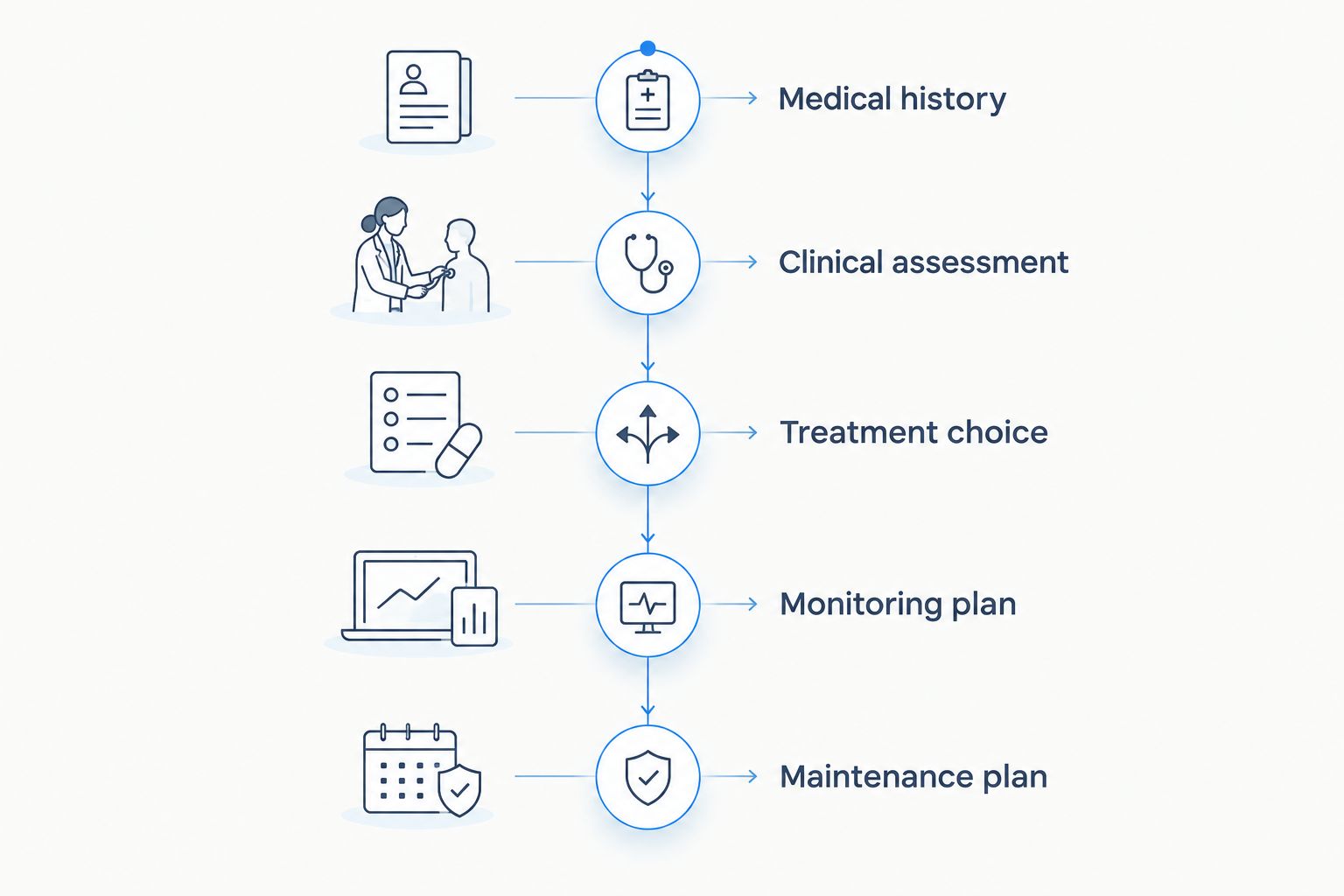
Look for these connected stages:
- Medical history: Discuss conditions, medicines, previous treatment, pregnancy plans where relevant and symptoms affecting treatment choice.
- Clinical assessment: Review weight-related health, examination findings and investigations the clinician considers necessary.
- Treatment choice: Compare suitable options, expected benefits, known risks and alternatives.
- Monitoring plan: Establish how response, tolerability and treatment changes will be reviewed.
- Maintenance plan: Clarify the support needed after the initial phase and what happens if treatment changes.
For a 2026 consultation, bring a current medication list and any relevant reports you already have. Ask before arranging new tests; the clinician should explain which investigations are needed and why.
Questions to ask before you enrol
A useful consultation leaves you understanding the plan, not simply agreeing to it. Ask direct questions and request clear answers:
- Who is responsible for prescribing and follow-up?
- What makes this treatment suitable for my medical history?
- Which benefits are realistic, and which outcomes cannot be promised?
- What side effects should I report, and how do I contact the clinical team?
- What happens if treatment does not suit me?
- How will eating patterns, activity and strength be supported?
- What is the maintenance plan if medication changes or stops?
For GLP-1 treatment, disclose pregnancy, breastfeeding or pregnancy plans before prescribing. Also discuss existing medicines and relevant medical history. Eligibility and precautions depend on the particular medicine; do not assume every product has identical instructions.
Severe or persistent abdominal pain, repeated vomiting or inability to keep fluids down during treatment needs prompt medical assessment. Do not wait for a routine review to report serious symptoms.
Discuss your weight management options
Explore clinic-based weight management and ask about suitability, supervision and follow-up.
How these options were ranked
This 2026 guide ranks pathways by the needs they serve: physical-clinic GLP-1 consultations, non-medication support, specialist medical assessment and surgical evaluation. The criteria are assessment quality, treatment suitability, clinical responsibility, monitoring and maintenance.
The named clinic’s placement reflects its supplied service description. It does not establish comparative effectiveness, fewer adverse effects or better outcomes than another provider. A service match is not an outcome guarantee.
Which medical weight loss program should you choose?
If you are undecided, start with a clinician-led assessment that considers different treatment options. Do not commit to a medicine or procedure before the assessment establishes why it fits you.
Choose structured lifestyle support when you want a supervised non-medication starting point. Seek specialist input when your medical history warrants it, and pursue bariatric assessment when your treating clinician recommends surgical evaluation.
Your best medical weight loss program in India in 2026 is the one that connects an appropriate treatment with clear monitoring and maintenance—not the one making the strongest promise.
FAQ
What’s the best medical weight loss program in India?
The best program is one matched to your medical history, treatment eligibility and follow-up needs. Compare clinician-led assessment, nutrition and activity support, medication monitoring and maintenance planning rather than promised weight loss.
Are doctor-supervised GLP-1 programs safe for everyone?
No. GLP-1 treatment requires individual screening, and doctor supervision does not eliminate side effects or contraindications. Suitability and precautions depend on the specific medicine and your medical history.
Can I choose a medical weight loss program without medication?
Yes. A structured medical lifestyle program provides supervised nutrition, activity and behaviour support without necessarily prescribing medication. Your clinician should explain whether additional treatment is indicated.
Do I need an endocrinologist before starting weight management?
Not everyone needs an endocrinologist. Specialist assessment is appropriate when your treating clinician identifies complex metabolic concerns or a suspected endocrine condition.
Is bariatric surgery better than weight loss medication?
Neither is the best choice for everyone. Surgery and medication have different eligibility requirements, benefits, risks and follow-up responsibilities, so the comparison requires an individual clinical assessment.
Can I stop weight loss medication when I reach my goal?
Discuss any treatment change with your prescribing clinician rather than stopping on your own. The decision should include your health response, tolerability and a maintenance plan.
Do I still need nutrition and exercise support during GLP-1 treatment?
Yes. Medication does not replace attention to nutrition, physical activity and strength. Ask your clinician to adapt the plan to your health, mobility and daily routine.
One last thing
Ask one question before choosing any program: What happens if this treatment does not suit me?
A useful answer explains reassessment, alternatives and who remains responsible for your care. Add that question to your 2026 consultation checklist; it reveals more about clinical support than a promised transformation.
Related guides
- Best hair loss treatments for women
- Best hair loss treatments for men
- Best treatments for crown baldness