How Many Days Off Work Do You Need After an FUE Hair Transplant? Desk vs Physical Jobs
You do not need weeks away from your desk after a modern follicular unit extraction session. Most office patients at iGraft return to email and meetings within 48 to 72 hours. If your work involves lifting, heat, helmets, or heavy sweat, plan on 7 to 14 days before you are back on site.
People mix up three different clocks: how the grafts heal, how you look on a video call, and when it is safe to strain. Those clocks are not the same.
What FUE recovery actually looks like
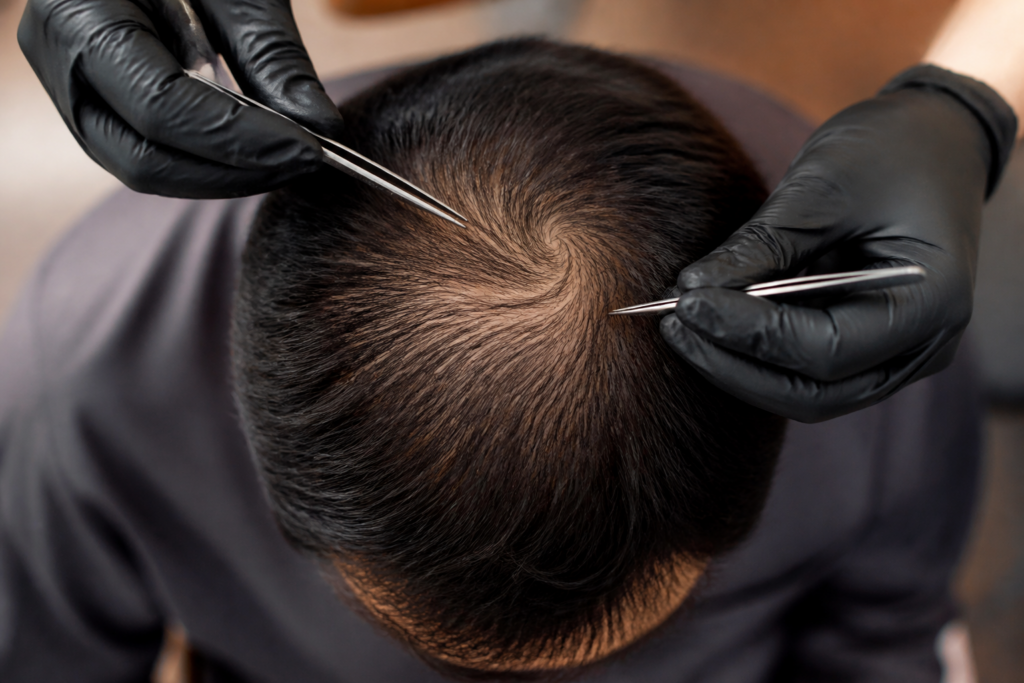
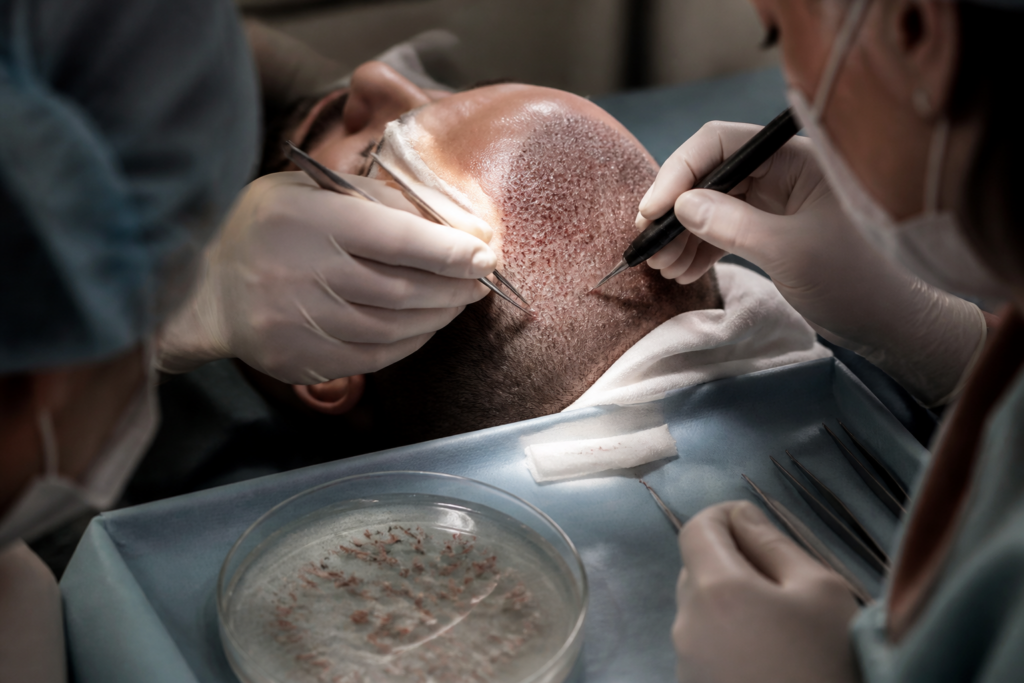
FUE hair transplant takes individual follicular units from the donor zone and places them where you are thinning. There is no long strip scar. Compared with older FUT (strip) surgery, FUE usually means faster healing, less discomfort, and a return to work within days rather than weeks (eternamd.com, fuesionhairclinics.com). Clinical reviews also describe FUE as having a shorter downtime and no linear donor scar (journals.lww.com).
The first 72 hours are the most visible. Mild swelling, redness, and small scabs in the donor and recipient areas are expected. Many patients resume light household tasks the same day or the next (hermestclinic.com, vatanmed.com). The acute healing window is typically 7 to 10 days (myhairline.ai).
You may still see tiny red marks if you wear your hair very short. That is social recovery, not a reason to stay off a laptop.
Desk jobs versus physical jobs
Treat the table as a planning tool. Your surgeon's written note always comes first, especially after a large session or if you work in dust, heat, or with a hard hat.
| Job type | Typical time off | What usually limits you |
|---|---|---|
| Remote or office desk work | 2 to 3 days | Swelling and redness, not pain |
| Client-facing office or teaching | 3 to 5 days | Visible scabs and forehead puffiness |
| Light standing work (retail, reception) | 4 to 7 days | Long hours on your feet and hat rules |
| Driving, delivery, light warehouse | 7 to 10 days | Bending, vibration, and sweat |
| Construction, gym floor, factory, outdoor labor | 10 to 14 days | Helmets, dust, heat, and heavy lifting |
| Contact sport, swimming, steam rooms | About 1 month | Impact, chlorine, and high heat |
If you can work from home for two days, most desk roles do not need a long medical leave. Sleep with your head slightly raised. Skip the gym. Keep cameras off if forehead swelling bothers you.
Physical jobs are a different case. Straining raises pressure in the scalp. Sweat and friction can disturb grafts while they are still settling. A published FUE aftercare protocol asks patients to avoid sports, fitness, steam rooms, swimming, and sunbaths in the first month, and to protect the head from direct impacts (doi.org).
Aftercare that decides how soon you clock in
How you wash, sleep, and move in week one changes both comfort and how you look at work.
- The first wash is usually done in clinic, then once a day with a gentle, surgeon-approved shampoo. Do not massage. Pat, do not rub.
- Use lukewarm water. Avoid a strong shower stream on the grafts for about two weeks.
- Dry with a soft paper towel or let the hair air dry. Skip the hair dryer.
- Sleep on your back with a neck pillow so the transplanted area does not rub the pillowcase.
- Follow clinic instructions on forehead bands in the first two days. They can reduce puffiness from local anesthesia (doi.org).
- Do not dye the hair for six months. If you need a trim in that period, use scissors only.
Shock loss, which is temporary shedding of transplanted or nearby hair, can start around weeks 2 to 6. It can look worrying on camera. It is a known phase, not a failed result (myhairline.ai). New growth usually shows from months 4 to 8. Thickness still matures through months 8 to 18.
If you want a smaller incision profile and a calmer first week, ask whether a sapphire punch fits your case. Incision size affects how the scalp feels when you pull on a shirt. See our note on sapphire FUE versus traditional steel FUE.
Planning leave if you fly to India
Around 30% of iGraft patients travel in, including NRIs and clients from the USA, UK, and Australia. Many choose a hair transplant in India because they want doctor-led care in company-owned clinics, a clear graft cost, and follow-up that does not end at the airport.
Patients who transplant abroad commonly stay 3 to 7 days near the clinic before flying home (myhairline.ai). Build leave around that stay plus two quiet days after you land. Desk staff can often resume remote work once they are home. Physical workers should not count airport days as recovery.
iGraft runs its own clinics in Pune, Bangalore, Hyderabad, and Vijayawada. You meet the doctor in person. You get a follicular-level scan and computerized diagnostics, then a written plan for natural hairline design. We do not operate franchise counters. Support continues for six months after your procedure, which matters when most healing happens at home. Tour iGraft facilities before you book.
Transparent unit pricing keeps the bill readable: ActiveFUE is ₹45 per graft and Gen3 DFI hair restoration is ₹50 per follicle. Read how hair transplant cost in India is quoted, why paying per follicle beats a flat session fee, and the hair transplant cost Bangalore breakdown.
DFI Ultimate Hair Transplant carries a 29-year assurance. ActiveFUE and no-shave options exist when you cannot take a long cosmetic break. Men's hair restoration and female hair transplant plans start from the same scans, not a one-size kit. The clinic has been doing this work for more than 15 years.
How to talk to your employer
Ask for a fit-to-work note that states sedentary duties from a given date and any lifting or helmet limits. You do not need to share graft counts. A line such as "minimally invasive scalp procedure, desk duties from day 3, no heavy lifting for two weeks" is usually enough.
If you can, book late in the week. A Thursday or Friday session gives desk staff a weekend of swelling before Monday meetings. Physical workers should still keep the following week light.
FAQ
How many days off work after FUE for a software or office job?
Two to three days is typical if you avoid helmets, tight caps, and heavy exercise. Some people work remotely the next day.
When can I return to a gym, warehouse, or construction site?
Wait until your surgeon clears you. As a rule, 10 to 14 days before dusty or heavy work, and about a month before swimming, steam, or intense training.
Will colleagues see that I had a hair transplant?
Short hair shows tiny red marks for about a week. Longer hair and a no-shave approach hide more. Forehead swelling can last a few days.
Can I fly home and go straight to the office?
Fly only when the clinic says you are fit. Then take at least one rest day. Cabin air and long sitting are tiring even when the scalp feels fine.
Does PRP or GFC add extra days off?
Adjunct GFC or PRP is usually done in clinic and does not add a full extra week off, though redness can last a little longer. Your doctor will say if same-day stacking is right for you.
Is downtime different for a hair transplant in Vijayawada, Pune, Hyderabad, or Bangalore?
The biology does not change by city. What changes is access to your surgeon in week one. That is why we keep doctor-led, company-owned clinics. If you are searching for a hair clinic near you, start with city reviews and an in-person scan.
Book your plan, including your days off
Get a computerized hair and scalp diagnosis at iGraft in Pune, Bangalore, Hyderabad, or Vijayawada. Take the 2-minute hair loss quiz, then sit with a doctor who will map your follicles in person. You will leave knowing your graft range, your likely days off, and a 6-month follow-up plan. Read reviews from Bangalore, Pune, Hyderabad, and Vijayawada before you decide. Visit the iGraft home page to book.