What Happens During an FUE Hair Transplant? Extraction to Implantation in One Day
If you are comparing a hair transplant in Bangalore, Pune, Hyderabad, or Vijayawada, the procedure day should not feel like a secret. Follicular unit extraction is a planned sequence: map the scalp, numb it, extract units one by one, open recipient sites at natural angles, then place grafts before you go home the same evening.
At iGraft Global Hair Services, you do not start with a punch. You start with a computerized hair checkup and follicular-level scans so the plan matches your scalp, not a template. Clinics are company-owned. You meet doctors in person. The group has a 15-plus-year setup, and about 30% of patients fly in from the USA, UK, Australia, and other NRI communities for a cost-effective premium session in India.
Diagnosis comes before any punch
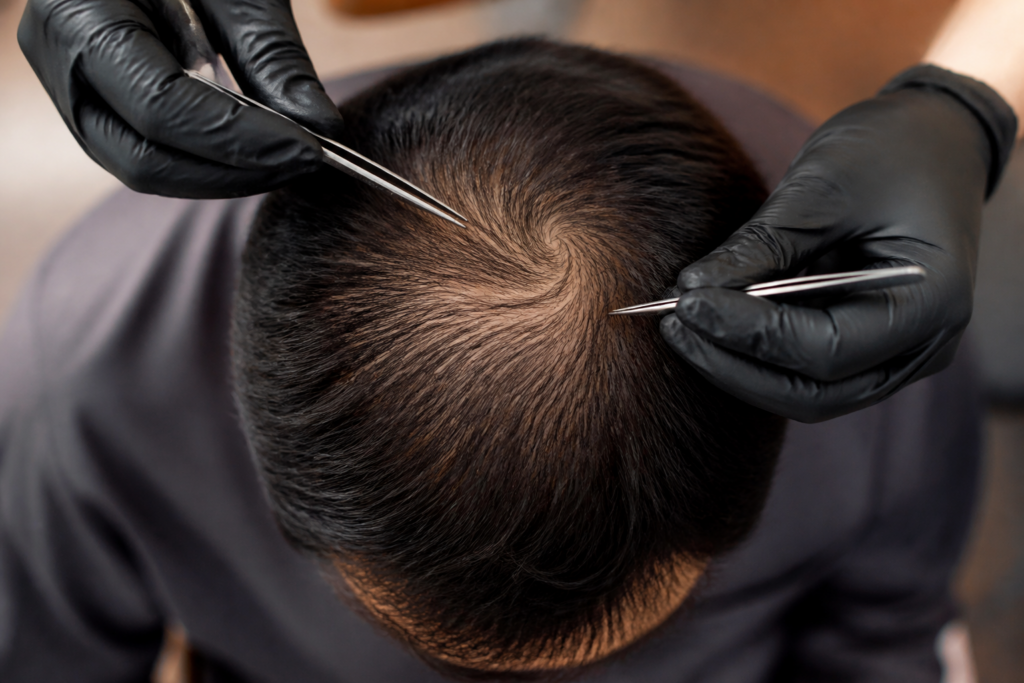
You meet a hair and skin specialist. They take your history, examine the pattern of loss, and talk through a realistic hairline. Then you get a computerized hair checkup. Not all thinning is androgenetic alopecia. Telogen effluvium and scarring alopecias need a different hair loss treatment. A transplant built for the wrong diagnosis wastes donor hair. An AI-guided checkup maps your scalp so hairline work has a medical reason. That diagnostic-first workflow is outlined on our about and treatments page.
The team chooses ActiveFUE, a hybrid plan, or Gen3 DFI Ultimate after the scan, not before. Hairline marking is done on your scalp. No-shave FUE is available when donor hair and your styling allow accurate punch placement. Paying per graft or per follicle keeps the quote tied to what was planned. That is why graft versus follicle wording can change your final bill if you do not ask what the unit actually means.
Morning: blood work, hairline, local anesthesia
A typical FUE day runs 6 to 8 hours. A 2,500 to 3,500 graft session can last 6 to 9 hours. The morning begins with blood work, a scalp check, and personalized hairline design. Male hair transplant work often rebuilds receding temples. Female hair transplant work more often adds density along a widening part.
Local anesthesia is where most people feel pressure, not a cutting sensation. Once the donor area is numb, extraction can begin. Comfort is not only the syringe. It is diagnosis, graft math, and who is in the room.
Extraction: isolating each follicular unit
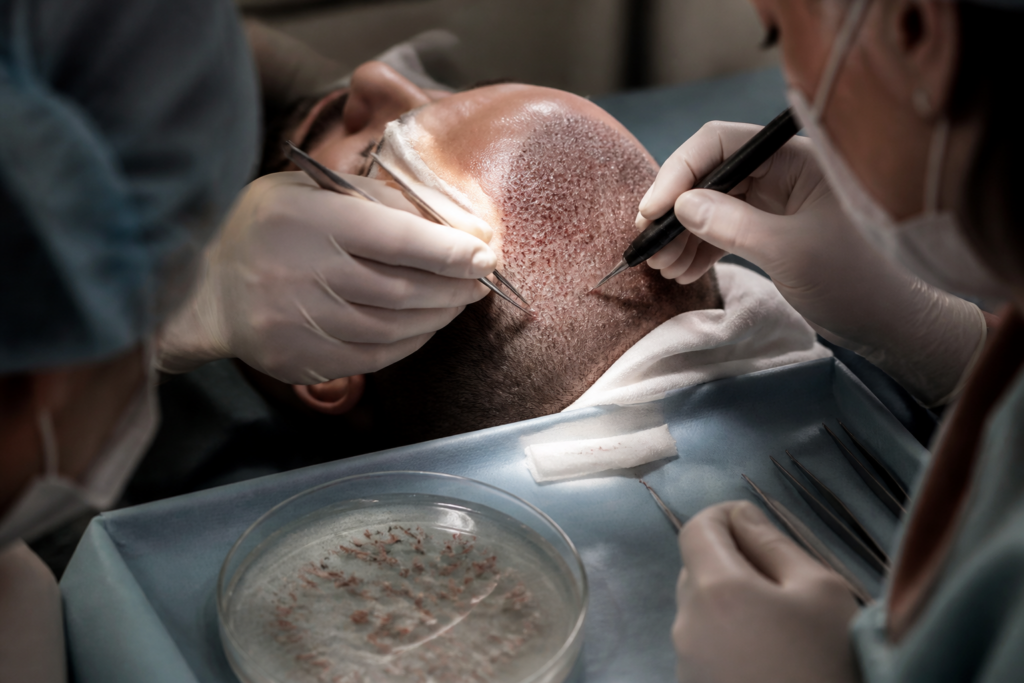
With the donor area numb, the surgeon extracts follicular units one at a time. A micro-punch, usually 0.6mm to 1.0mm, sits over a unit and rotates to score a circular incision. The punch isolates each unit to a depth of a few millimetres, often around 4mm. Rushing here causes transection and weak growth. Extracted grafts sit in a holding solution so they stay viable while the rest of the work continues.
This is the core of follicular unit extraction. It replaced older strip methods for many patients because there is no long linear donor scar and you typically leave the same evening. You still need a stable donor supply. FUE relocates hair. It does not invent it.
If you have been comparing DHI hair transplant listings with DFI hair restoration, ask who extracts, who implants, and how units are counted. Technique names mean little until the scan and the surgeon's plan are on paper. A DHT-driven hair transplant still needs a plan for ongoing loss. FUE moves DHT-resistant donor hair. It does not switch DHT off.
Implantation: angles, singles, and density
Recipient sites are opened at angles that match your existing hair. Single-hair units sit at the hairline. Multi-hair units add density behind. That is natural hairline design in practice, whether you came in for bangalore hair transplant research, hair restoration for men, or a hair plantation consult after years of thinning.
Implantation often takes 1 to 3 hours depending on graft count. You can rest or talk during placement. There is usually a lunch break between extraction and implantation. When every graft is in, the team inspects the recipient area under magnification. You receive discharge instructions and leave that evening.
The weeks after: clots, growth, and honest timelines
You are not fully healed when you walk out. Swelling, tightness, and scabbing are common. Desk work versus physical work needs different time off. At iGraft, clot removal around day 12 is a scheduled visit.
Around 2 to 4 weeks after surgery, transplanted hairs typically shed. That is shock loss, a telogen-phase shed, not a sign that the session failed. The follicle stays in place. Visible new growth generally starts around month 3 to 4. At 4 to 6 months you usually see early growth, often around 30 to 50 percent of the expected density. Fuller density and the final cosmetic result typically take 9 to 12 months, and the crown can keep filling in up to 18 months. Dedicated 6-month post-procedure support is part of the plan so you are not guessing between visits.
If the scan shows active shedding around the transplant zone, grafts will not hold a bald patch on their own. The clinic may add GFC Class 2, advanced PRP therapy, exosomes for hair treatment, BioCell treatment, or a booster course, often with high-frequency and low-level laser. Those therapies support remaining hair. They do not replace implantation in a bare area. Searches such as regenera activa vs GFC, regenera activa vs PRP, regenera activa India, or GFC hair treatment cost are usually the same clinical question: which option fits your pattern. Home care can include biotin hair gummies, minoxidil, serum, and shampoo plus conditioner from the product line. None of that replaces follow-up.
People looking for the best hair transplant in Vijayawada, a hair clinic near me, or hair transplant in Pune are often asking for a physical centre and a doctor they can meet. Company-owned facilities exist for that reason.
Graft cost, without a padded invoice
Current pricing is ₹45 per graft for ActiveFUE and ₹50 per follicle for Gen3 DFI Ultimate, which carries a 29-year assurance. Your total follows the scan.
| Plan | Unit price | What it covers |
|---|---|---|
| ActiveFUE | ₹45 per graft | Established FUE with motorized punches |
| Gen3 DFI Ultimate | ₹50 per follicle | Direct follicle implantation with 29-year assurance |
See the pricing table and hair transplant cost in India if you are comparing hair transplant cost Bangalore, hair transplant cost in Pune, or hair transplant cost Hyderabad. Paying per follicle rather than a flat session fee keeps the invoice tied to the plan. Overseas patients use unit-based quotes so hair restoration cost does not drift after they land.
FAQ
How long does FUE take in one day?
Plan for 6 to 8 hours. Larger graft counts take longer. ActiveFUE tends to run a bit faster. DFI can take more time because of how follicles are placed.
Does FUE hurt?
You feel pressure when local anesthesia is given. Extraction and implantation happen after the area is numb. Soreness later is normal and managed in aftercare.
When can I return to work?
Desk work is often possible sooner than physical labour. Confirm timing with your doctor and read the desk versus physical recovery guide.
Is no-shave FUE always possible?
Only when donor density and your styling allow accurate punch placement. It is not automatic for every scalp.
How soon will I see results?
Around 2 to 4 weeks you may see shock loss, not new growth. Visible new hair generally starts around month 3 to 4. Early density at 4 to 6 months is typically around 30 to 50 percent. Fuller results usually take 9 to 12 months, and the crown can take up to 18 months. Instant-cure timelines are not realistic.
What is iGraft graft cost?
ActiveFUE is ₹45 per graft. Gen3 DFI Ultimate is ₹50 per follicle. Your total depends on the scan. Compare Bangalore pricing if you are travelling for a session.
Do GFC, PRP, or exosomes replace a transplant?
No. They can support remaining hair when shedding is active. They do not fill a bare patch the way implantation does.
Book a checkup, not a guess
If you want a hair loss solution that starts with scans instead of a script, book a computerized checkup at a company-owned clinic. Take the 2-minute quiz for a first pass on your pattern, then sit with a doctor in Bangalore, Pune, Hyderabad, or Vijayawada. Read Vijayawada reviews or Pune reviews before you travel, and use contact to schedule. For more procedure detail, see the iGraft blog and common transplant myths.