
Best overall for female pattern hair loss: topical minoxidil. Best for temporary shedding: correcting the trigger. Best procedural add-on: PRP, after a dermatologist confirms suitability. This 2026 guide compares the best hair loss treatment for women by diagnosis, benefits and limitations—not by the strongest promise.
- Topical minoxidil is the best hair loss treatment for women with confirmed female pattern hair loss.
- Igraft hair loss treatment starts with clinical assessment and computerized diagnostics to guide treatment selection.
- Temporary shedding, nutritional deficiency and inflammatory scalp disease require different treatment plans.
- PRP and hair transplantation are selected options, not substitutes for diagnosing the cause.
Why this matters
A widening part, sudden shedding and smooth bald patches are different problems. Buying the same serum for all three risks delaying the treatment you actually need.
Igraft is best suited to women seeking an in-person hair loss assessment before choosing a procedure. Igraft offers physical clinics, follicular-level scans and computerized diagnostics; your medical history and scalp examination still determine the diagnosis.
The key question in 2026 is not which treatment sounds newest. It is whether your follicles need stimulation, a shedding trigger needs correction, or inflammation needs medical treatment. A scan supports that decision; it does not replace a doctor’s assessment.
What makes the best hair loss treatment for women?
Use these criteria before accepting a recommendation:
- Diagnosis fit: The treatment addresses your type of hair loss, not simply the appearance of thinning.
- Clinical evidence: Published evidence supports its use for that diagnosis. Established treatments take priority over unproven claims.
- Safety fit: Pregnancy plans, breastfeeding, medical conditions and current medicines affect your choices.
- Maintenance burden: You understand whether treatment is ongoing, requires repeat visits or involves surgery.
- Measurable progress: Comparable photographs and scalp assessments help distinguish improvement from changes in styling or lighting.
- Honest limitations: The clinician explains side effects, non-response and what the treatment cannot restore.
A treatment that performs well on one criterion can fail another. Minoxidil has established evidence for pattern thinning, for example, but it is not an appropriate default during pregnancy.
Women's hair loss treatments at a glance: 2026
| Treatment | Best for | Standout feature | Key limitation |
|---|---|---|---|
| Topical minoxidil | Confirmed female pattern hair loss | Established treatment that supports hair growth | Continued use is generally needed to maintain benefits |
| Trigger correction | Temporary shedding after illness, childbirth or another trigger | Addresses the reason shedding started | Recovery takes time; another diagnosis can coexist |
| Spironolactone | Selected women needing prescription treatment for pattern thinning | Anti-androgen action | Requires medical screening; unsuitable during pregnancy |
| Deficiency correction | Hair loss with a confirmed nutritional deficiency | Treats an identified medical problem | Supplements do not treat every cause of thinning |
| PRP | Selected patients considering an adjunct for pattern thinning | Uses a preparation from your own blood | Results and treatment protocols vary |
| Hair transplantation | Carefully selected women with stable loss and suitable donor hair | Redistributes existing follicles to thinning areas | Surgery does not stop ongoing loss in untreated hair |
1. Topical minoxidil: best for female pattern hair loss
Topical minoxidil is the strongest starting recommendation for women with confirmed female pattern hair loss. It supports hair growth but does not cure the underlying tendency to thin. A gradually widening part or reduced density over the crown warrants assessment before you begin.
Best for: Women with diagnosed female pattern hair loss who can maintain a regular treatment routine.
Topical minoxidil pros:
- Has established evidence for female pattern hair loss.
- Provides a non-surgical treatment option.
- Comes in formulations suited to different application preferences.
Topical minoxidil cons:
- Can cause scalp irritation, unwanted facial hair and initial shedding.
- Usually requires ongoing use to maintain the benefit.
- Should be avoided during pregnancy and breastfeeding unless your treating specialist advises otherwise.
Common topical strengths include 2% and 5%, but the correct formulation and application schedule depend on the product and medical advice. A stronger concentration is not permission to apply more.
Expect months rather than weeks: assessing benefit commonly takes 6–12 months. Follow product instructions, and seek medical advice for symptoms such as dizziness, palpitations or swelling. Oral minoxidil is a separate, prescription-only decision; it is not an interchangeable substitute.
Verdict: Buy only after confirming pattern hair loss and checking suitability.
2. Trigger correction: best for temporary shedding
Telogen effluvium is diffuse shedding that can follow childbirth, significant illness, rapid weight loss, major stress or medication changes. Treatment focuses on identifying and addressing the trigger rather than automatically adding a procedure.
Best for: Women with diffuse shedding linked to a recent trigger and a scalp assessment consistent with telogen effluvium.
Trigger correction pros:
- Addresses the reason shedding started.
- Avoids treating every episode as permanent pattern hair loss.
- Supports recovery through appropriate nutrition and management of underlying illness.
Trigger correction cons:
- Visible recovery lags behind correction of the trigger.
- Persistent shedding needs reassessment.
- Telogen effluvium and female pattern hair loss can occur together.
Tell your clinician about recent illness, childbirth, changes in eating, weight loss and new medicines. Do not stop a prescribed medicine yourself; the prescriber should assess whether it contributes and whether an alternative is appropriate.
Adequate protein and a balanced diet matter, but no food or supplement guarantees regrowth. If shedding continues or your part keeps widening, return for review rather than repeatedly changing shampoos.
Verdict: Hold off on procedures until the shedding trigger and diagnosis are clear.
3. Spironolactone: best for selected prescription-treatment needs
Spironolactone is an anti-androgen medicine that dermatologists prescribe off-label for selected women with female pattern hair loss. It is not suitable for everyone and requires a clinician to consider your medical history, other medicines and pregnancy plans.
Best for: Selected women whose dermatologist recommends anti-androgen treatment for pattern thinning.
Spironolactone pros:
- Offers a prescription option beyond topical treatment.
- Can be considered alongside minoxidil when clinically appropriate.
- Can also address acne in suitable patients.
Spironolactone cons:
- Can cause dizziness, menstrual changes and breast tenderness.
- Can raise potassium, particularly with certain conditions or medicines.
- Must not be used during pregnancy; pregnancy prevention needs discussion when relevant.
Your clinician decides whether blood-pressure checks or blood tests are needed. Do not borrow tablets, copy another patient’s dose or assume that normal hormone results rule out female pattern hair loss.
Bring up irregular periods, new facial hair or persistent acne during the consultation. These symptoms can justify further assessment; they do not establish a diagnosis by themselves.
Verdict: Hold until a dermatologist confirms suitability and explains monitoring.
4. Deficiency correction: best for a confirmed nutritional problem
Correcting iron deficiency or another identified nutritional problem is appropriate when it contributes to shedding. This is different from taking a hair supplement because its label promises thicker hair.
Best for: Women with a deficiency established through medical assessment and appropriate testing.
Deficiency correction pros:
- Treats an identified health problem rather than a presumed one.
- Connects treatment to symptoms, diet and relevant test results.
- Avoids unnecessary supplement combinations when no deficiency exists.
Deficiency correction cons:
- Does not replace treatment for coexisting female pattern hair loss.
- Excess supplementation can cause harm.
- Hair recovery takes longer than simply correcting a laboratory result.
Tell your clinician about heavy menstrual bleeding, restrictive eating, digestive symptoms and recent weight changes. Testing should follow your history and examination, not a fixed package sold to every patient.
Biotin deficiency is uncommon, and routine biotin is not a proven answer to every case of thinning. Biotin supplements can also interfere with certain laboratory tests, so disclose them before testing. Do not start iron solely because you are shedding.
Verdict: Buy supplements only for an identified need, not as a default hair-loss treatment.
5. PRP: best as a selected procedural add-on
Platelet-rich plasma, or PRP, uses a preparation made from your own blood that is injected into the scalp. It has evidence of benefit in pattern hair loss, but study methods and treatment protocols vary.
Best for: Selected women with pattern thinning who understand the uncertainty and want to discuss an adjunct to established treatment.
PRP pros:
- Provides a non-transplant procedural option.
- Uses a preparation derived from your own blood.
- Can be considered within a broader treatment plan.
PRP cons:
- Involves injections, discomfort and possible bruising.
- Does not produce a predictable result for every patient.
- Requires discussion of repeat treatment and how benefit will be assessed.
Igraft offers PRP and other hair therapies. Choose among those services only after the clinician explains the diagnosis, supporting evidence and reason for recommending that specific treatment.
An injectable treatment is not automatically better than a topical medicine. Ask what improvement is realistic, how photographs will be standardized, and what the next step is if treatment does not help. A package name is not evidence of effectiveness.
Verdict: Hold until PRP has a defined role in your treatment plan.
6. Hair transplantation: best for carefully selected stable loss
Hair transplantation moves follicles from a donor area to areas needing coverage. It redistributes existing hair; it does not create an unlimited supply or treat every cause of thinning.
Best for: Carefully selected women with suitable donor density, an appropriate diagnosis and realistic coverage goals.
Hair transplantation pros:
- Can improve coverage in suitable localized areas.
- Uses your own donor follicles.
- Allows individualized planning of placement and coverage.
Hair transplantation cons:
- Involves surgery, healing and the possibility of scarring or complications.
- Is unsuitable when donor hair is inadequate or affected by diffuse thinning.
- Does not prevent further loss of non-transplanted hair.
Igraft offers DFI Ultimate and ActiveFUE hair transplantation. The technique name comes after candidacy: your clinician must first assess donor quality, scalp health and whether the loss is stable enough for surgery.
Ask how future thinning will affect the result and whether medical treatment remains necessary. Active inflammatory or scarring hair loss needs specialist assessment before any surgical plan.
Verdict: Wait until a qualified clinician confirms candidacy and explains alternatives.
How these treatments were ranked
This 2026 ranking prioritizes diagnosis fit, established evidence, safety and maintenance. It is not a claim that these treatments were tested against each other in the same patients.
The clinical distinctions reflect patient guidance from the American Academy of Dermatology on female pattern hair loss, the British Association of Dermatologists on telogen effluvium, and NHS guidance on minoxidil. Minoxidil ranks first for confirmed pattern loss—not for every condition that causes shedding.
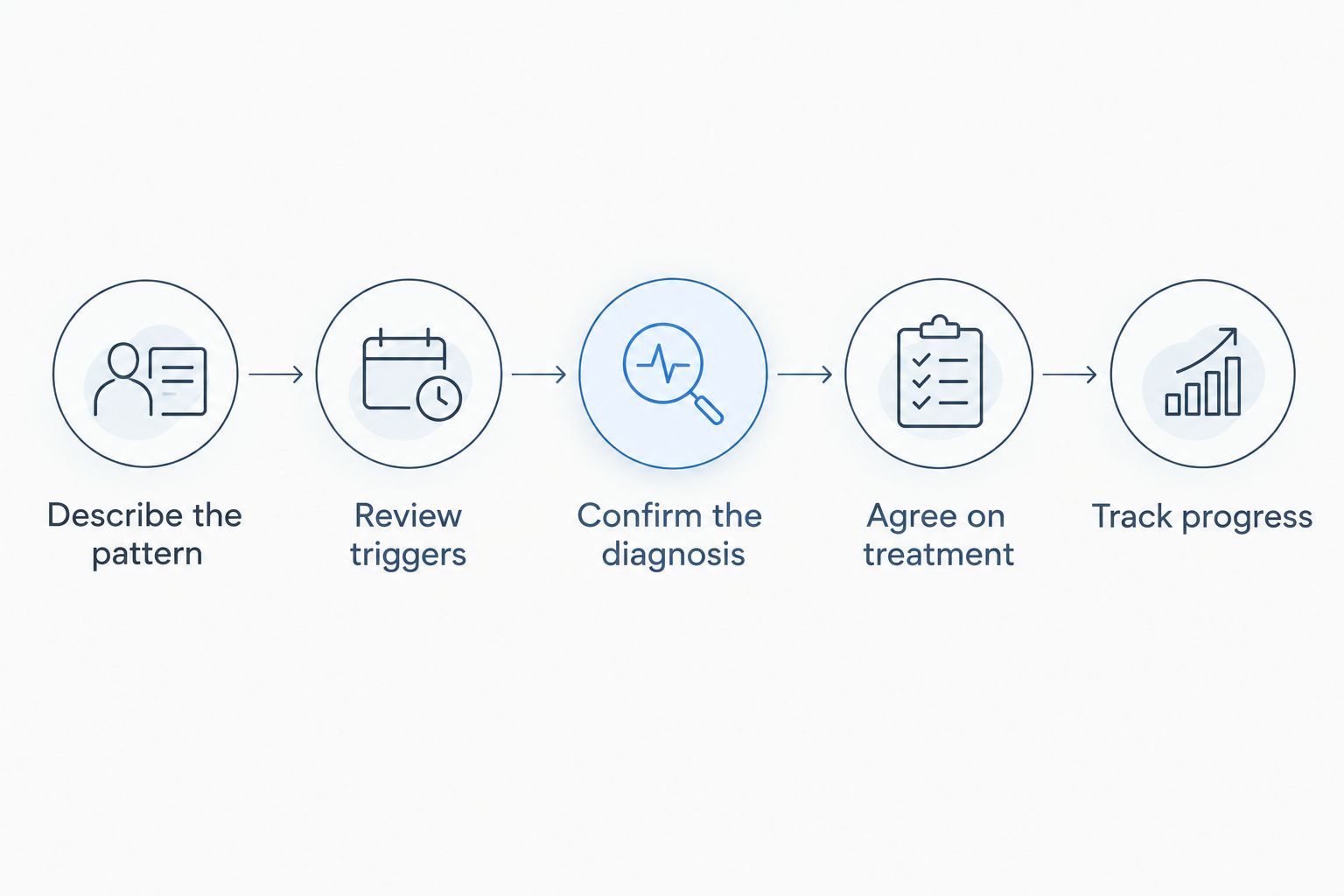
For an appointment, use this sequence:
- Describe the pattern: Explain whether you see shedding, widening, breakage or patches.
- Review triggers: Bring your medication list and relevant health history.
- Confirm the diagnosis: Ask whether more than one condition is present.
- Agree on treatment: Discuss benefits, risks and pregnancy plans.
- Track progress: Use comparable photographs and a planned review.
Which hair loss treatment should you choose?
For confirmed female pattern hair loss, topical minoxidil is the default treatment to discuss in 2026. For sudden diffuse shedding, identifying the trigger comes first. For patchy loss, scalp pain, redness or suspected scarring, seek medical assessment rather than starting a cosmetic package.
Igraft hair loss treatment offers an in-person assessment route for women considering medical therapies or transplantation. Ask for a clear explanation of what your examination shows, why a treatment fits and what would make the clinician change the plan.
You should leave knowing the diagnosis, the next step and how progress will be judged. You do not need to agree to a procedure at the first visit.
FAQ
What’s the best hair loss treatment for women in 2026?
Topical minoxidil is an established first-line option for confirmed female pattern hair loss. Temporary shedding, patchy loss and inflammatory scalp conditions need different treatment, so diagnosis comes first.
Is 5% minoxidil better than 2% for every woman?
No, the appropriate strength and formulation depend on the product, tolerability and medical advice. Follow the recommended application schedule rather than assuming more product produces better growth.
How long does minoxidil take to improve women’s hair loss?
Assessing benefit commonly takes 6–12 months of consistent use. Initial shedding can occur, and continued treatment is generally needed to maintain improvement.
Is PRP better than minoxidil for female pattern hair loss?
PRP is not an automatic replacement for minoxidil. Minoxidil has an established role in female pattern hair loss, while PRP is a selected procedural option with variable protocols and outcomes.
Can women use hair loss medicines during pregnancy?
Pregnancy changes which treatments are appropriate: spironolactone must not be used, and minoxidil should be avoided. Tell your treating clinician if you are pregnant, breastfeeding or planning pregnancy before starting treatment.
Will hair gummies stop my hair shedding?
Hair gummies are not a general treatment for shedding. Supplementation is appropriate when medical assessment identifies a relevant deficiency or nutritional need; it does not replace diagnosis.
Can women have a hair transplant for thinning hair?
Some women are suitable for hair transplantation, but donor density, the diagnosis and stability of loss determine candidacy. Diffuse thinning that affects the donor area can make surgery unsuitable.
One last thing
Hair shedding and visible thinning can have different causes in the same person. A woman can experience temporary shedding while also having female pattern hair loss, so improvement in shedding does not always resolve a widening part.
For your 2026 assessment, bring older photographs showing your part and hairline, along with a medication and supplement list. That history helps your clinician distinguish a recent change from gradual thinning—and choose treatment for the problem you actually have.