2,500 to 3,000 Graft Hair Transplant: Recipient Coverage, Density Math, and Scalp Planning
A 2,500 to 3,000 graft hair transplant sits in a practical middle. It is enough to rebuild a receding hairline and thicken the mid-scalp, and it usually stays inside one FUE sitting if your donor is healthy. The number is not a package you pick from a menu. It is recipient area times density, checked against what your donor can safely give.
At iGraft Global Hair Services you sit with a doctor in a company-owned clinic in Pune, Bangalore, Hyderabad, or Vijayawada. You see a computerized hair checkup with an AI report. You do not buy a graft count from a photo sent from another city. That in-person scan is how we keep planning honest after 15-plus years of clinic work.
What 2,500 to 3,000 grafts actually cover
A graft is a follicular unit, not one hair. Most units hold 1 to 4 hairs, so 3,000 grafts often yield about 6,000 to 7,500 strands. That conversion explains why two people with the same count can look different. Caliber, curl, and contrast between hair and scalp change how full the result looks.
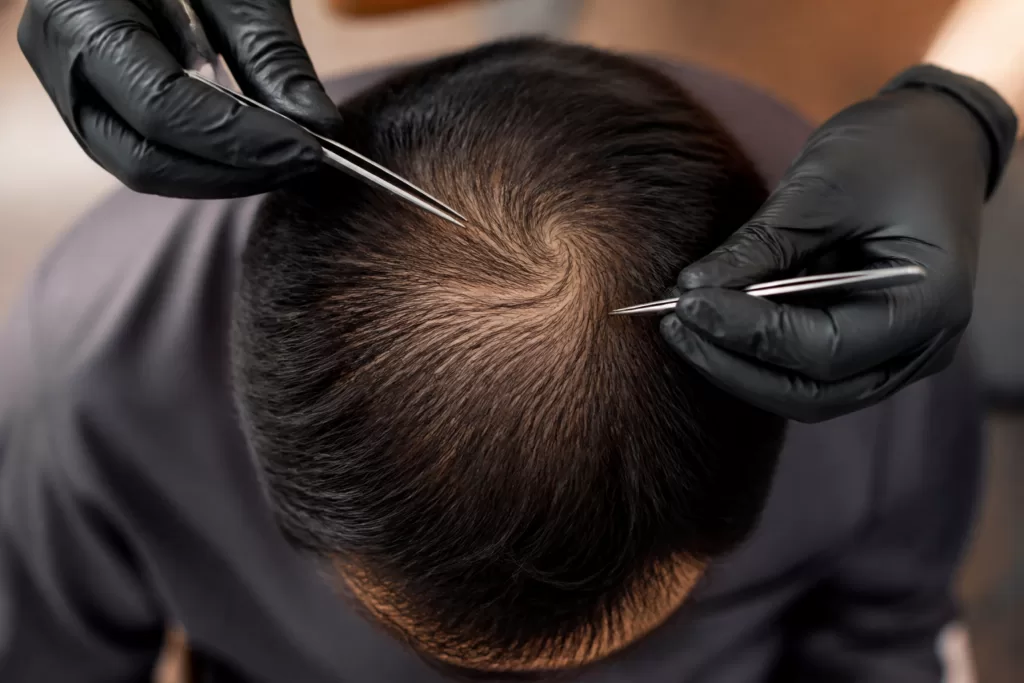
Native scalp density runs about 60 to 100 grafts per cm². Surgery does not restore that full biological density. The goal is an illusion of coverage that reads as natural in daylight. Frontal hairline and mid-scalp often need 40 to 50 grafts/cm². The crown can sit at 30 to 35 grafts/cm² so you do not empty the donor bank on one vertex.
The formula is simple: recipient area in cm² times target grafts per cm² equals grafts for that zone. At 25 to 35 grafts per cm², a 3,000 graft plan covers roughly 85 to 120 cm², less if a dense hairline takes a larger share. For many men seeking hair restoration, the map is the frontal third plus the zone behind it, or a rebuilt hairline with a partial crown.
| Zone | Target density | Coverage from 2,500 grafts | Coverage from 3,000 grafts |
|---|---|---|---|
| Hairline and temples | 40 to 50 grafts/cm² | About 50 to 62 cm² | About 60 to 75 cm² |
| Mid-scalp | 35 to 45 grafts/cm² | About 55 to 71 cm² | About 67 to 86 cm² |
| Crown | 30 to 35 grafts/cm² | About 71 to 83 cm² | About 86 to 100 cm² |
These are planning bands, not guarantees. Thick, wavy hair can look full at the low end. Fine, dark hair on pale skin may need the high end of density to hide scalp.
Who usually needs this range
The ISHRS Census reports an average near 2,262 FUE grafts per case, so 2,500 to 3,000 is a step above early recession work. Real heads vary with Norwood grade, hair caliber, and how much crown you want to treat now.
| Norwood grade | Typical pattern | Estimated graft range |
|---|---|---|
| Grade 3 to 4 | Deeper recession, early crown thinning | 1,800 to 2,800 |
| Grade 4 to 5 | Significant thinning across the top | 2,500 to 3,500 |
| Grade 5 | Large top plus crown | 3,000 to 4,000+ |
A Grade 3 hairline may finish under 2,000 grafts. A Grade 5 front-plus-crown case often needs more than 3,000, sometimes staged.
Most teams keep a single follicular unit extraction session in the 3,000 to 4,500 graft band to protect donor and graft survival. Mega sessions exist. They are not the default when the plan has to last.
Scalp planning that protects tomorrow's hair
We map the recipient in cm², then apply 30 to 50 grafts/cm² based on caliber and how you style. More density goes to the hairline and the side you part from. Mid-scalp and crown take a lighter, layered density.
If you are under 30 or still progressing, we reserve donor for later loss. We refuse any plan that harvests the donor down to a see-through state for one maximum sitting. If an earlier transplant left gaps or an unnatural edge, revision is planned the same way: scan first, then graft math.
Technique is chosen after the scan, not before. ActiveFUE covers many 2,500 to 3,000 graft cases. DFI hair restoration (Gen3 DFI Ultimate) is the precision option, with a 29-year assurance on the work. No-shave options exist when you need a faster return to public life.
Natural hairline design is not a template. Single-hair units sit at the edge. Multi-hair units sit behind them. That is how a well-placed 2,500 graft front can look denser than a poorly placed 3,500 graft dump.
Graft cost with transparent unit pricing
Current unit pricing is ₹45 per graft for ActiveFUE and ₹50 per follicle for Gen3 DFI. You pay for what is planned and placed. Check the pricing table and the hair transplant cost in India guide. Hair plantation cost and men's hair transplant cost follow the same unit math once your scan is done.
| Approximate grafts | ActiveFUE at ₹45/graft | Gen3 DFI at ₹50/graft |
|---|---|---|
| 2,500 | ₹1,12,500 | ₹1,25,000 |
| 3,000 | ₹1,35,000 | ₹1,50,000 |
In the US, respected FUE work often lands around $5 to $8 per graft. A 2,500 graft case there can sit well above $12,000 before extras. That is why patients from the USA, UK, and Australia look at India. About 30% of our clients already travel to iGraft for a cost-effective premium session rather than an opaque overseas bundle. See the India vs USA and UK comparison.
Per-graft math also stops session fees that hide how many units you received. Read why paying per follicle beats a flat rate and how graft vs follicle wording can inflate a bill. Outcome-based quotes are another way overseas patients overpay.
Company-owned centres, not franchise counters, mean you meet the doctor who will plan the work. For local search, start with hair transplant Bangalore, hair transplant cost Bangalore, best hair transplant Hyderabad, or hair transplant in Vijayawada.
Pair the grafts with hair loss treatment
If native hair is still miniaturizing, surgery alone leaves a thin mid-scalp next to a new hairline. We add GFC, PRP therapy, Exosomes, Booster, or BioCell treatment after an in-person exam, then quote against the scan. Compare PRP vs GFC if you are weighing non-surgical options.
Searches for regenera activa vs GFC, regenera activa vs PRP, regenera activa cost, regenera activa price, and regenera activa India are usually about non-surgical hair growth. We run GFC Class 2 and PRP in clinic, often packed with high frequency and low laser therapy. GFC hair treatment cost is quoted after the scan, not as a generic add-on.
If you are still choosing between a transplant, GFC, or medical therapy, take the 2-minute quiz first. Not every thinning pattern needs surgery on day one. Home support can include Hair Gummies, minoxidil, serum, and shampoo plus conditioner from our product line. That is maintenance, not a diagnosis.
What the months look like
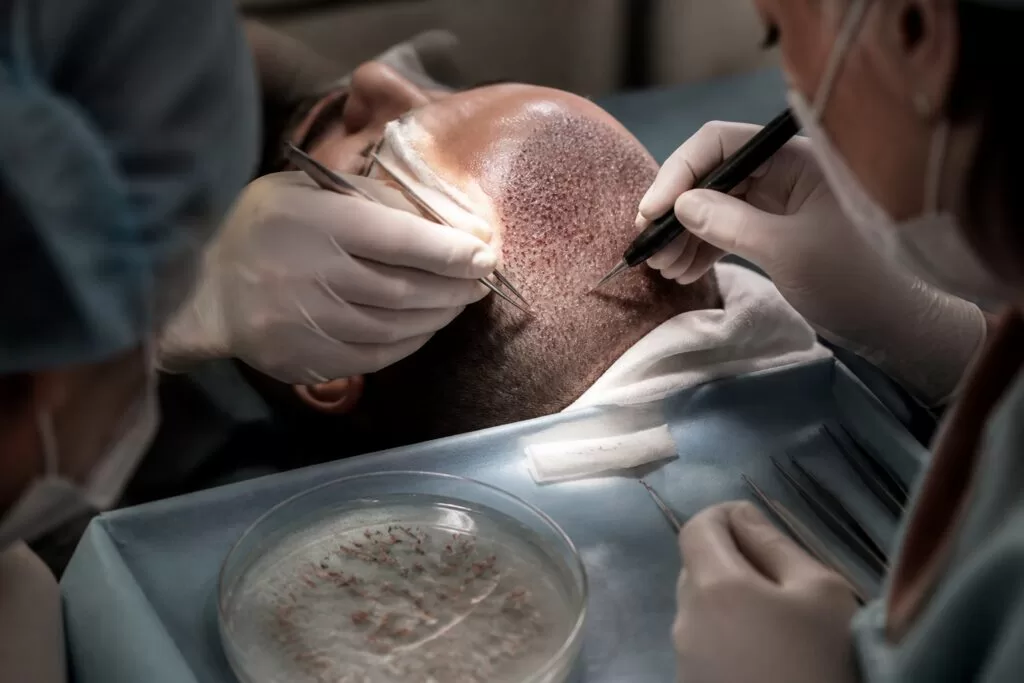
Procedure day uses local anesthesia. Comfort is part of the protocol. Around day 12 you return for crust removal. Most transplanted hair then enters a dormant phase (telogen effluvium, often called shock loss) between weeks 2 and 8. Visible early regrowth generally starts around 3 to 4 months after surgery, not after one month. Density typically fills in through months 4 to 6 and can still settle after that. Dedicated 6-month post-procedure support is part of the plan. You will not have a finished result the next morning. Anyone who tells you otherwise is selling a myth. Read myths about hair transplants.
FAQ
How do I know if I need 2,500 or 3,000 grafts?
You need area, density, and donor measured, not a guess from a selfie. Book a computerized checkup at an iGraft clinic.
Can women use this graft range?
Yes, when pattern thinning or a high hairline needs that much coverage and the donor is adequate. The math is the same. The hairline design is not.
Is 3,000 grafts safe in one day?
For many donor patterns, yes. We stop short of over-harvesting. If the crown and front both need dense work, we stage.
When will I see new hair after a 2,500 to 3,000 graft session?
Expect shedding in weeks 2 to 8. Early visible growth is usually at 3 to 4 months. Fuller coverage takes longer, which is why we stay with you for six months after the procedure.
Do overseas patients need to fly in first?
Start with an e-consultation. Surgery is confirmed in person at the clinic.
Plan your coverage with numbers, not a photo
Come in. Sit with a doctor. See the follicular-level scan. Contact iGraft to book at Pune, Bangalore, Hyderabad, or Vijayawada, or read about our treatments before you travel.