Hybrid FUE and FUT Harvesting: How Combining Strip and Punch Surgeries Unlocks Over 5,000 Grafts
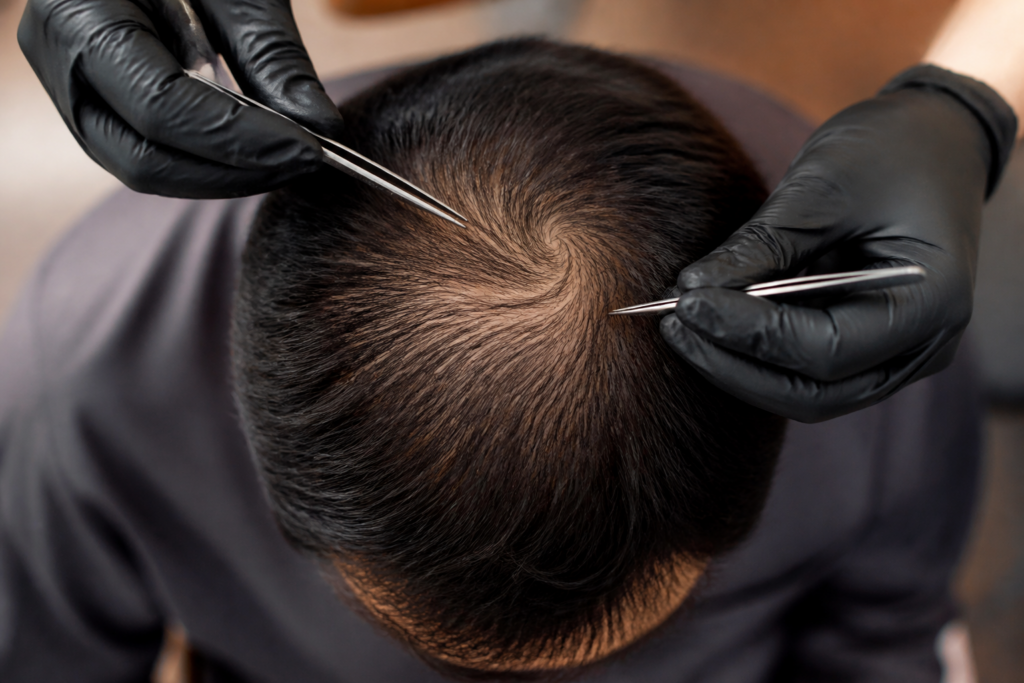
If you have advanced pattern baldness, one harvest method often runs out of grafts before the hairline, mid-scalp, and crown are covered. Hybrid harvesting is the practical answer. In a single session, your surgeon takes a FUT strip from the stable donor zone, then adds follicular unit extraction (FUE) punches from the remaining safe areas. When donor density and scalp laxity allow it, that mix can push total yield past 5,000 grafts without emptying the back of your head.
This is not a default package. It is reserved for high-volume work, typically 3,000 grafts and above, and only after a real donor assessment. Guessing graft numbers from a photo is how people end up with thin coverage and a depleted donor.
What strip harvesting and punch harvesting each contribute
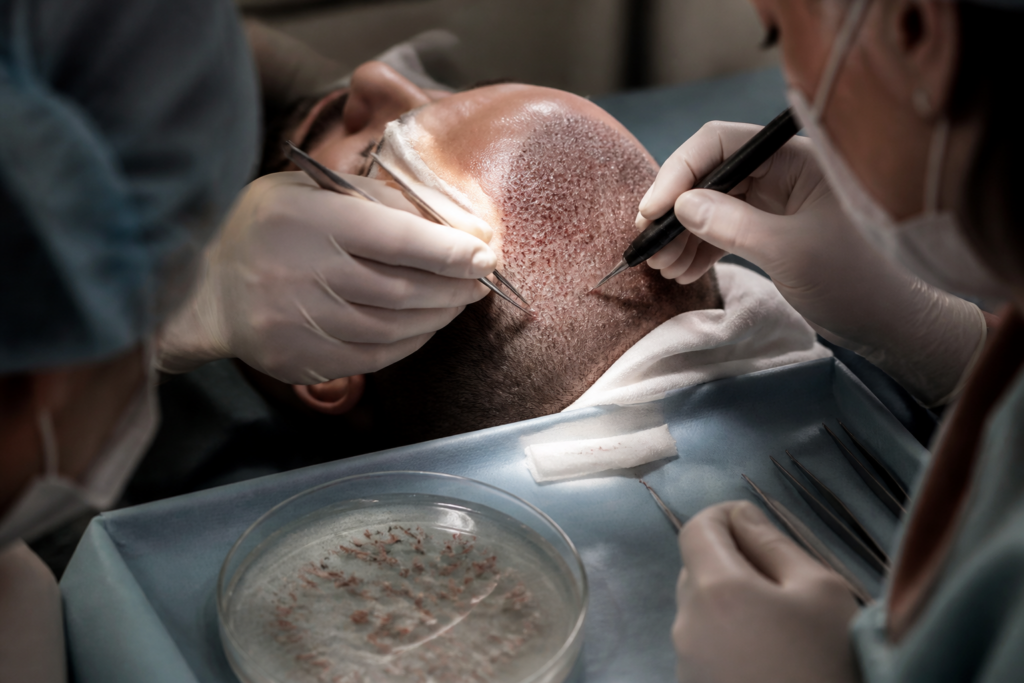
FUT, the strip method, removes a thin band of scalp from the back of the head, usually the occipital zone. Technicians then dissect it under microscopes into individual follicular units. A well-chosen strip commonly yields around 3,000 to 3,500 grafts when density is good, which is why it still matters for mega-sessions.
FUE uses a motorized micro-punch, typically 0.7 to 1.0 mm, to lift grafts one by one. It leaves tiny, dot-like scars rather than a line. On its own, FUE is slower per session and more limited if you also want to keep the donor looking dense under short hair.
Used together, FUT can supply the bulk while FUE adds another 1,500 to 2,000 grafts from untouched safe zones. Combined totals in the 5,000 to 6,000 range are discussed in clinical practice, and about 6,000 grafts is widely treated as a normal safe ceiling for one patient, not a number you chase at any cost. iGraft plans the mix around your scan, not a catalogue promise.
Why combining methods protects the donor better than stretching one technique
If you force a very wide strip, you raise the risk of a stretched linear scar. If you punch the entire donor for a mega FUE session, the back of the head can look see-through. Hybrid harvesting lets the surgeon stay inside safer limits on both sides. The strip does not have to be taken at maximum width. The FUE component does not have to empty every remaining follicle. You still get a large hair transplant. You keep more of the donor looking natural.
The usual sequence starts with the strip so elasticity can be tested during excision and the wound can close without tension. FUE then comes from the remaining safe zones, not from the strip site itself. Extra FUE grafts often go where coverage is hardest. Roughly 60 to 70 percent may be reserved for the crown, with the rest used to thicken the front. That split matters if you want a natural hairline design plus some crown fill in one trip.
Poor donor density, tight scalp, or an old strip scar are other reasons to combine methods. A strip alone may produce too few grafts. FUE alone may not make up the gap. Together they can, which is why this approach is often considered for Norwood class IV to VI loss, including the crown, rather than for mild recession.
Recovery, scars, and what you should plan for
A hybrid session is still surgery. You will have a linear scar from FUT, usually hidden under existing hair, plus the small FUE dots. If you keep your hair very short, you will see more of both. If you wear it at a typical length, the linear scar is the main long-term mark.
Recovery follows the slower of the two methods. Strip closure commonly needs about 10 to 14 days before the donor feels comfortable. FUE dots often settle in 5 to 7 days. Desk work is usually easier to resume than physical labour. How much time you need off depends on your job, not on a generic calendar.
After surgery, transplanted hairs typically shed and enter a resting phase (telogen effluvium). Early regrowth does not generally begin around month 1. New visible growth typically starts between months 3 and 4, and significant cosmetic maturation continues between months 6 and 12 as more follicles leave rest and the shafts thicken. That timeline is the hair cycle, not an instant fix. Risks to discuss in person include a wider-than-planned scar, reduced donor density, uneven growth, bleeding, infection, and numbness. A computerized, follicular-level check before you book is how you avoid treating the wrong problem.
How iGraft prices and plans a high-graft session
iGraft Global Hair Services runs company-owned clinics in Pune, Bangalore, Hyderabad, and Vijayawada. There are no franchisees. You meet the doctors on site. Diagnosis comes first: a computerized hair and scalp assessment maps density, miniaturization, and how many grafts you can spare without visible thinning.
From there, the plan may be hybrid harvesting, DFI hair restoration, ActiveFUE, or a smaller FUE session. If the issue is thinning rather than empty scalp, GFC, advanced PRP, exosomes, BioCell, and booster protocols can sit alongside surgery. You get a 360-degree plan, not a single product push.
Transparent unit pricing is the other difference. ActiveFUE is ₹45 per graft. Gen3 DFI Ultimate is ₹50 per follicle. You pay for what is transplanted, which is why paying per follicle beats a vague session fee. Clarify graft versus follicle language before you sign, because unclear unit labels can inflate the final bill. If you are comparing hair transplant cost in Bangalore, Pune, Hyderabad, or Vijayawada, ask for graft count, method mix, and what happens if your donor is weaker than expected. Those three answers tell you more than a headline price. A 2,000 versus 3,000 graft session is a different bill and a different donor load, which is why Pune FUE cost math should be done in grafts, not packages.
About 30 percent of patients fly in from the USA, UK, Australia, and the Gulf because they can sit with the doctor before anything is scheduled, and because a cost-effective hair transplant in Bangalore or another iGraft city still includes six months of post-procedure support. The group has been doing this work for more than 15 years. DFI Ultimate is backed by a 29-year assurance.
FAQ
How many grafts can hybrid FUE and FUT produce in one session?
Often 3,000 to 6,000, depending on your donor. Crossing 5,000 is realistic only when density and laxity support it. The safe limit is your scalp, not a marketing target.
Who is a candidate?
Men and women with advanced loss, a crown that needs fill, or a donor that is too limited for FUE or FUT alone. Mild recession usually does not need both methods.
Is hybrid harvesting the same as DHI?
No. DHI is an implantation method using a Choi pen. Hybrid harvesting is about how grafts are taken (strip plus punch), not how they are placed.
When will I see growth after a hybrid session?
Expect shedding first, then a rest phase. New visible growth typically starts between months 3 and 4. Fuller cosmetic results continue to develop between months 6 and 12.
Can women use this approach?
Yes, when donor supply and the pattern of loss justify a high graft count. Female hair transplant cases still start with diagnosis, because diffuse thinning is not treated the same as a receding hairline.
Will I need a second surgery later?
Possibly. Hair loss can progress. Keeping reserve grafts in the donor is part of honest counseling, not a failure of the first session.
What does graft cost look like at iGraft?
₹45 per graft for ActiveFUE and ₹50 per follicle for Gen3 DFI Ultimate. Your quote should match the grafts actually planned after the scan, not a flat session fee.
If you want a precise number rather than an estimate, book a computerized checkup at an iGraft clinic in Pune, Bangalore, Hyderabad, or Vijayawada, or start with the 2-minute quiz. Bring your goals, your haircut preference, and any old scars. We will map the donor, explain the strip-plus-punch plan in plain language, and tell you if 5,000-plus grafts is actually on the table for you.