Body Hair Transplant

Specialized Hair Restoration Using Body Hair
A Body Hair Transplant (BHT) is a specialized hair restoration procedure that uses suitable hair follicles from areas of the body as donor grafts for hair restoration. It may be considered when scalp donor hair is limited or when additional donor follicles are required to achieve the desired coverage. At iGraft, body hair transplantation is planned according to your hair-loss pattern, donor hair availability, body-hair characteristics, scalp condition, graft requirements, and restoration goals. Because body hair can differ from scalp hair in texture, growth cycle, thickness, and length, careful assessment is important before treatment.

What Is a Body Hair Transplant?
Body hair transplantation may be considered by individuals who have limited scalp donor hair, advanced hair loss, reduced scalp donor density, or insufficient graft availability for their desired restoration. It may also be considered in selected cases where additional donor follicles are required for specific areas. A detailed consultation is essential because body hair does not always behave exactly like scalp hair. The specialist needs to evaluate the quality, density, texture, growth cycle, and suitability of available body hair before recommending BHT.

Body Hair as a Donor Source
Body hair can have different characteristics depending on where it is obtained. Chest, abdomen, back, arms, and other body areas may have differences in hair thickness, curl, growth duration, and growth cycle. For this reason, body hair transplantation is not suitable for every patient. The donor area must be carefully assessed to determine whether the available follicles can provide useful grafts for the intended restoration. The selection of donor hair is based on individual characteristics rather than simply choosing the area with the most visible body hair.
Our Patients Speak
How Does a Body Hair Transplant Work?
The BHT process begins with a detailed assessment of the scalp and potential body-hair donor areas. The specialist evaluates your hair-loss pattern, donor availability, body-hair characteristics, and restoration goals.
Suitable follicles are carefully extracted from the selected donor area. The extracted grafts are prepared and then implanted into the recipient area according to the planned hairline, density, direction, and coverage requirements.
Because body hair can have a different growth pattern from scalp hair, careful graft selection and placement are important when incorporating body hair into a restoration plan.
Body Hair Transplant Procedure
Consultation and Assessment
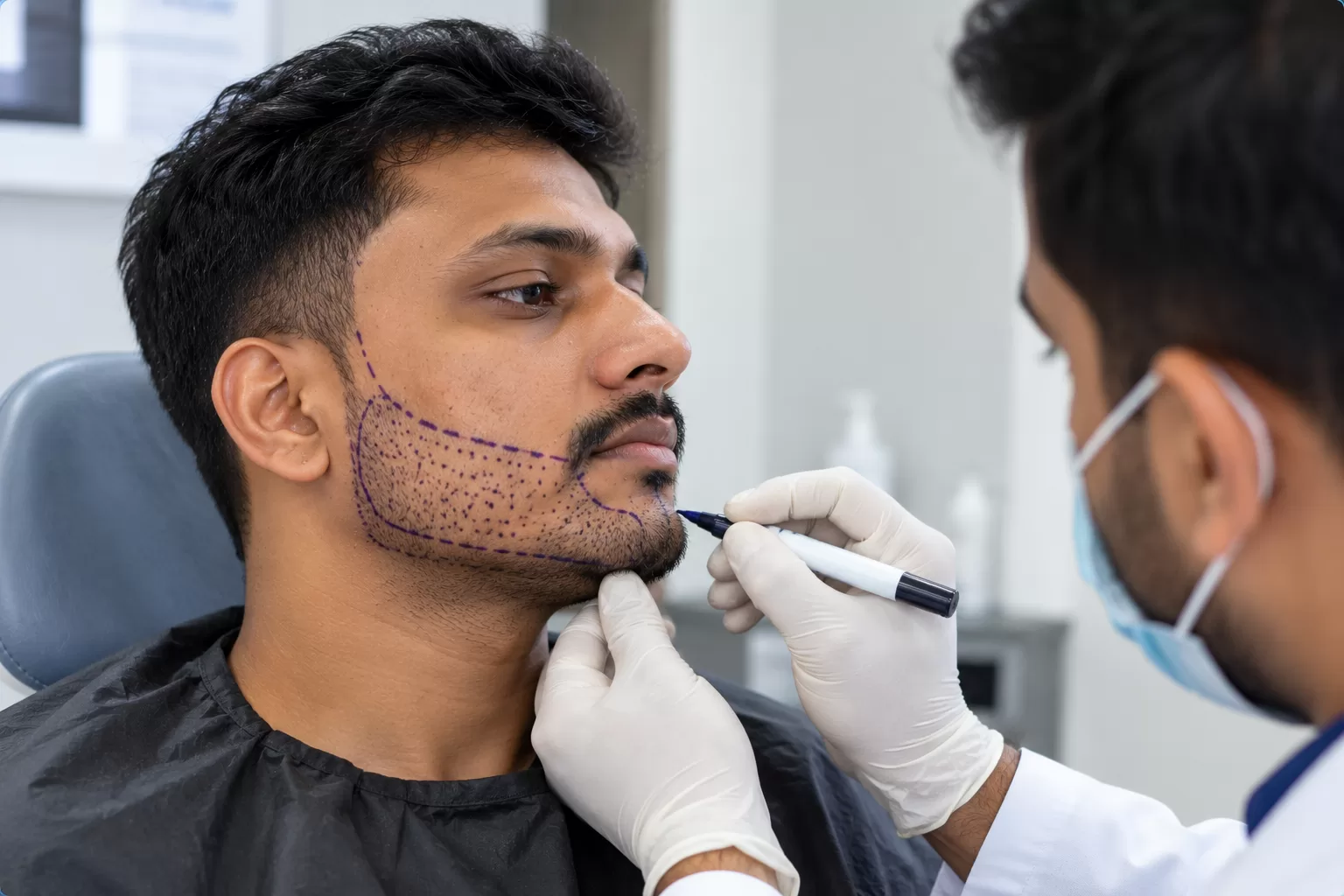
The treatment begins with an evaluation of your scalp, existing donor hair, body-hair density, hair characteristics, and the areas requiring restoration.
Donor Area Selection
Suitable body-hair donor areas are identified based on follicle quality, density, growth characteristics, and compatibility with the treatment objective.
Graft Extraction
Individual follicles are carefully extracted from the selected donor area using an appropriate extraction approach.
Graft Preparation
The extracted follicles are prepared for transplantation while maintaining their condition before implantation.
Recipient Area Preparation
The recipient area is designed according to the required hairline, density, direction, and overall restoration plan.
Graft Implantation
The prepared follicles are individually placed into the recipient area according to the planned design.
Benefits of Body Hair Transplantation
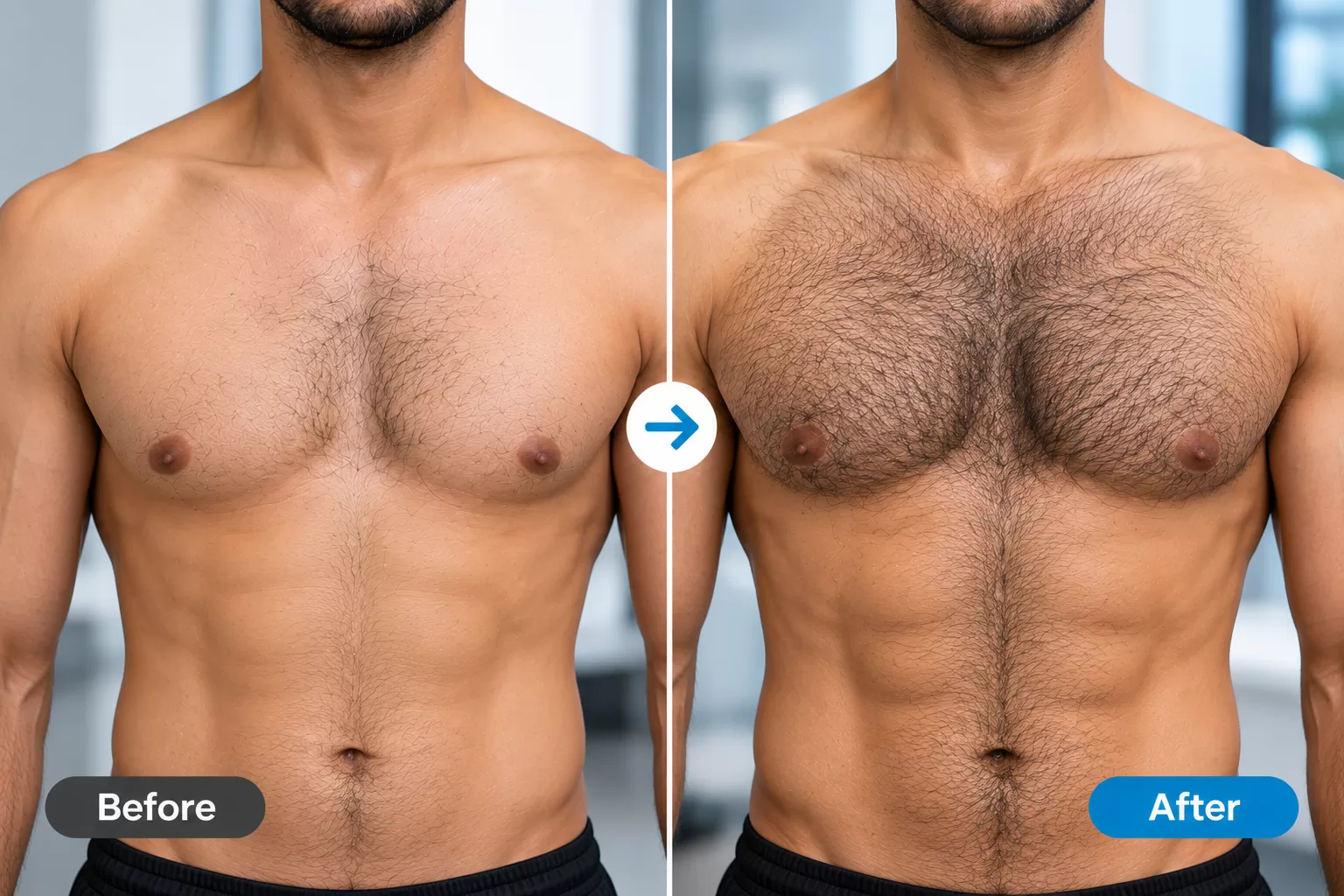
A major potential benefit of body hair transplantation is that it can provide an additional source of donor follicles when scalp donor availability is limited.
For selected patients, BHT may help increase the number of available grafts for areas requiring additional coverage. It may be incorporated into a broader hair restoration strategy when the characteristics of the body hair are considered suitable.
The final outcome depends on donor hair quality, recipient area, graft survival, treatment planning, and individual biological factors.
Body Hair Transplant for Advanced Hair Loss
Individuals with extensive hair loss may have limited scalp donor reserves. In such cases, body hair may be evaluated as a potential supplementary donor source.
A body hair transplant for advanced hair loss does not necessarily replace scalp donor hair. Instead, it may be considered as an additional source of follicles when appropriate.
The treatment plan depends on the amount and quality of available donor hair and the areas requiring restoration. A specialist assessment is required to determine whether BHT can contribute meaningfully to the overall treatment plan.
Body Hair Transplant Cost
The body hair transplant cost varies according to the individual treatment plan. Factors may include the number of grafts required, donor area, availability and quality of body hair, extent of scalp hair loss, recipient area, and overall treatment requirements.
Because body hair suitability differs between individuals, an in-person assessment is important before determining the required grafts and treatment cost.
A body hair transplant is a hair restoration procedure in which suitable hair follicles are extracted from body areas and transplanted into areas affected by hair loss.
Body hair may be considered when scalp donor hair is limited or when additional grafts are required for a specific restoration plan.
Depending on individual hair characteristics, potential donor areas may include the chest, abdomen, back, arms, legs, or other suitable body regions. The appropriate donor area varies from person to person.
In selected patients, suitable body hair may be used as supplementary donor hair for scalp restoration. Its suitability depends on factors such as texture, thickness, growth cycle, density, and compatibility with the recipient area.
No. Body hair varies considerably between individuals, and not all body hair is suitable for transplantation. A specialist assessment is necessary to evaluate donor quality and treatment suitability.
The number of available grafts depends on the density and characteristics of the individual’s body hair and the selected donor areas. There is no fixed number applicable to every patient.
Body hair can have a different growth cycle, texture, thickness, and maximum length compared with scalp hair. These characteristics should be considered when planning BHT and evaluating expected results.
Transplanted follicles are intended to provide long-term hair growth, but the outcome can vary depending on donor characteristics, graft survival, healing, and the individual’s natural hair-loss pattern.
In selected cases, body hair may provide additional donor follicles when scalp donor availability is limited. Its usefulness depends on the quality and quantity of available body hair.
The procedure is generally performed using local anaesthesia to minimize discomfort. Temporary tenderness, redness, swelling, or sensitivity may occur during the recovery period.
Results develop gradually. Transplanted hairs may initially shed before new growth begins. The visible improvement and final appearance vary depending on individual growth and healing.
The body hair transplant cost depends on the number of grafts required, donor area, body-hair characteristics, extent of hair loss, and treatment plan. A consultation is required for a personalized estimate.